




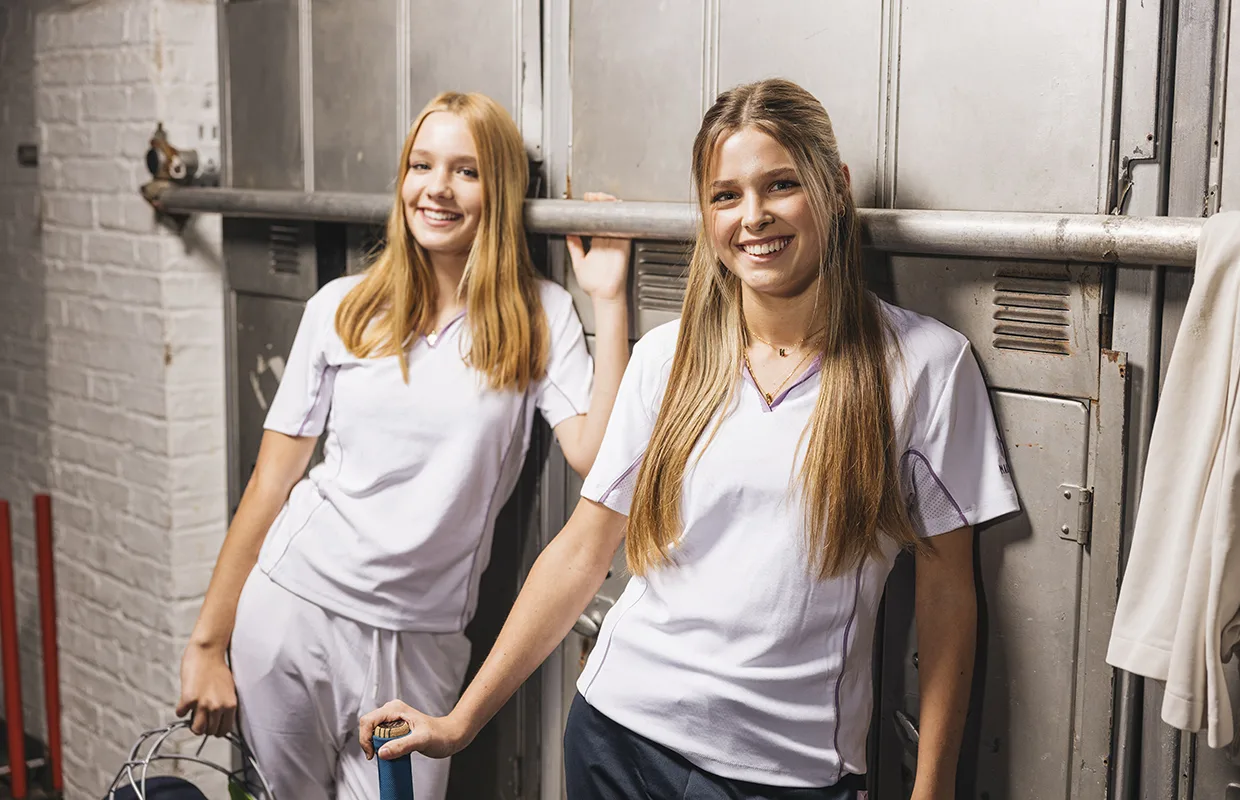
Maiden Cricket is a female-founded sportswear brand that designs purpose-built, high-quality cricket kit exclusively for women and girls. It has partnered with professional services firm Gateley to supply tailored cricket clothing and tackle inequality in access to the sport. We find out more from co-Founder, Cat Black.
BUILT FOR HER, NOT ADAPTED FROM HIS
Maiden Cricket (Maiden) was co-founded by sisters Cat and Honor Black in 2024 because they kept seeing the same problem repeat itself – girls and women turning up to play cricket in kit that simply wasn’t designed for them.
Oversized shirts, trousers that didn’t fit, protection built for male bodies – it sounds like a small thing, but kit is the first signal a player receives about whether the sport sees them.
When that signal says, ‘you’re an afterthought’, it has a real effect on confidence, retention and, ultimately, performance.
“We built Maiden to fix that – apparel and equipment for women and girls, designed with performance and fit at the centre. From the beginning, we knew the brand had to do more than sell kit – it had to be part of changing the infrastructure around women’s cricket,” introduces Cat.
“That’s what led us to our partnership with Gateley. They share a serious commitment to inclusion and to backing organisations doing purposeful work. The collaboration gave us the resources and platform to take Maiden’s ethos into the schools and clubs that needed it most,” she reveals.
GIRLS IN SPORT
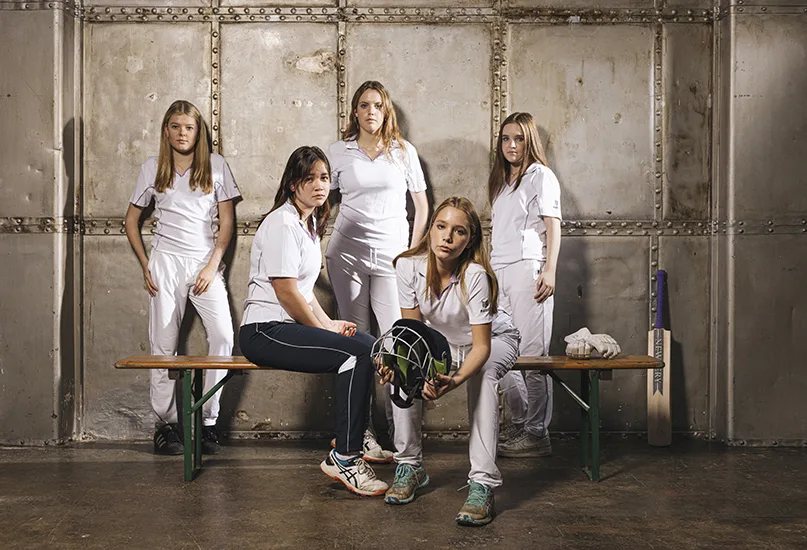
The case for girls in sport is well-evidenced – 94 percent of female C-suite leaders played sport at a competitive level.
Additionally, after-school sport is said to increase long-term leadership outcomes by 50 percent.
These aren’t soft statistics – they’re a pipeline argument. The girls playing cricket today are the leaders, professionals, and decision-makers of tomorrow, and sport is one of the most effective environments for building the resilience, teamwork, and self-belief that underpin this reality.
“The challenge is that girls drop out of sport at twice the rate of boys during early adolescence – and one of the primary drivers is feeling like the sport wasn’t made for them,” explains Cat.
“That’s fixable, and it starts with how the kit fits. It continues with representation at every level – coaches, ambassadors, role models – and is sustained by building real community, not just access,” she sets out.
Maiden’s ambassador programme, its school partnerships, and county work are all designed to create an environment where a girl feels she belongs in cricket from the first session.
“From the beginning, we knew the brand had to do more than sell kit – it had to be part of changing the infrastructure around women’s cricket”
Cat Black, co-Founder, Maiden Cricket
SEIZING THE MOMENT
Right now, women’s cricket finds itself in a genuinely exciting moment, and the momentum shows no sign of slowing down.
The Hundred has opened the game to an audience that wouldn’t previously have engaged with cricket – attendances are up, broadcast numbers are growing, and the conversation around women’s sport more broadly has shifted.
There’s also a commercial importance now that wasn’t there five years ago.
“But here’s what we think is equally important – visibility at the top doesn’t automatically translate into structural change at the grassroots. A girl watching The Hundred on Sky Sports is inspired – but if she can’t find a club that takes her seriously, the kit doesn’t fit, or there’s no clear pathway, the moment passes,” Cat impassions.
“Maiden exists at that grassroots level, and we’re trying to make sure the infrastructure matches the ambition. We’re focused on the part of the picture that doesn’t always make the headlines,” she tells us.
THE POWER OF A TEAM
Team sport does something that’s very hard to replicate elsewhere – it creates shared stakes.
When you win together or lose together, when you must trust someone else to play their role, when you’re accountable to a group rather than just yourself – those experiences build a form of confidence that’s genuinely durable.
“It’s not the confidence that comes from being told you’re good – it’s the confidence that comes from knowing you’ve worked hard,” Cat informs.
The mental health evidence is also significant, as girls who play team sport through adolescence show measurably better resilience, lower rates of anxiety, and stronger social connection in adulthood.
“Cricket specifically is interesting because it accommodates different types of contribution – batting, bowling, fielding, tactics – which means different personalities and ability levels can find their place.”
It’s not a sport that rewards one archetype, and that really matters for inclusion.
“At Maiden, we think about this very deliberately as our goal isn’t just to get girls playing cricket. It’s to create an experience that makes them want to stay and carry what they learn into everything else they do,” she continues.
PERFORMANCE AND AESTHETIC
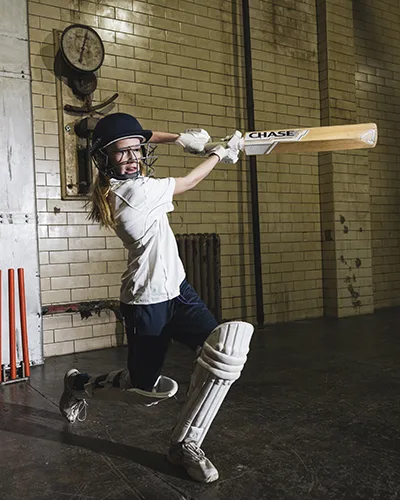
Sporting apparel and sportswear as fashion has seen a marked resurgence in recent years. Maiden, however, believes that performance and aesthetic aren’t in tension.
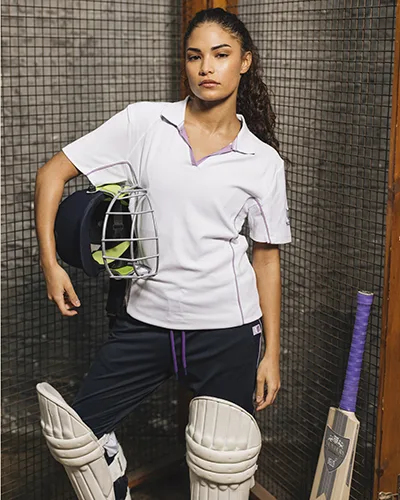
“That’s a false choice that the industry perpetuated for a long time by treating women’s kit as an afterthought. When you design specifically for female bodies, with the right fabrics, fit, and construction, you get a product that performs better and looks better. They’re part of the same conversation,” Cat expands.
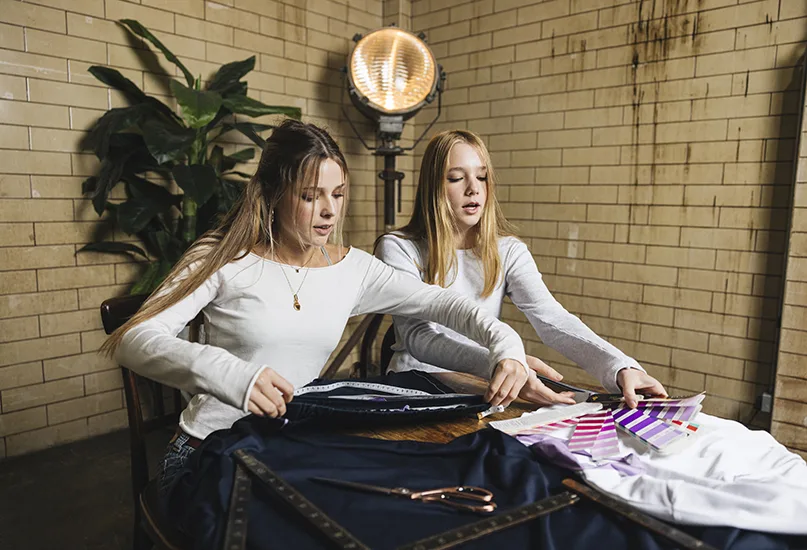
“Our design process starts with function. We work with technical fabrics that manage moisture, allow freedom of movement, and hold their shape through a full day’s play.”
Every seam placement is considered in terms of comfort under protective equipment, and the fit is built from female body measurements, not scaled-down male templates. Once those foundations are right, the aesthetic work – colour, finish, detailing – sits on top of a product that already performs.
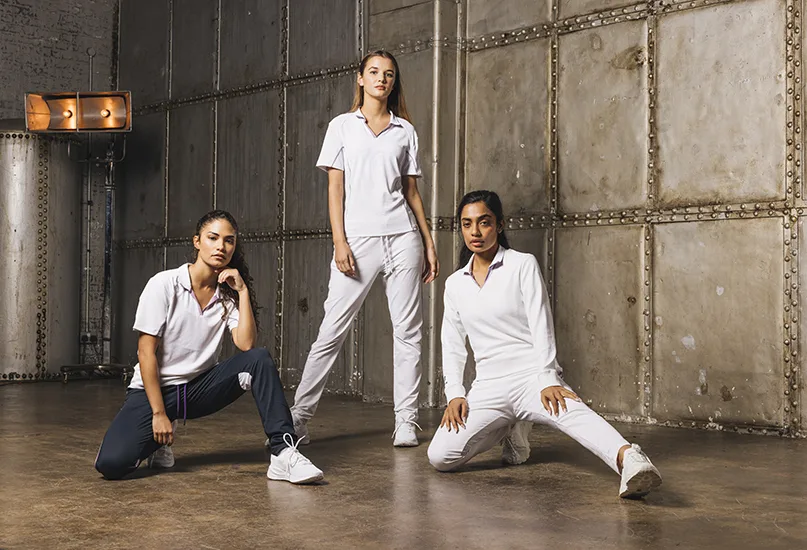
“On the fashion side, we’re aware that sportswear is having a broader cultural moment, and we think that’s a positive development for cricket. When a girl is proud to wear her kit, both on and off the pitch, it changes her relationship to the sport,” she notes.
“When a girl is proud to wear her kit, both on and off the pitch, it changes her relationship to the sport”
Cat Black, co-Founder, Maiden Cricket
ACCESS AND INCLUSION
At Maiden, the company believes inclusion has to mean something specific, or it means nothing at all.
“We’re not interested in the kind of inclusion that adds a line to a brochure. Through our work with Gateley, we’ve focused on three things: reaching schools and clubs at entry level, when girls are first encountering cricket; ensuring the kit itself is accessible, which means practical sizing, sensible price points, and products designed for real bodies; and making sure disability cricket is part of the conversation from the start, not a later add-on,” lists Cat.
There are serious programmes already running in disability cricket – the England and Wales Cricket Board (ECB) has built real infrastructure – but the kit and equipment provision hasn’t always kept pace.
Today, Maiden is actively working on that, and the company wants every girl, regardless of ability or background, to have access to a kit and community that takes her participation seriously.
“The Gateley partnership has given us the resource and reach to move that work forward faster than we could have done alone,” she finishes excitedly.
This article was produced by the editorial team at EME Outlook and published as part of the Outlook Publishing global network of B2B industry magazines.
Outlook Publishing delivers industry insights, company stories, and sector coverage across manufacturing, mining, construction, healthcare, supply chains, food production, and sustainability.
EME Outlook provides ongoing coverage of organisations and developments shaping industries across Europe and the Middle East.