



SAP has unveiled a new Autonomous Enterprise strategy designed to embed AI agents directly into enterprise workflows, combining business data, governance and automation to support more autonomous business operations.
- SAP Unveils Autonomous Enterprise Strategy at Sapphire 2026
- SAP Business AI Platform Unifies Enterprise AI, Data and Governance
- Autonomous Suite Brings AI Agents Into Core Enterprise Workflows
- Industry AI Expands Sector-Specific Enterprise Automation
- Joule Work Redefines the Enterprise User Experience
- SAP Expands AI Partnerships and Customer Investment
- In Focus: SAP and Claude
- In Focus: SAP and AWS
SAP Unveils Autonomous Enterprise Strategy at Sapphire 2026
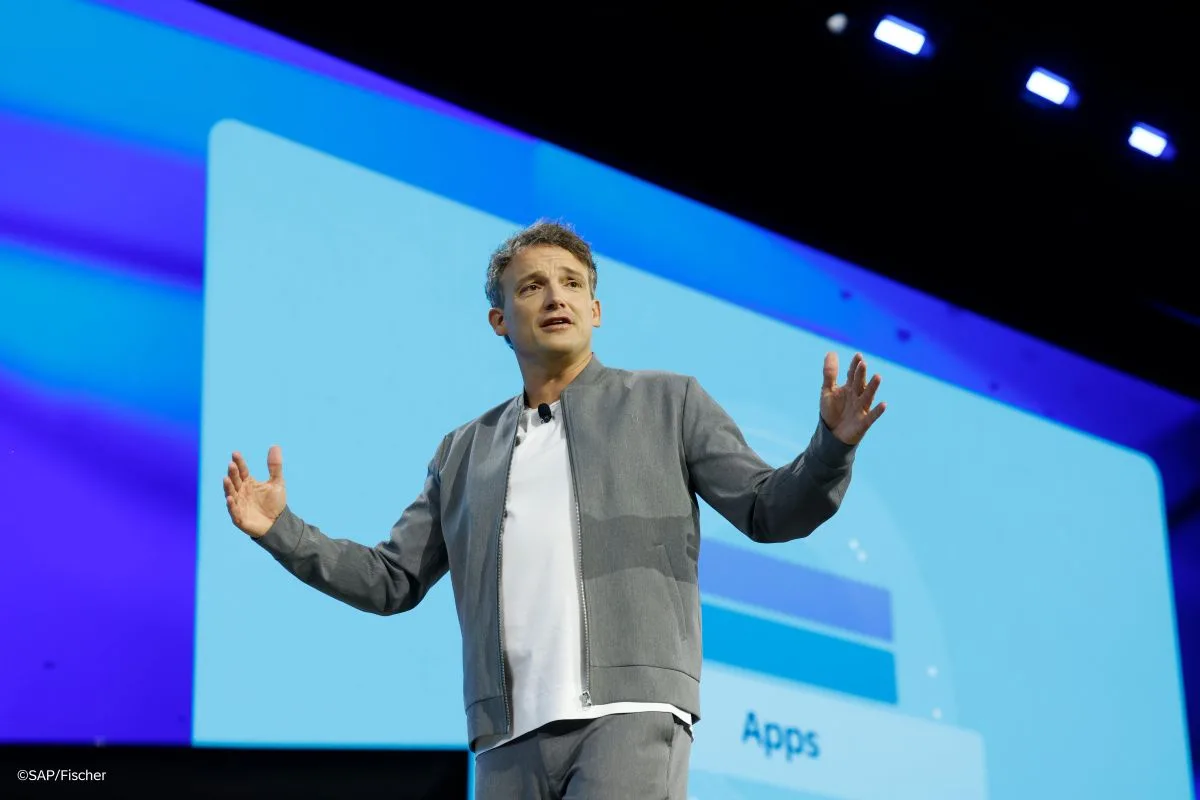
Announced at SAP Sapphire 2026, the initiative introduces the new SAP Business AI Platform alongside SAP Autonomous Suite, bringing together AI, enterprise data and workflow automation into a unified environment aimed at helping organisations automate critical business processes more securely and efficiently.
The strategy is designed to support closer collaboration between humans and AI as enterprises face growing pressure to improve productivity, accelerate decision-making and manage increasingly complex operations.
“For the mission-critical processes of our customers, ‘almost right’ just isn’t good enough,” said Christian Klein, CEO of SAP SE.
“By uniting SAP Business AI Platform with SAP Autonomous Suite, we anchor AI agents in the business processes, data and governance so they can deliver accurate, compliant and secure outcomes, unlocking new sources of revenue and meaningful cost savings.”
SAP Business AI Platform Unifies Enterprise AI, Data and Governance
At the centre of the announcement is SAP Business AI Platform, which combines SAP Business Technology Platform, SAP Business Data Cloud and SAP Business AI into a single governed environment for building and deploying enterprise AI applications and agents.
The platform is designed to provide AI systems with deeper business context through the SAP Knowledge Graph solution, which maps business entities, relationships and workflows across enterprise environments.
It introduced Joule Studio, a development environment for building AI agents, applications and agentic workflows using no-code, pro-code and AI development frameworks.
According to SAP, developers will be able to build enterprise AI applications on SAP-managed infrastructure designed to support enterprise-grade security, governance and scalability.

Autonomous Suite Brings AI Agents Into Core Enterprise Workflows
SAP also launched SAP Autonomous Suite, which introduces AI agents capable of executing business processes across finance, procurement, supply chain, human resources and customer experience functions.
The suite includes more than 50 domain-specific Joule Assistants supported by over 200 specialised AI agents designed to automate specific operational tasks.
One example highlighted was the Autonomous Close Assistant, which is intended to automate journal entries, reconciliations and error resolution to shorten financial close processes from weeks to days.
Industry AI Expands Sector-Specific Enterprise Automation
SAP also introduced Industry AI, expanding AI-driven automation into sector-specific operational workflows.
The new offering includes seven autonomous industry solutions embedding industry-specific process logic, regulatory requirements and operational data models into AI-driven workflows.
Using SAP’s Autonomous Asset Management scenario, AI agents are designed to analyse historical incident data, identify probable root causes and generate pre-filled maintenance work orders using proven remediation actions from previous cases.

Joule Work Redefines the Enterprise User Experience
SAP also introduced Joule Work, a new AI-driven interface designed to change how users interact with enterprise software.
Rather than navigating multiple applications and workflows manually, users will interact primarily through Joule, describing desired business outcomes while AI agents orchestrate workflows, data access and task execution behind the scenes.
Joule Work will proactively surface insights and automate routine processes even when users are not actively interacting with systems.
The interface will be available across desktop, mobile and voice environments spanning both SAP and non-SAP systems.
SAP Expands AI Partnerships and Customer Investment
As part of the launch, SAP announced a €100 million partner fund aimed at accelerating customer adoption of SAP-built AI assistants and agents.
The company also expanded its RISE with SAP and SAP GROW programmes to include broader access to Joule Assistants and AI capabilities.
SAP also announced strategic partnerships with a range of technology providers including Anthropic, Amazon Web Services, Google Cloud, Microsoft, NVIDIA and Palantir.
The partnerships will support areas including foundation AI models, cloud data integration, agent interoperability, sovereign AI infrastructure, workflow orchestration and ERP migration automation.
In Focus: SAP and Claude
SAP and Anthropic are expanding their partnership to integrate Anthropic’s Claude AI models into the newly launched SAP Business AI Platform, as part of SAP’s Autonomous Enterprise strategy.
Claude will connect with systems including SAP S/4HANA, SAP SuccessFactors and SAP Ariba, enabling AI-driven automation for tasks such as financial close processes, employee service requests and supplier order management.
“Our open platform means we’re tightly integrated with world-leading companies across our portfolio. Together with Anthropic, we’re building something uniquely valuable for our customers,” said Christian Klein. “The Autonomous Enterprise requires AI that understands business context and acts within the controls organisations depend on, and our partnership with Claude plays a key role in this.”
“We built Claude to support the work that helps businesses run: closing the books, rerouting delayed orders, or approving expenses, to name a few. With Claude on SAP Business AI Platform, that work happens inside the systems enterprises have already invested in, with the trust and governance SAP customers rely on,” said Daniela Amodei, co-founder and president of Anthropic.

In Focus: SAP and AWS
SAP and Amazon Web Services announced plans to launch SAP Business Data Cloud Connect for Amazon Athena, a new offering designed to provide bi-directional zero-copy integration between Amazon Athena and SAP Business Data Cloud.
The integration will allow customers to access SAP data products across AWS services including Amazon Bedrock, Amazon Quick and Amazon SageMaker without replicating or moving data. SAP said the offering is intended to support self-service analytics and AI agent development across business functions while maintaining business context and governance controls.
“The next era of business will be defined by how well organizations turn intelligence into action at scale,” said Muhammad Alam, member of the Executive Board of SAP SE, SAP Product & Engineering.
“By bringing together SAP Business Data Cloud and widely adopted AWS AI and analytics capabilities, customers can unlock the truepotential of data and AI.”

“SAP and AWS share a commitment to helping customers put their most valuable data to work,” said Ruba Borno, vice president of Global Specialists and Partners at AWS.
“By combining SAP Business Data Cloud with the AWS secure, global infrastructure and advanced AI services, organizations can unlock mission-critical SAP data and act on it at the speed and scale their business demands.”

This article was produced by the editorial team at EME Outlook and published as part of the Outlook Publishing global network of B2B industry magazines.
Outlook Publishing delivers industry insights, company stories, and sector coverage across manufacturing, mining, construction, healthcare, supply chains, food production, and sustainability.
EME Outlook provides ongoing coverage of organisations and developments shaping industries across Europe and the Middle East.