






In the era of artificial intelligence, we find out how DataVolt is pioneering the next generation of data centres with CEO, Rajit Nanda.
POWER TO THE DATA
“DataVolt was created by infrastructure leaders who understand energy is the real bottleneck in the digital age – we seek to bring power to the data, not the other way round.”
In today’s artificial intelligence (AI)-driven world, digital infrastructure requires huge amounts of computing power, energy availability, and resilient cooling systems.
For Rajit Nanda, CEO, the natural next step was to work with Vision Invest, a Saudi Arabian development and investment holding company, to create DataVolt.
“A couple of years ago, we identified a new emerging thesis in infrastructure at the intersection between power, water, and data,” explains Nanda, whose professional journey has always revolved around building and scaling transformative infrastructure.
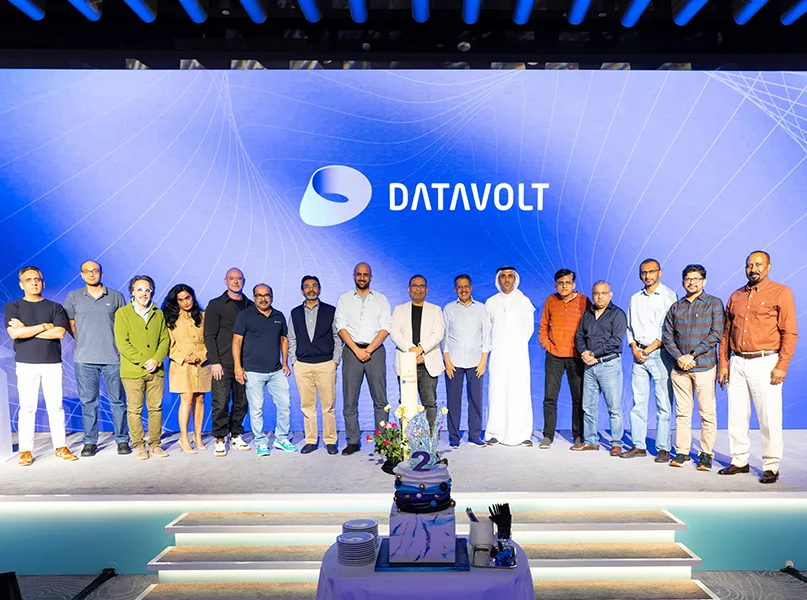
DataVolt was subsequently established in 2023, building and operating data centres across the Middle East and Central Asia.
The company has since expanded rapidly, with five office locations worldwide, circa 175 staff members, and multiple projects under development across Saudi Arabia and Uzbekistan.
“Our target customers range from hyperscalers and cloud providers to governments and AI innovators who trust us to deliver infrastructure capable of supporting tomorrow’s digital demands,” Nanda outlines.
AI-FIRST PHILOSOPHY
The data centre industry sits at the forefront of the world’s digital transformation and is currently enjoying unprecedented growth.
In the Middle East, recent predictions suggest the sector will be worth USD$7.7 billion by 2030, driven by a compound annual growth rate of 19.76 percent.
“The rise of AI, especially generative AI, has accelerated computing requirements far beyond traditional projections,” insights Nanda.
At the same time, Internet of Things (IoT) proliferation and 5G adoption are driving demand for ultra‑low‑latency, high‑density infrastructure.
This means modern data centres are no longer simple storage facilities – they are powerful, energy‑intensive ecosystems that must deliver both performance and sustainability.
“What excites me most is the shift towards AI‑first design principles. This is why we have in-housed our design and engineering team, giving us the flexibility to engineer our facilities to integrate new cooling and power technology as it matures,” Nanda explains.
“Everything from cooling architecture to campus layouts must be reimagined to support massive graphics processing unit (GPU) clusters, accelerated computing, and long‑term scalability.”
DataVolt’s AI-first philosophy means it is building data centres to be AI-ready from the outset.
Indeed, all of the company’s facilities have efficient designs and next-generation cooling systems that can cater to high-performance computing and high power density deployments.
“We are also partnering with global technology leaders, such as LG Electronics, Supermicro, and Saudi Arabia’s AI champion, HUMAIN, and leveraging the expertise of our in-house engineering team to ensure we remain at the forefront of the ever-evolving technology landscape; we are working to futureproof our facilities for the AI applications of tomorrow,” affirms Nanda.

“DataVolt was created by infrastructure leaders who understand energy is the real bottleneck in the digital age – we seek to bring power to the data, not the other way round”
Rajit Nanda, CEO, DataVolt
SHAPING THE DIGITAL FUTURE
DataVolt’s flagship project is a 1.5-gigawatt (GW) AI factory campus in Oxagon, NEOM, an advanced industrial city located on the Red Sea.
Backed by an initial USD$5 billion investment, the campus is set for its first operational phase in 2028.
“We are particularly grateful to our partners at NEOM for their support with this project, enabling us to access cost‑competitive renewable energy and benefit from fast-tracked approval processes to ensure speed to market,” Nanda acknowledges.
Located on the Red Sea, the site also offers proximity to Europe, Africa, and Asia through subsea cables, enabling DataVolt to deliver low-latency and regional connectivity to customers.
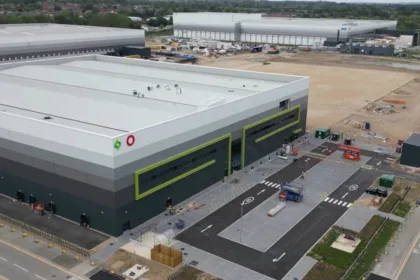
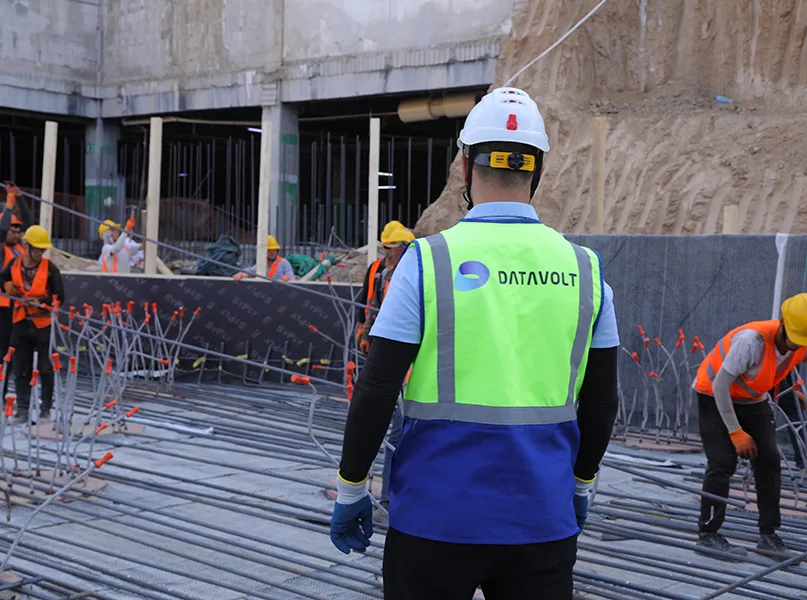
Elsewhere, the company is supporting Uzbekistan’s push towards digital modernisation with a 12-megawatt (MW) data centre in Tashkent.

Construction of the data centre is already well underway, and it is set to be ready for service at the end of this year.
“Again, we are grateful for the government support, including the Ministry for Digital Technologies, for enabling us to deliver this project at rapid pace and to international standards. We look forward to welcoming our first customers into the facility very soon,” highlights Nanda.
“By collaborating with governments, industrial leaders, and technology innovators, we are building ecosystems – not just data centres – that will shape the digital future.”
This year, DataVolt’s key focus is on progressing these projects and moving towards delivery.
“The rise of AI, especially generative AI, has accelerated computing requirements far beyond traditional projections”
Rajit Nanda, CEO, DataVolt
SUSTAINABLE INFRASTRUCTURE
DataVolt’s mission is to build the digital backbone that will power the AI era and support emerging countries to realise their digital transformation.
At the core of this mission is delivering secure, scalable, and sustainable digital infrastructure that can handle the high-performance, mission-critical computing workloads needed for the AI era.
Most significantly, DataVolt wants to do this in a way that embeds sustainability in every aspect of design – from renewable energy sourcing to water‑efficient cooling systems and optimised electrical configurations – to minimise its environmental impact.
“For example, our 1.5 GW AI factory campus in Oxagon is intended to be the region’s first truly sustainable, net zero AI infrastructure ecosystem. We will work to achieve this through dedicated renewable energy supply from the grid and green hydrogen as a secondary power source, alongside innovative seawater cooling,” Nanda reveals.
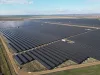
Saudi Arabia is already ahead of the game, as its renewable energy capacity reached 6,551 MW in 2024.
The government’s Vision 2030, meanwhile, aims to transition the Kingdom to a sustainable future by generating 50 percent of its power from renewable sources by 2030.
“At DataVolt, we believe this, alongside Saudi Arabia’s land availability and good connectivity to Europe and Africa, positions it well to become a global AI infrastructure hub,” affirms Nanda.
“As an operator, we also believe in the importance of building a partnership ecosystem. That means aligning with partners on green energy, technology tie-ups for liquid cooling, and advanced battery storage.
“We will continue to deepen our technology partnerships and further embed our sustainability commitments to ensure we can deliver on our promise to build the next green generation of data centre capacity. As always, we will continue to listen to our customers and support them to effectively navigate the ever-evolving landscape of the AI era,” he sets out.
SOURCING TALENT
Another key challenge the data centre industry faces is around sourcing talent, with many operators struggling to attract and retain qualified staff.
In the age of AI, the data centre jobs of tomorrow may also look very different to those of today.
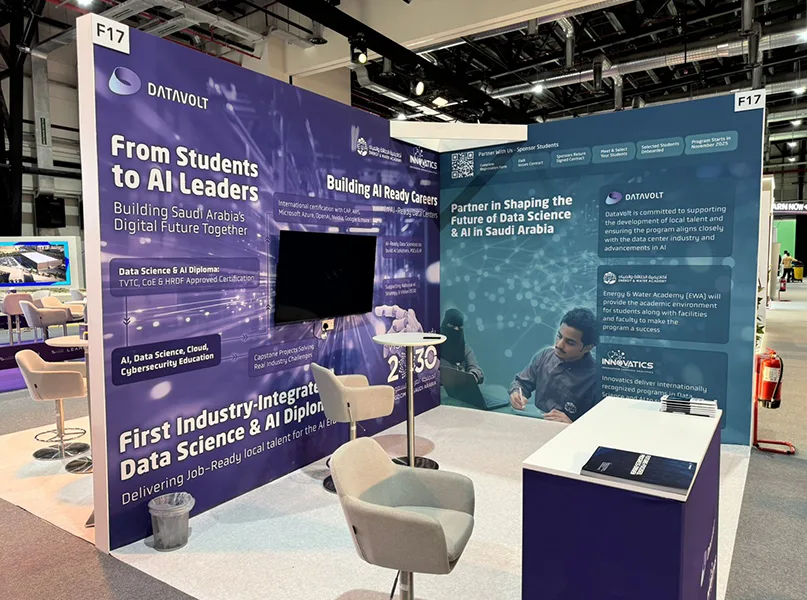
DataVolt is working to build the future talent pipeline by offering industry-integrated diplomas in key skills such as electrical and heating, ventilation, and air conditioning (HVAC) engineering, as well as AI and data science.
“All our sponsored students receive guaranteed employment with DataVolt upon graduation, and our programmes incorporate hands-on, practical skills with real-world training to ensure they can hit the ground running from day one,” informs Nanda.
Crucially, the company is partnering with domestic education institutions and training local talent in the markets where it operates, ensuring the next generation directly benefits from their country’s ongoing digital transformation.
Across the Energy and Water Academy in Saudi Arabia and Shirin Energy College in Uzbekistan, DataVolt is sponsoring a total of 120 students, with a further five in AI and data science to commence studies in the spring.
“We look forward to following their journeys as they grow into the industry’s future leaders,” Nanda proudly concludes.