



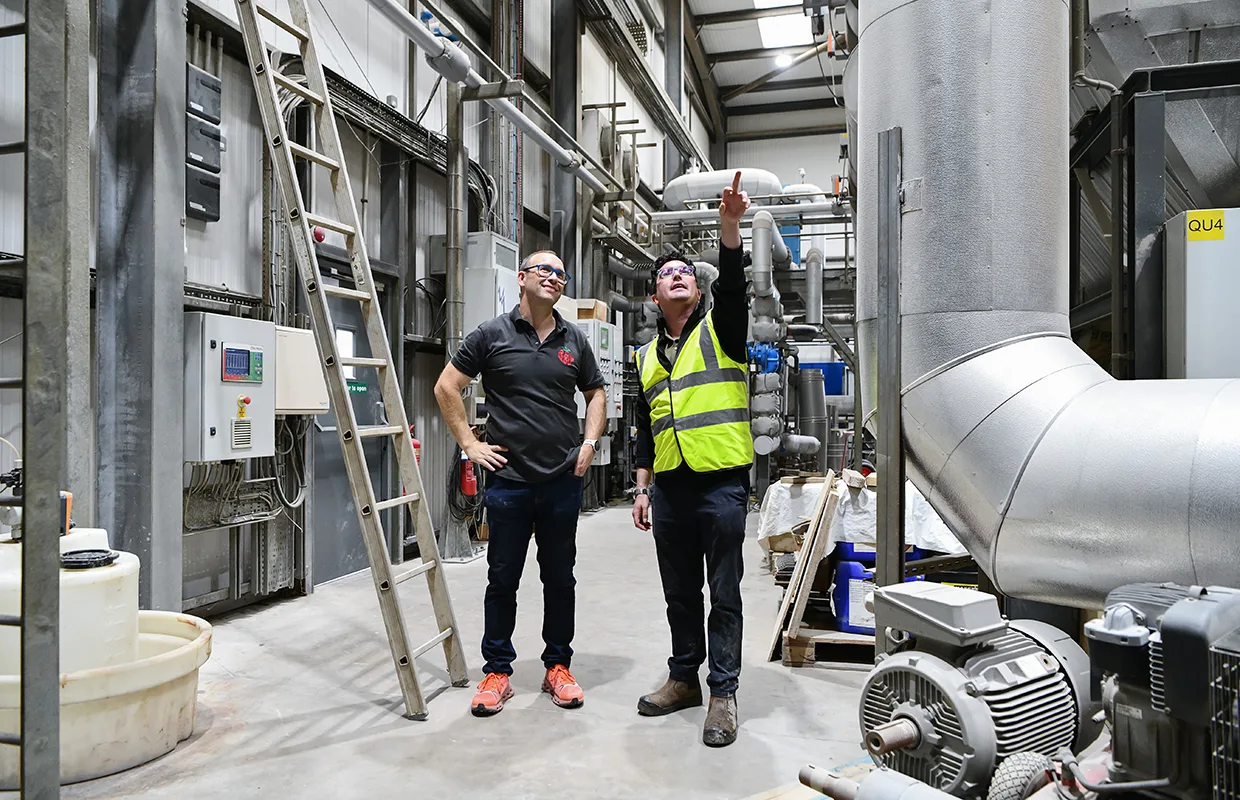
We sit down with Lisa Howkins, Sales and Marketing Director at NFU Energy, who talks us through the UK’s changing regulatory landscape, how it presents obstacles to tens of thousands of agricultural businesses, and the services the company has in place to help reduce energy costs, cut carbon emissions, and generate income from renewable sources.
THE FOREFRONT OF FARMING ENERGY EFFICIENCY
The UK energy and utilities space is at a pivotal moment, characterised by highly impactful regulations that are sending shock waves across the industry.
Amongst the sources of this changing environment lies the recent increase in non-commodity charges – a key focus in generating income to update an outdated energy grid.
Impacting a vast range of sectors, the increase in these charges is having a significant effect on the agricultural industry, particularly subsectors such as horticulture, dairy, and poultry, which are certainly energy intensive but not classified as such under the Energy and Trade Intensive Industries (ETII) scheme and are therefore missing out on major government support and targeted relief on electricity and gas costs.
“Other sectors classified as energy intensive – such as cement and manufacturing – receive discounted rates on non-commodity costs, but those within farming and agriculture don’t have the same luxury,” explains Lisa Howkins, Sales and Marketing Director at NFU Energy – one of the UK’s leading sustainable energy consultants who provides vital support to thousands of businesses across the agricultural industry and beyond.
“We’ve not only been providing support to help our customers understand what these non-commodity charges mean for their business, but also providing insights, data, and support to the National Farmers Union’s (NFU) lobbying efforts. They are working with the farming and agricultural sectors to ensure they receive critical pricing benefits under the ETII,” she adds.
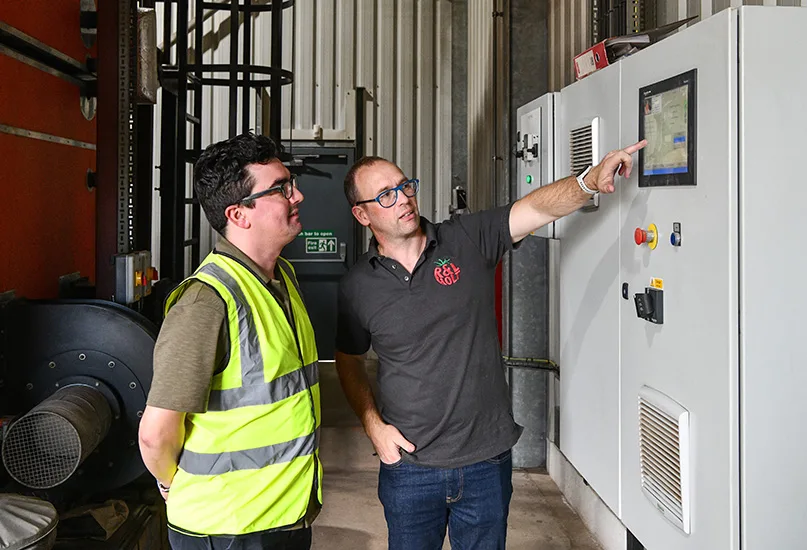
END-TO-END ENERGY SERVICES
Specialising in energy and utilities for nearly 60 years, NFU Energy has been a vital pillar in the agricultural industry’s evolving energy requirements.
“Almost a decade ago, the company was purchased outright by the NFU as part of its strategy to build a base of commercial business that could best support farming in managing its energy needs, spending, and compliance, making it more efficient,” Howkins outlines.
Today, NFU Energy supports over 22,000 farming and agricultural organisations, aiding various aspects of the energy sector.
Based in Stoneleigh, Warwickshire, on the same site as its parent company, NFU Energy’s expertise is led by 50 staff members across the energy consultancy, energy contract management, delivery, and sales and marketing spheres of the business.
The energy contract management division, for instance, supports customers with their energy and utility contracts, covering both importing from the grid and exporting back.
“We ensure they are not only getting the best rates possible, but with the best suppliers. If there are supplier issues, we manage them directly on the client’s behalf.”
Indeed, NFU Energy can offer its customers a varied suite of contracts, working with over 30 energy suppliers to find the best solutions for its clients’ needs.
Elsewhere, the company also possesses a comprehensive energy account management team who oversee some of the largest energy consumers and generators within the farming and agricultural sectors.
NFU Energy’s technical and compliance services teams, meanwhile, offer a whole host of expertise in areas including the Renewable Heat Incentive (RHI); Climate Change Agreement (CCA) scheme for horticulture, pigs, and poultry; and the Energy Savings Opportunity Scheme (ESOS), to name just a few.

“Other sectors classified as energy-intensive – such as cement and manufacturing – receive discounted rates on non-commodity costs, but those within farming and agriculture don’t have the same luxury”
Lisa Howkins, Sales and Marketing Director, NFU Energy
FACILITATING FARMING INNOVATION
Building on its foundations in agriculture, NFU Energy made the decision a few years ago to support the industry’s adjacent sectors.
“We now work with businesses across a range of areas, from food production all the way through to manufacturing and leisure, where many of our farmers diversify.
“They’re a resourceful, savvy bunch, and a lot of them go into areas like camping or glamping and golf facilities, for example, so we’ve broadened our scope,” Howkins details.
On top of this, a large number of NFU Energy’s clients are also significant energy generators themselves, with some supporting local communities and businesses with renewable energy capacity and selling excesses back to the grid.
Indeed, many farmers have recently supported notable forward-thinking projects and developments.
“We’re currently working on numerous bids and seeing lots of farmers wanting to be involved in bringing that innovation to the forefront, which is really exciting,” she reveals.
Indeed, the company is working with multiple horticulture sites to investigate innovative methods for producing the necessary heat levels to achieve continuous, year-round growth in glasshouses.
“A lot of these things rely on energy and the cost impact of that, so it’s an exciting but also challenging time in the industry.”

BOOSTING RENEWABLE ENERGY CAPACITY
With the continued aim to help clients boost their renewable energy capacity and reduce reliance on the grid, NFU Energy understands that not all its customers have the funding available to invest in renewable energy immediately.
“I’m sure all our farmers would like to look at installing solar panels, heat pumps, or wind turbines, but they don’t always have the capital expenditure to be able to do so straight away. So, we offer multiple solutions in order to make it easier,” Howkins shares.
For instance, the company has a team of trusted suppliers who can recommend the right service and product for each client before installing it.
NFU Energy also recommends clients to organisations that can provide access to funding.
For customers who want to reduce their energy spend and benefit from renewable technologies, the company also provides access to blended power purchase agreement (PPA) funders.
“We have special PPA funders who will cover the installation and maintenance costs of solar, wind, and combined heat and power systems. They will then sell the energy back to the customer at a favourable market-rate price over a period of time.
“Although it’s a longer-term contract, it gives customers the opportunity to have a reduced energy spend and know exactly where they are going to be in the long-term,” she points out.
NFU Energy also works with specialists to offer peer-to-peer modelling – matching customers who generate energy with energy consumers – thereby allowing businesses to understand exactly where their energy is coming from.
Meanwhile, for clients still considering a venture into renewable energy, the company offers fully independent feasibility studies to provide a clear understanding of what is needed and what type of energy generation best suits their requirements. The studies also highlight significant costs and return on investment.
“Conducting feasibility studies and energy audits prior to renewable projects is important as it means we can reduce eventual energy consumption on-site.
“This would make a project more efficient as it might require less solar power, for example, allowing the client to sell excess power back to the national grid.
“This also means renewable projects can generate more profit, ensuring farmers have stable enough incomes to support food security,” Howkins impassions.
“If we want to focus on protecting food security, we’ve got to ensure the impacts of the non-commodity increases are mitigated, because fundamentally, those that will be most impacted are consumers, as farmers will have to increase their prices”
Lisa Howkins, Sales and Marketing Director, NFU Energy
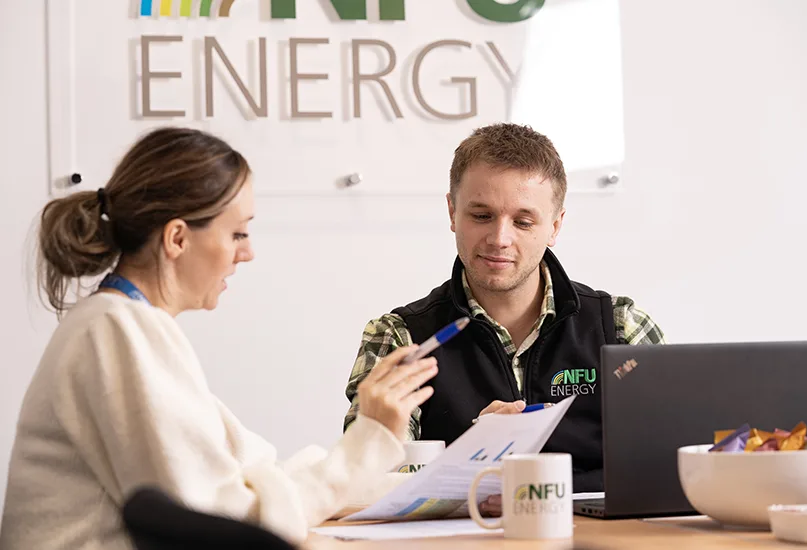
OVERCOMING KEY INDUSTRY OBSTACLES
The recent increase in non-commodity charges is impeding farmers’ stability, particularly affecting businesses in horticulture, dairy, poultry, and other energy-intensive sectors.
Non-commodity charges, which make up around 60 to 65 percent of the total energy bill, will continue to go up as a result of a number of changes coming into force.
In fact, the Transmission Network Use of System (TNUoS) charge alone is going up by around 64 percent on average in 2026-27 and is predicted to continue to rise for the next five years, which is undoubtedly going to have a huge impact on businesses.
“The increase in non-commodity charges will affect everybody from domestic users all the way through to large, energy-intensive organisations. It could be a minimal impact in terms of a slight cost increase or raise bills by hundreds of thousands dependant on the type of user,” Howkins insights.
In response, NFU Energy recently developed a TNUoS charge impact calculator, giving businesses a clear idea of how the rates will affect them.
NFU Energy has also been supporting the NFU in its lobbying efforts to include agricultural organisations under the ETII umbrella.
“If we want to focus on protecting food security, we’ve got to ensure the impacts of the non-commodity charge increases are mitigated, because fundamentally, those that will be most impacted are consumers, as farmers will have to increase their prices.
“If we are to continue to back British produce, then we need to support the farming sector in reducing non-commodity cost increases,” affirms Howkins.
More broadly, NFU Energy’s focus remains on educating customers to ensure they understand what the best contract or solution is for them, creating greater levels of efficiency.
This priority not only applies to the agricultural sectors, but also the broader business landscape, raising awareness of renewable solutions and the impacts of the non-commodity charge increases for agriculture-adjacent industries.
“From a focus point of view, it’s about ensuring our customers and the wider network are educated on what is happening in the industry, how this could affect their business, and what support is available,” Howkins insights.
“Although managing energy and making the most of the opportunities available can feel like a real challenge for many businesses, with the right guidance and support, it’s very achievable to make real gains when it comes to how you use your energy, what you spend, and your environmental impact.
“There is no out-and-out fix – it’s a multi-layering of different products and services that can have an impact,” she concludes.