



With aerial risks growing more complex and unpredictable every day, Thales Group unveils SkyDefender – a fully integrated air and missile defence system designed to unify capabilities across Europe. We speak with Hervé Dammann, Executive Vice President – Land and Air Systems and Gerben Edelijn, Former CEO of Thales Netherlands, who reflect on how integration, interoperability, and decades of innovation are converging to shape the future of European defence.
UNIFYING EUROPE’S AIR DEFENCE
As global threats evolve in terms of speed, scale, and sophistication, Europe’s defence strategies are increasingly expected to adapt at pace.
Indeed, the challenge is no longer simply a case of detection or interception, but complex coordination across multiple domains in real time.
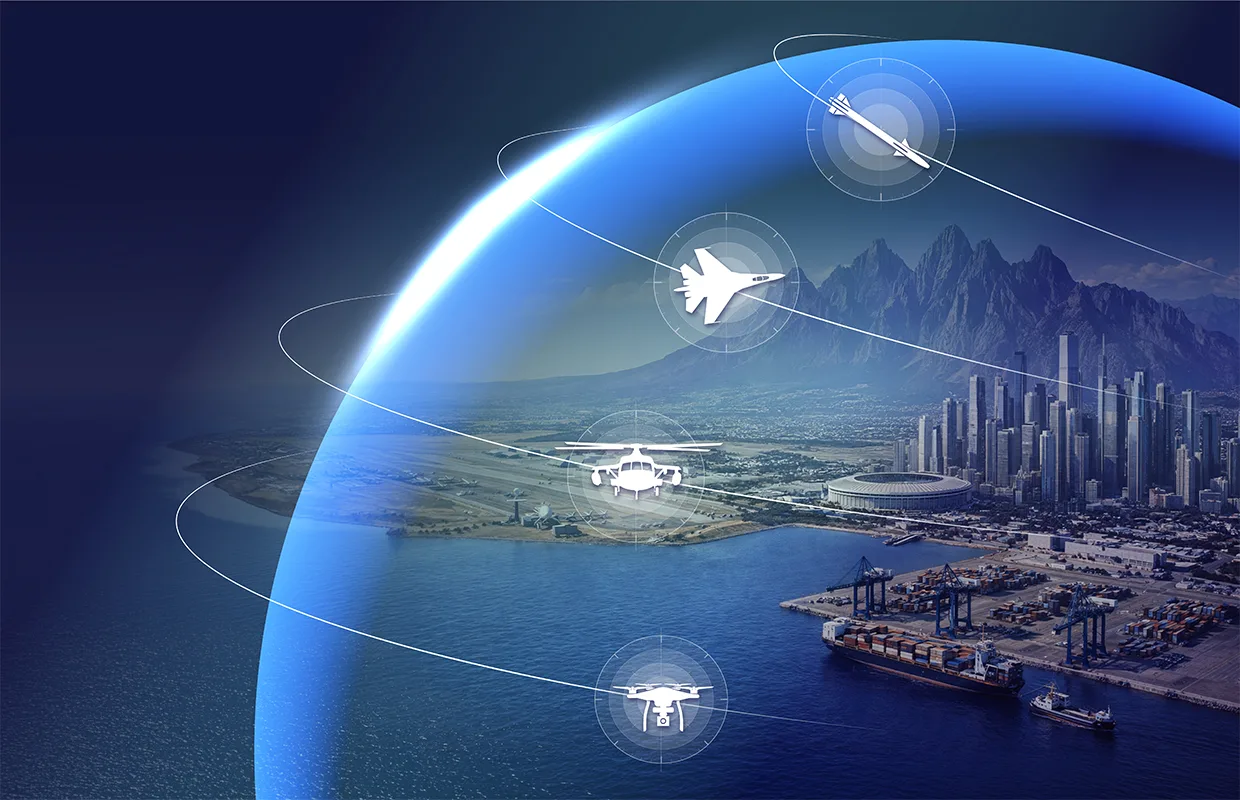
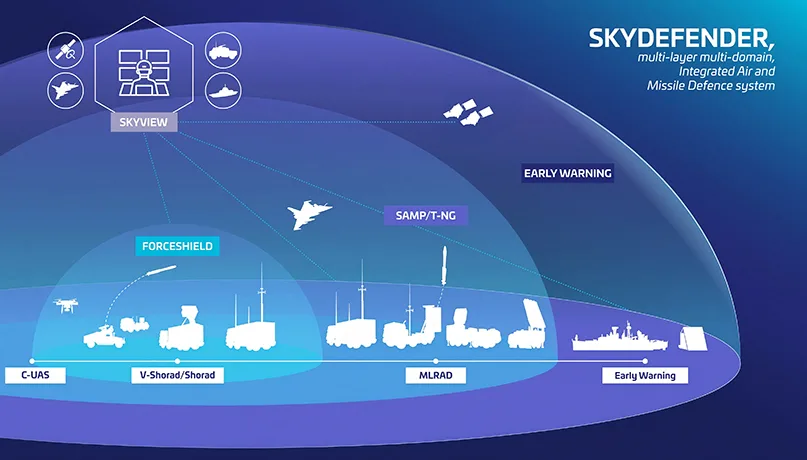
Enter SkyDefender – the new multi-layer, multi-domain defence system from Thales Group (Thales) designed to unify capabilities across land, sea, and air.
Integrating air and missile defence systems, SkyDefender reflects a significant shift towards interoperability, alongside increased sovereignty within European defence manufacturing.
What’s more, as the technologies leveraged by SkyDefender already exist within Thales’ world-class defence portfolio, the platform simply consolidates them into a single, coordinated architecture – rather than building a new system from the ground-up.
“The main driver is that we already have a number of existing capabilities that SkyDefender is able to unify,” opens Hervé Dammann, Executive Vice President – Land and Air Systems.
“Meanwhile, we’re ramping up production elsewhere in terms of both detection systems such as short and long-range surveillance and effectors,” he adds.
In parallel, SkyView – SkyDefender’s data-enabling advanced command and control platform – utilises Thales’ artificial intelligence (AI) accelerator, cortAIx, to provide AI-based decision support, speed up analysis, and optimise responses.
All elements of SkyDefender are managed through SkyView, with SkyView Alliance ensuring seamless interoperability with NATO and allied multi-domain platforms.
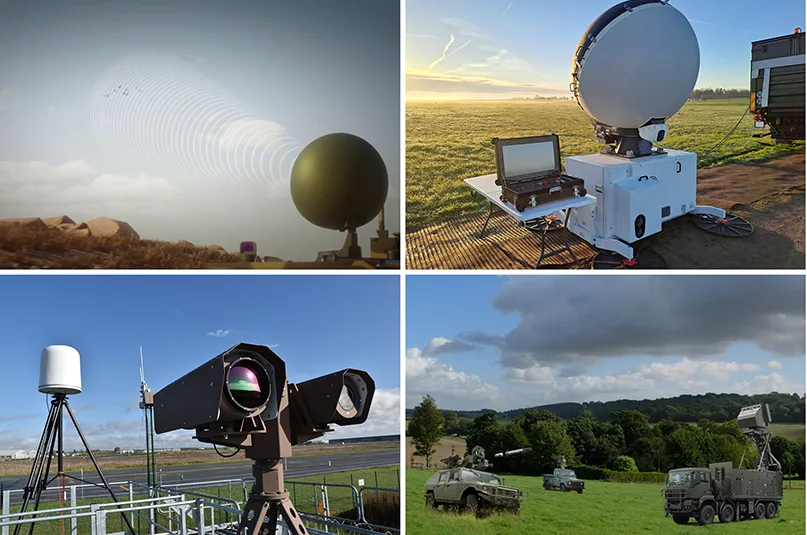
Fully compatible with a wide variety of sensors and weapon systems – including those from different manufacturers and existing legacy platforms – SkyDefender integrates easily with existing defence programmes and can be further developed as threats evolve.
“Thales has developed for a long time a wide range of defence capabilities across Europe. Now, it is time we aggregate them and demonstrate how a multi-layer system can be successfully constructed and orchestrated,” Dammann asserts.
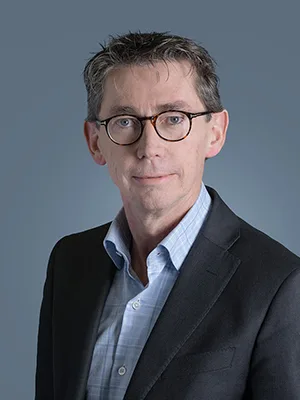
“Thales has developed for a long time a wide range of defence capabilities across Europe. Now, it is time we aggregate them and demonstrate how a multi-layer system can be successfully constructed and orchestrated”
Hervé Dammann, Executive Vice President – Land and Air Systems, Thales Group
FROM CAPABILITY TO URGENCY
As the geopolitical situation develops, both in Europe and worldwide, Thales has noticed a significant surge in demand for its products.
“Air defence remains a key domain, with ballistic missile defence becoming increasingly pressing in many countries across Europe given the current potential for threats,” Dammann points out.
In many cases, this has resulted in growing recognition across governments that their current investment in military defence is struggling to keep pace with rising demand.
“Across Europe, nations are beginning to realise they’ve likely been underinvesting in these capabilities,” he observes.
Therefore, a continent-wide call to protect critical sites, infrastructures, citizens, and nations has emerged, with SkyDefender uniquely positioned to meet these needs through its layered protection capabilities.
Combining short-range counter-drone systems with medium-range interception and long-range early warning capabilities – all coordinated through SkyView – the platform is unquestionably well equipped to respond.
IMPERATIVE INTEROPERABILITY
Through the launch of SkyDefender, Thales has solidified its position as a partner of choice for NATO when it comes to critical air defence.
This is supplemented by its capacity to integrate legacy systems, focus on AI-driven decision-making, and provide immediate, combat-driven technology.
Rather than replacing existing defence assets in NATO countries, however, SkyDefender is designed to integrate them, reflecting both the strategic realities and technical necessities of a combat environment.
“By definition, when you provide systems to NATO countries, they must be interoperable – each nation has its own systems, so interoperability is always a major requirement,” Dammann explains.
SkyDefender’s aim, therefore, is to coordinate new and existing defence systems to ensure they work smoothly together, enabling allied countries to share capabilities when protecting critical national assets.
“We recognise the capabilities that exist across Europe and beyond, and what we can provide is the ability to integrate all these assets – orchestrated by a central system capable of making the right decisions,” he insights.
DELIVERY, INTEROPERABILITY, AND PERFORMANCE
Building on Dammann’s sentiment, Gerben Edelijn, Former CEO of Thales Netherlands, is equally unequivocal about SkyDefender’s ability to integrate across existing defence capabilities – whether these are Thales’ own or components from partners.
“What is unique about SkyDefender is it can integrate components from partners – even competitors – whilst still offering an advanced working solution,” Edelijn smiles.
This capability is particularly significant in Europe, where defence ecosystems are inherently diverse.
“In the UK, you’ll need a different defence solution than you might in Denmark, the Netherlands, or France. At Thales, we don’t discriminate, we work with all of them – it’s what we do,” he states.
In this way, the company places emphasis on delivery, interoperability, and, ultimately, performance as opposed to ownership.
“In short, SkyDefender’s unique capability is integration – its ability to bring together all subsystems to deliver a complete, working solution to the end user,” Edelijn reflects.
“If we offer a solution, we guarantee it will hit the target,” he adds.
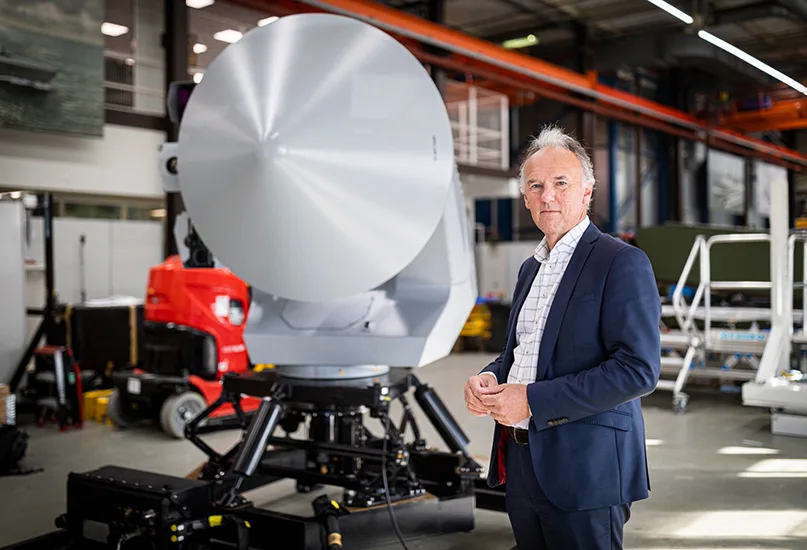
“In short, SkyDefender’s unique capability is integration – its ability to bring together all subsystems to deliver a complete, working solution to the end user”
Gerben Edelijn, Former CEO of Thales Netherlands, Thales Group
SOVREIGNITY AND COLLABORATION
Beyond its technical capabilities, SkyDefender also speaks to a broader ambition around European sovereignty in a defence context.
“The system is a strong answer for countries seeking a sovereign, European solution to protect critical sites,” Dammann outlines.
By its very nature, SkyDefender draws on capabilities developed across multiple countries – including France, the UK, Belgium, Germany, and the Netherlands – positioning it as a collaborative offering.
“It is ultimately a European solution, based on capabilities developed across the continent over a number of years, directly supporting our vision of sovereignty,” he explains.
This isn’t to say SkyDefender is expected to dominate European defence in coming years – in fact, many capabilities in the region are still provided by US companies.
At the same time, challenges remain when it comes to navigating various nations’ procurement processes and defence priorities around implementing SkyDefender – something being addressed at the European level through joint funding and development initiatives, encouraging greater alignment across borders.
“The European Commission is now providing funding for shared development, fostering cooperation and helping to ensure what we build is used by several countries – reducing both procurement and maintenance costs,” Edelijn details.
DEVELOPING A TALENT PIPELINE
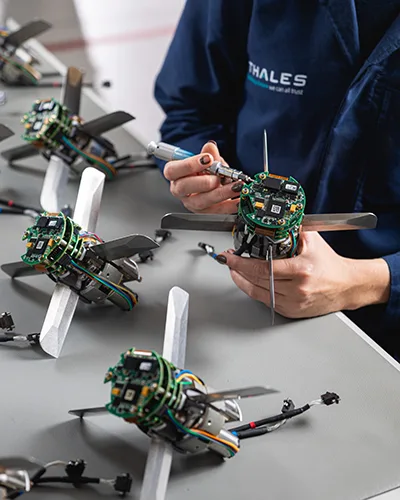
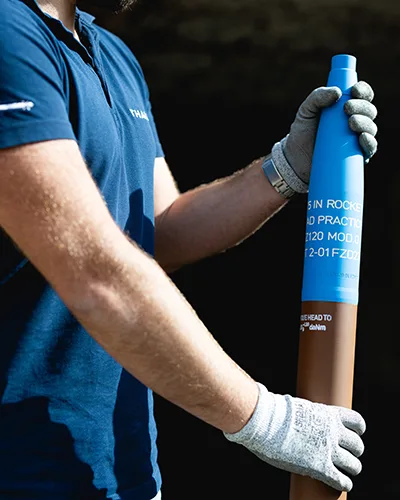
Looking ahead, Thales’ leadership in the defence manufacturing space hinges not only on its technological innovation and reputation for safety, but also on its people.
With a committed staff base who look forwards to coming into the workplace, the company has worked tirelessly to develop an environment where its people not only feel respected and rewarded but motivated to thrive.
This has resulted in a deeply talented workforce, whose knowledge, not only of Thales’ products but of the wider industry, is notable – particularly at higher levels.
“Now, we need our leaders to pass their knowledge onto the next generation so we can continue developing innovative, state-of-the-art solutions,” Edelijn reflects.
This is particularly poignant given Edelijn’s recent retirement from the company in April this year.
Following in his stead, Thales’ focus today is on attracting, developing, and retaining new talent, as well as preserving critical expertise.
Particularly as emerging technologies such as AI continue to reshape engineering disciplines, Edelijn points out how this knowledge base remains more important than ever.
“Whilst AI is developing fields like software engineering extremely fast, you still need to hone core domain knowledge in many areas. For instance, AI cannot manually construct a radar for you,” he emphasises.
Bringing together both new technologies and those developed over years, SkyDefender arrives at a moment when capability, demand, and political will are increasingly aligned.
For Thales, the message is ultimately one of readiness within a framework designed for the realities of modern defence.
“We have demonstrated SkyDefender’s capability; now, we’re ready to meet Europe’s defence demands,” Dammann confidently concludes.
This article was produced by the editorial team at EME Outlook and published as part of the Outlook Publishing global network of B2B industry magazines.
Outlook Publishing delivers industry insights, company stories, and sector coverage across manufacturing, mining, construction, healthcare, supply chains, food production, and sustainability.
EME Outlook provides ongoing coverage of organisations and developments shaping industries across Europe and the Middle East.