




We sit down with Alexander T. Müller, CEO of SK Gaming, who discusses the organisation’s important role in shaping the historic evolution of esports and its preeminent status in the world of gaming today, taking up the mantle of responsibility to safeguard a new generation of competitive gamers.
AN ENDURING ESPORTS LEGACY
Established in 1997, SK Gaming (SK) is the longest-standing active esports organisation in history and has helped to define competitive gaming for nearly three decades.
From the early PC tournaments of the late 1990s to the global arenas and professional gaming infrastructure we see today, the world of esports has certainly evolved rapidly.
At the heart of SK’s journey to success is CEO and co-Founder, Alexander T. Müller, one of esports’ earliest architects and a long-time advocate for its legitimacy as both a competitive and cultural force.
Müller also co-founded the Electronic Sports League (ESL) in 2000 and has been integral to shaping the evolution of the gaming space.
“If you go back 30 years, this was really the beginning of the PC era with advanced graphics and also the emergence of internet connectivity,” he opens.
What followed was not simply technological progression, but a fundamental cultural shift that reshaped how people connected, competed, and entertained themselves.
In its earliest form, gaming was a shared experience where friends gathered around a single PC or console to compete with one another on the same screen – a level of intimacy that changed rapidly as networks expanded.
“With the advent of local networks and internet connectivity, players could suddenly compete with people they didn’t know from all over the world,” Müller shares.
The globalisation of gaming quickly triggered a natural escalation in ambition amongst players that Müller attributes to human nature.
“It’s part of being human – competing with one another, testing your limits, and seeing who comes out on top,” he observes.
As such, though the gaming industry provided the hardware, the competitive driving force behind its growth came from the community itself.
Indeed, as gaming technology continued to mature, graphics improved, balance within games became more refined, and virtual environments stabilised.
This led to the rise of mobile gaming in the late 2000s, representing an enormous leap in accessibility.
Future advancements in the sector are expected from immersive formats such as virtual reality (VR), but for now, esports has entered what Müller describes as a settled phase – focused on professionalism and structure rather than rapid escalation.
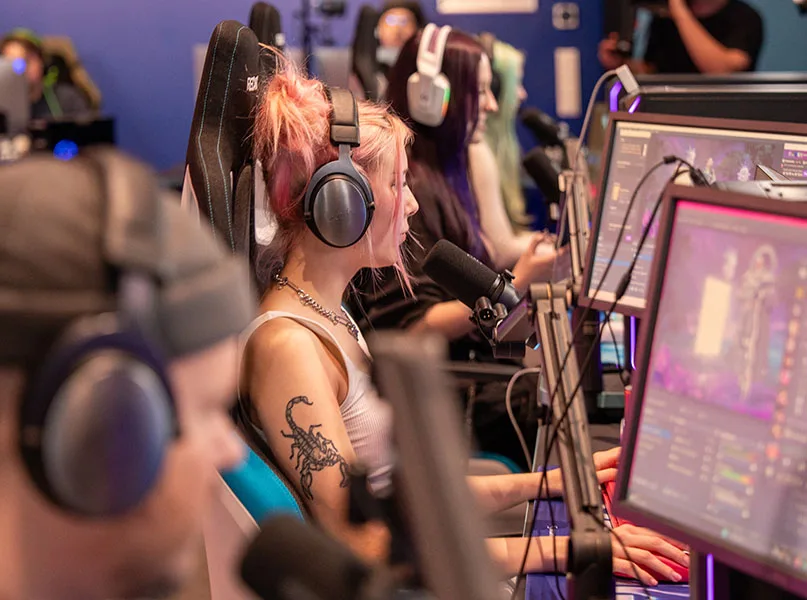
A BRIEF HISTORY
SK’s story began with a small group of friends in Oberhausen, Germany, who shared not only entrepreneurial spirit but also an intense competitive streak.
“The founding members of SK were all huge sports fans – one even played professional football in the 2. Bundesliga,” Müller informs.
Gaming became a natural extension of that sporting mindset for the group, particularly at a time when traditional media offered little that resonated with younger audiences.
“As young people, they of course played sports and board games, but the discovery of the PC opened their eyes to a whole new world,” Müller smiles.
Games such as Quake introduced the friends to true team play that required coordination, practice, and tactical discipline.
They soon emerged as Schröt Kommando – SK’s inaugural esports team – and continued developing at a grassroots level in Oberhausen.
Meanwhile, Müller was busy building esports from the institutional side in Cologne.
As co-Founder of ESL, his focus was on leagues, tournaments, and infrastructure – until a defining moment in December 1999 when he witnessed Schröt Kommando in action for the first time, competing at the Quake 3 tournament final in Duisburg.
1,300 people filled the venue, with the final’s broadcast featuring exciting live commentary.
“This was the moment I fell in love with SK. However, as the league and tournament organiser at the time, I knew I had to decide between working with the team or managing the league,” he reflects.
Ultimately, as a competitive individual himself, Müller decided to support the team, which soon made its mark as the first European team to dominate a Cyberathlete Professional League (CPL) competition, winning the CPL Pentium 4 Summer Championship in Texas, US in 2002.
The following year, SK’s Counter-Strike team won all four major international esports tournaments, which Müller describes the ‘grand slam’ of the gaming world.
“At this point, SK was well and truly on the map and became a role model for other organisations to follow in its footsteps,” he tells us.
SAFEGUARDING THE GAMING COMMUNITY
Today, SK’s headquarters in Cologne can be considered the pinnacle of modern esports in Europe.
The 2,000 square metre facility houses state-of-the-art training rooms, broadcast studios, a gym, and even an in-house chef, ensuring SK’s competitive teams are extremely well looked after.
“We understand gaming is a huge part of youth culture, and we intend to be a responsible brand within this space,” Müller prides.
In addition to being the training ground of SK’s top team, the Cologne headquarters is also a fan-facing venue.
Thanks to the organisation’s ongoing partnership with technology giant Sony, it has access to broadcast-grade cameras, lighting, sound, and display technologies.
Originally built for Berlin’s famous Center Potsdamer Platz, the facility’s ground floor also features a massive 4K crystal LED wall.
This makes it the ideal venue to host tournament broadcasts and showcase major esports events, creating a unique stadium atmosphere.
SK’s commitment to being a responsible steward for today’s esports space also manifests itself in the brand’s dedication to diversity, equity, and inclusion (DEI).
Its DEI work dates back to the early 2000s when the organisation was heavily invested in representing female Counter Strike teams, however institutional limitations around inclusivity hindered progress.
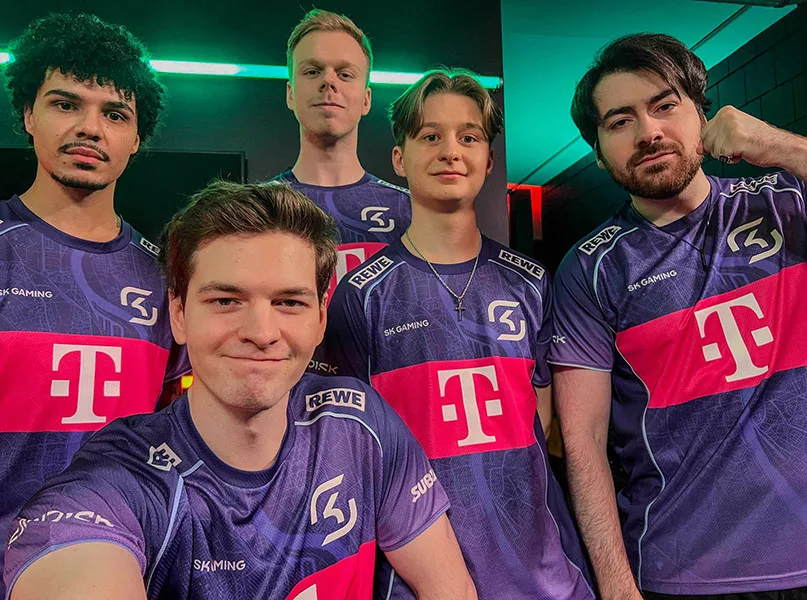
Eventually, SK shifted its focus towards more inclusive games, particularly League of Legends and Valorant, and in 2021 partnered with Deutsche Telekom on the Equal Esports initiative, creating equality for women and non-binary players in esports and gaming.
“We made it clear to Deutsche Telekom from the outset that this was not a one-year campaign, but a long-term commitment,” Müller assures.
This ongoing collaborative initiative provides professional infrastructure and safe competitive environments, with the long-term aim of mixed teams competing at the highest level.
“In esports, talent should be the only thing that matters – but first, you must build the correct environment and infrastructure to support this,” he adds.
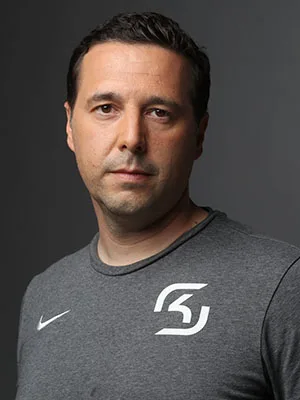
“We understand gaming is a huge part of youth culture, and we intend to be a responsible brand within this space”
Alexander T. Müller, CEO, SK Gaming
PROLIFIC PARTNERSHIPS
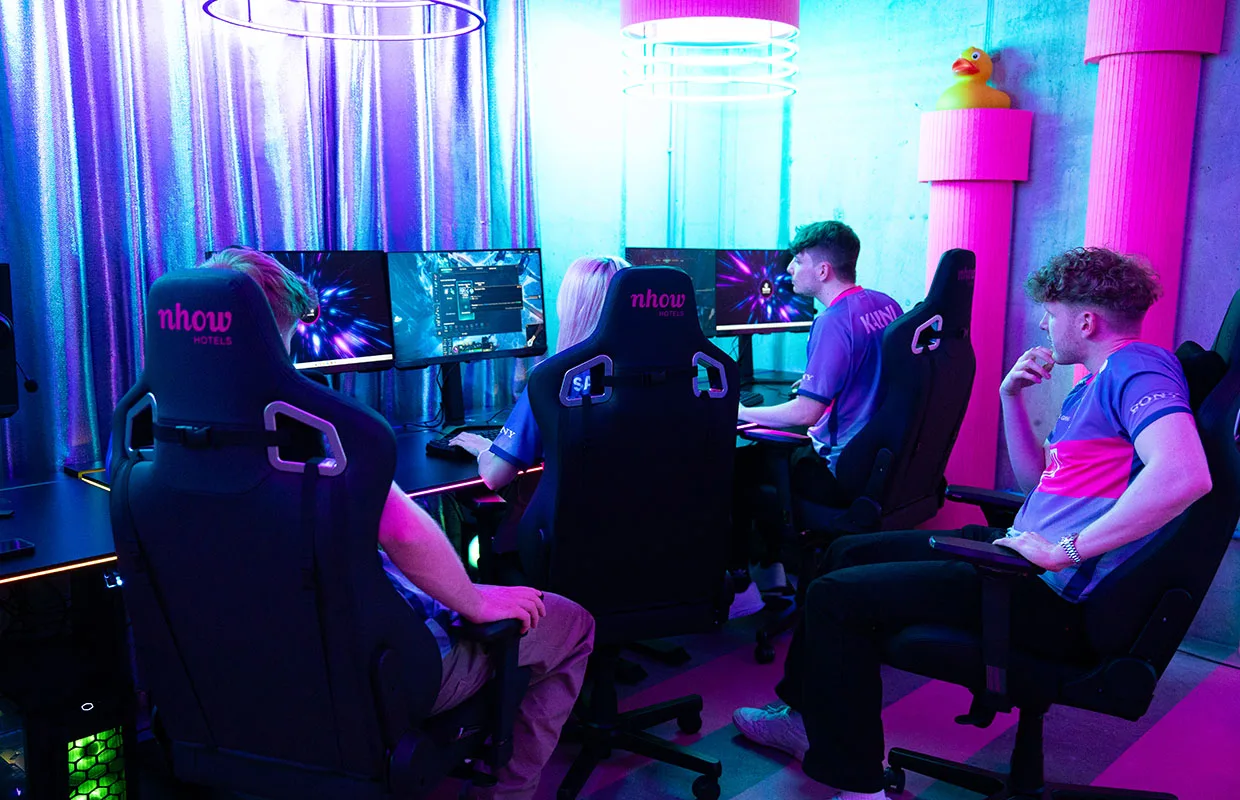
Having utilised nhow Hotels (nhow) for many years to host its players during international tournaments, SK is collaborating with the brand today to create first-choice accommodation options for streamers, content creators, and professional esports teams.
“Over the years, we’ve refined this concept with nhow, which means today we find everything we need at their hotels – PCs, gaming laptops, and fast connectivity,” Müller clarifies.
In collaboration with the hotel brand, SK has now co-designed fully equipped gaming rooms that quickly earned the highest reservation rate in the group.
“The gaming rooms are always booked up months in advance, which is a huge success!” he acclaims.
At nhow’s Berlin site, SK has also established a satellite training facility to support its League of Legends EMEA Championship team when competing in the city, whilst Cologne remains its operational base.
“As a brand, nhow understands everything we do in gaming and what players want.
“It’s a well thought-through concept that is perfectly in tune with our requirements and those of the wider gaming community,” Müller insights.
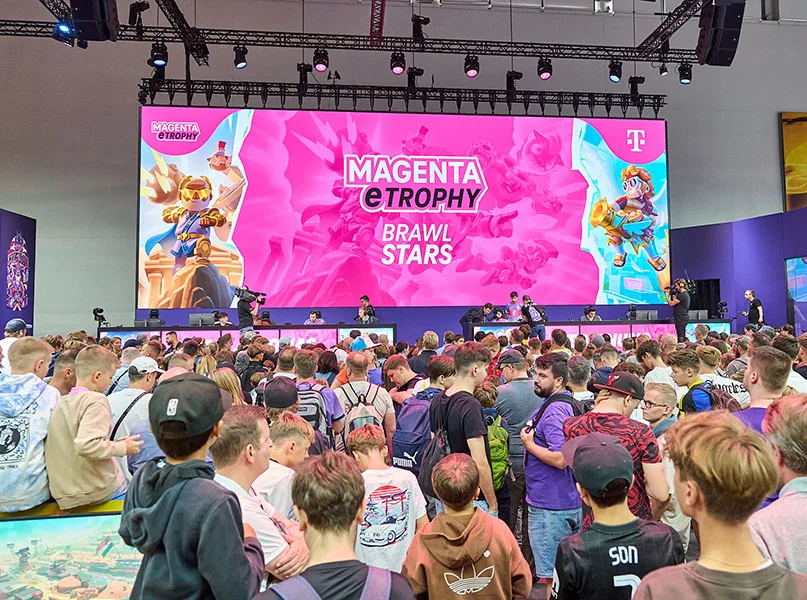
“SK has not only provided nhow with visibility, but also integrated gaming into their product.”
As a result, and based on its success in Berlin, nhow is expanding its presence further across Europe.
Elsewhere, SK has collaborated with its partner and shareholder REWE Group (REWE) to develop a new low-sugar vitamin water+ product designed to enable sustained focus for gamers.
“When competing at the highest level of esports, you don’t have the luxury of 20 to 30 minutes to ‘get in the zone’ – you must be there from the first second,” Müller sets out.
As such, many gamers have historically turned to energy drinks for a quick boost, however they are often sugary and not the healthiest option.
Nutrition, Müller explains, plays a key critical role in players’ ability to focus and perform.
Therefore, SK devised a vitamin water+ product that is refreshing, healthy, flavoursome, and provides players with the correct intake of daily supplements.
“Crucially, the sugar content also had to be low. For us to put the SK brand on something, it had to be responsible,” he emphasises.
Today, SK’s vitamin water+ is available all over Germany at REWE supermarkets, sold at just €0.99 per bottle, making it a truly accessible alternative to energy drinks for gamers and non-gamers alike.
AN IMPORTANT MILESTONE
For Müller, few moments define SK more than its victory at the ESL One Cologne 2016 Counter-Strike: Global Offensive.
“Winning a CPL world championship in 2002 and then coming back 14 years later and winning ESL One in 2016 – that’s an insane achievement in esports,” he says.
Also securing the ESL One title the following year in 2017, SK is the only team in history that’s won the tournament in back-to-back years.
With the 10-year anniversary of SK’s historic ESL One victory fast approaching in 2026, it is excited for the opportunity to celebrate its resounding success.
Indeed, the organisation plans to celebrate its legacy not by chasing another title, but by honouring the fans, players, and moments that built the brand.
“Looking back on that winning moment from 2016 still gives me goosebumps today. Some achievements get lost over time, but we don’t want ours to ever be forgotten – the 10-year anniversary is the perfect way to celebrate this.”
Müller reflects on SK’s historical ESL One win and much more in his book – released exclusively in Germany in 2025 and soon to be translated and made more widely available to international audiences.
Innovation is and always has been part of SK’s DNA and exploring new areas of development is something it is always eager to do.
Indeed, redefining the brand for 2026, the organisation is adding new artwork to enhance its storytelling abilities and overall vibe.
SK is also partnering with great new players, teams, and content creators which it is excited to work with in 2026.
Looking ahead, Müller believes esports is entering a new phase focused on stability, sustainability, and longevity, which he anticipates SK playing a crucial role in guiding as one of the biggest brands in the industry.
“We’re redefining how we communicate and want to make sure the community understands we are spearheading a movement that pushes the ecosystem into stability,” he passionately concludes.