




Continuing its journey to achieve clean electricity by 2030 and net zero emissions by 2050, the UK’s nuclear energy sector is heralding a new age of growth, bolstered by government-backed legislation.
SPOTLIGHT ON UK NUCLEAR ENERGY
As it undergoes a considerable period of renaissance, the UK’s nuclear energy landscape is moving away from an ageing fleet of traditional reactors and towards a renewed collection of large-scale plants and advanced, smaller technologies.
Having agreed upon a robust set of legally binding carbon emission reduction targets in a 2019 review of the Climate Change Act 2008, the nation is aiming for net zero greenhouse gas emissions by 2050.
An important part of achieving this goal is the current government’s commitment to building more nuclear sites to strengthen national energy security.
Currently, the country generates approximately 15 percent of its electricity from existing nuclear sites, but with the majority anticipated to come offline by 2030, an urgent call for new infrastructure has emerged.
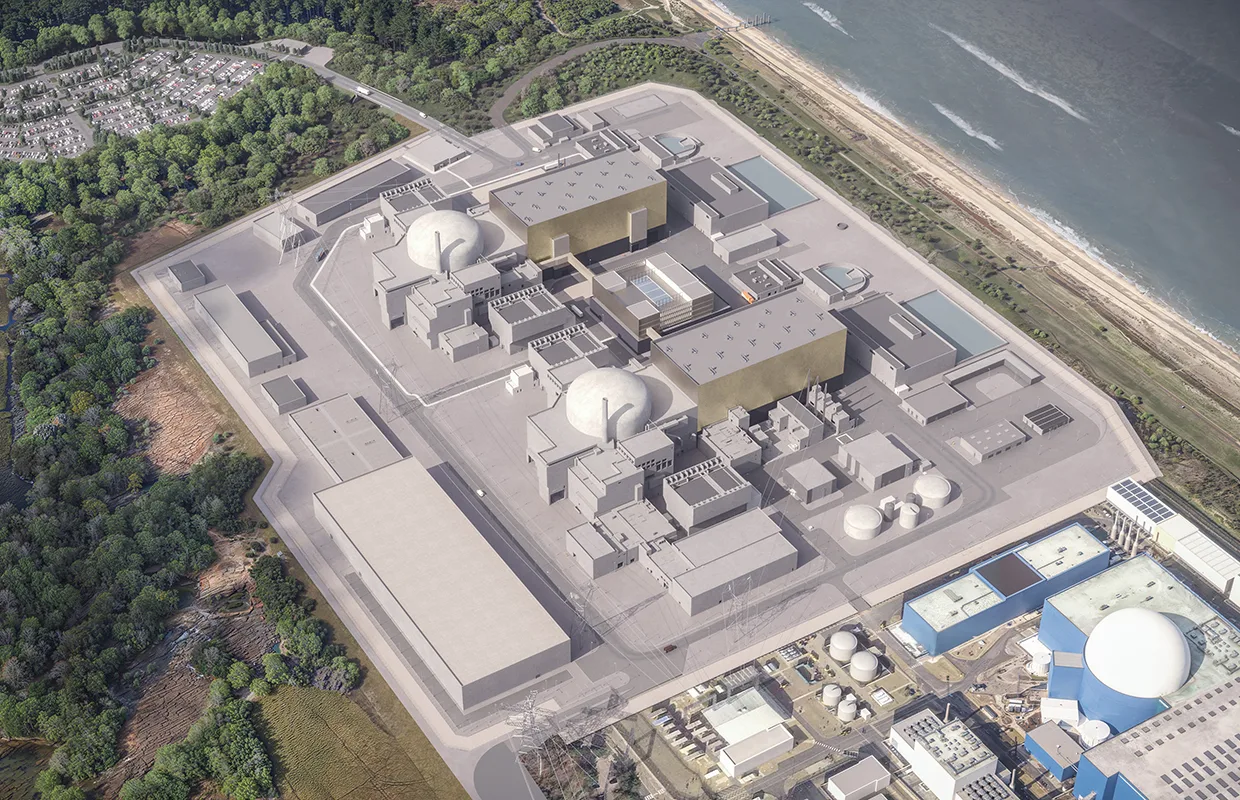
As such, major nuclear undertakings such as the 3.2 GW Hinkley Point and Sizewell C projects underway in Somerset and Suffolk, respectively, will begin to fill this gap.
In addition, the government has implemented a radical review of the overall regulatory systems surrounding nuclear energy implementation, with the recently launched EN-7 National Policy Statement accelerating the deployment of next-generation technologies such as small modular reactors (SMRs).
Elsewhere, the sector is transitioning to the Regulated Asset Base (RAB) funding model, which allows new power plants to be funded by small, regulated contributions from consumers’ energy bills during construction.
As the UK’s energy sector continues to retire ageing capacity whilst building an advanced new nuclear fleet, it is entering a period of revival characterised by government-backed legislation and technological advancement.
Q&A WITH TOM GREATREX, CEO, NUCLEAR INDUSTRY ASSOCIATION
Seeking to promote, support, and grow the UK nuclear sector as it moves towards its goal of producing all electricity from clean sources by 2030 and achieving net zero emissions by 2050, the Nuclear Industry Association is ushering in a new era of rapid expansion and government backing for SMRs and large-scale projects. Tom Greatrex, CEO, highlights the importance of nuclear energy in meeting carbon emission reduction targets.
Firstly, could you talk us through the origins and primary goals of the Nuclear Industry Association?
Tom Greatrex, CEO (TG): The Nuclear Industry Association (NIA) is a member organisation which has existed in its current format since the early 1990s, with our members making up the supply chain for the civil nuclear sector in the UK.
Its main goals are to further the interests of this sector and ensure there’s public understanding of the role nuclear plays in the energy system and more widely.
The association also seeks to maximise opportunities for companies involved in nuclear projects both nationally and internationally.
What is your take on the current UK energy landscape, and how have you seen it evolve over the course of your career?
TG: The UK energy landscape is always challenging – but challenges are also opportunities in many cases.
My involvement in energy policy has spanned almost 20 years – first as an advisor in government, then as a Member of Parliament and Shadow Minister, and in the last few years as CEO of NIA.
Throughout this period, we’ve experienced various stages of the energy transition, moving broadly away from fossil fuels and towards other forms of electricity generation.
This comes with related challenges in terms of ensuring systems work properly, the grid can transmit power, and we have enough capacity to be able to maintain supply when weather conditions aren’t optimal.
All those things are happening together right now, which have made it a very exciting industry to be involved in, and nuclear is an important part of that.
How important is nuclear energy in helping the UK meet legally binding carbon emission reduction targets?
TG: We are not going to be able to meet our net zero commitments without nuclear being an integral part of the system – I think that is beyond dispute.
There was a period when people said you could do it all with renewables, but the reality is, if you want a resilient, low-carbon system that provides energy security and is price predictable for households as well as businesses, nuclear needs to be an integral part of it.
Granted, nuclear won’t be the biggest single contributor to the future grid, but it is an integral and necessary part of it if we want to minimise our reliance on fossil fuels.

“We are not going to be able to meet our net zero commitments without nuclear being an integral part of the system – I think that is beyond dispute”
Tom Greatrex, CEO, Nuclear Industry Association
As an association that serves as a link between government and the energy industry, how extensively is NIA involved in contributing to policy and regulatory frameworks which may affect the UK’s energy landscape?
TG: We have been involved in lots of policy development in recent years, such as the establishment of Great British Energy – Nuclear in 2023, formerly Great British Nuclear (GBN), which was the result of collaboration between NIA and others across the industry.
Through Great British Energy – Nuclear, we’re looking to secure the nuclear sites we need across the country.
Then there’s the RAB model for financing nuclear projects, which recently went through a legislative process to enable a new, cost-effective funding model.
NIA was heavily involved in explaining why this legislation was required and how it could be properly carried out.
Elsewhere, many of the changes to green financing which have now been adopted by the government are things that we’ve been pushing for over a long period of time.
Currently, perhaps the most important development is the Nuclear Regulatory Taskforce’s review of nuclear regulation, led by Taskforce Lead, John Fingleton, which has now been published.
NIA was significantly involved in making the case for some of those regulatory changes and will now be instrumental in ensuring that implementation happens as effectively as possible.
Therefore, alongside other trade bodies, NIA has played an important role in making contributions across all these areas, providing the industry with a vital voice and making decisions conscientiously by taking potential impacts into full consideration, thereby reducing the rate of unintended consequences.
I think it’s important for all concerned when dealing with energy – which is both a political and technical consideration – that decisions are well-informed.
Ultimately, it’s our job to help ensure decision-makers are as informed as possible.
Can you talk about your involvement in Nuclear Week in Parliament (NWiP) 2026 and what key topics were on the agenda for Parliamentarians to discuss?
TG: Over the course of 2025, several nuclear policy decisions were made by both the previous and current governments. Today, it’s about how we deliver on those policies.
Currently, we have a broad policy framework in place, and parliamentarians are primarily interested in how this will become a reality in their constituencies – how their supply chains might be impacted and what benefits might be afforded, for example.
We discussed decisions on major nuclear projects like Sizewell C alongside updates on the first SMR and routes to market for alternative ways of building privately-led capacity, which the government recently announced – particularly in relation to artificial intelligence (AI) and data centre requirements, but also for synthetic fuel grids in sectors like aviation and maritime.
Parliamentarians are interested in all these things because they want to see real delivery happening.
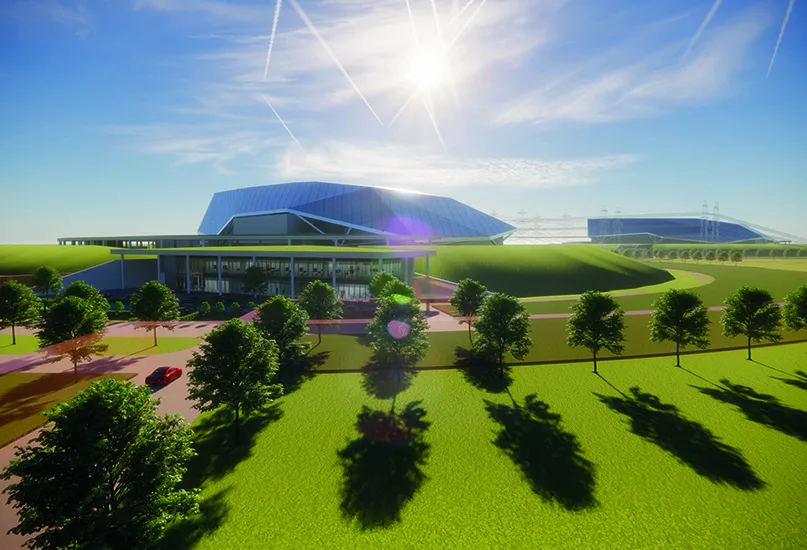
How does the recent cross-party support in Parliament for SMRs at Wylfa indicate that nuclear will be central to the UK’s economic and energy future? Equally, what socioeconomic benefits will the power station’s revival afford?
TG: The benefits of Wylfa are two-pronged. Firstly, there’s what will happen at and around the site itself in Ynys Môn, North Wales, which includes the creation of thousands of jobs – around 3,000 in the community and 8,000 across the UK during peak construction.
These are long-term career opportunities, and when the announcement was first made of Wylfa being the site for the first SMR, local colleges became awash with lots of very excited young people who would benefit.
The opportunities that accompany big infrastructure projects like this are not only in nuclear engineering or construction, but across the board, meaning local talent can stay local.
Secondly, Wylfa is North Wales’ largest industrial investment in a generation, so it’s significant both locally and regionally, but it also heralds the establishment of the first SMR in the UK – Rolls-Royce SMR – which has huge export potential.
As exports from the site will increase incrementally, the supply chain for the UK-based Rolls-Royce brand is anticipated to see major growth opportunities – initially in Europe, then around the world.
In this way, Wylfa’s local economic impact will be both tangible and immediate, and its national and international influence will escalate.
Finally, what are NIA’s key priorities for the future, and how do you see the UK’s energy landscape evolving in coming years?
TG: Our key priorities in the period ahead include ensuring the delivery of nuclear commitments happen unencumbered by external factors.
This includes implementation, regulatory reviews, and changes to the planning systems to ensure they dovetail with projects.
In parallel, we have opportunities to develop future technologies in the fuel and the supply chain sectors to increase energy security.
There is also lots of work happening in decommissioning and waste management, which isn’t as often talked about, but is vitally important and a significant part of the sector and again has export opportunities.
Together, these areas are our key priorities, and in some ways, they’re the same as those we’ve had for the last few years, but we’re now shifting from discussion to delivery, which is an exciting place to be.
As such, the UK’s energy landscape will continue to evolve into a low carbon, secure, and reliable mix over the next few years.
Other aspects of the energy system will be challenging, but as we move towards the 2030s and increasingly see nuclear deliver, it will help to stabilise the energy ecosystem and ensure we achieve the right mix for the future.
It’s a really exciting time to be involved in energy and nuclear.