



Now more than ever, London Fire Brigade must go above and beyond to protect the UK capital, which is witnessing fire risk levels like never before. Jonathan Smith, Commissioner, updates us on the Brigade’s plan of action to uphold the city’s safety and embrace technological advancements.
MEETING TOMORROW’S FIRE SERVICE NEEDS TODAY
Since speaking to London Fire Brigade (LFB) in March last year, the fire service operating environment across the city has changed at a pace the Brigade is working hard to tackle.
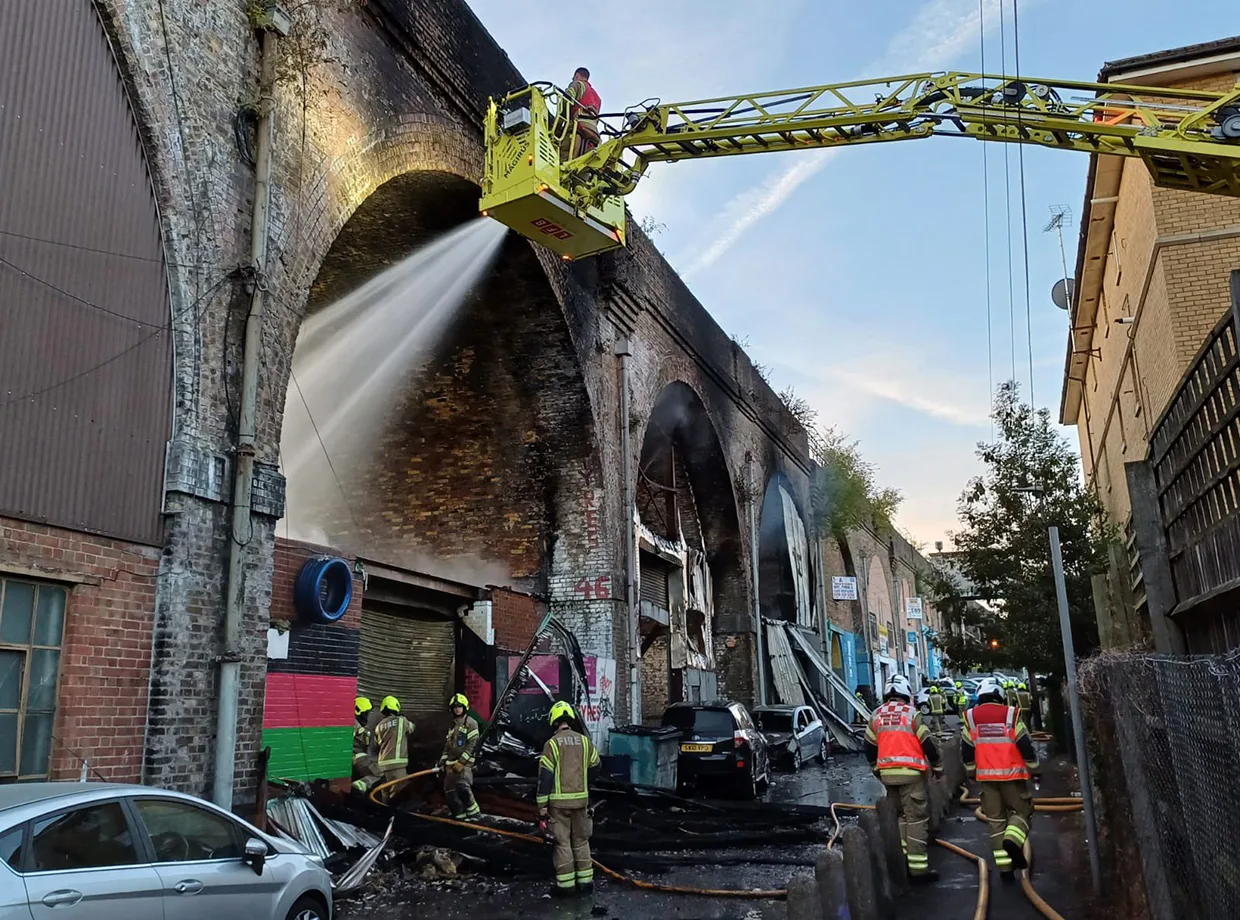
Some of the most serious risks LFB is grappling with – including summer wildfires and 200+ e-bike and e-scooter fires in 2025 – have only recently emerged as pressing issues.
“We have to adapt in response to these risks to ensure we are ready and prepared to protect Londoners,” attests Jonathan Smith, Commissioner.
In response to this evolving threat profile, the Brigade has made significant changes, including improved training and new equipment.
Yet, Smith anticipates this high-risk environment will remain for the next five to 10 years, emphasising how LFB must be relentless in how it continues to adapt and improve the provision of fire services across London.
NAVIGATING AN UNPRECEDENTED ENVIRONMENT
In the last 18 months, LFB’s firefighters have come up against an unprecedented variety of hazards, including issues in the built environment, impacts of climate change, threats from terrorism and hostile state actors, or even the pace of technological change.
These factors all point to the fact firefighting has evolved to become a highly complex and multifaceted role.
This is compounded by the fact LFB operates in a national context with pressures on public finances, causing the Brigade to think carefully about how it can operate as efficiently as possible when responding to risk.
Promoted to the role of Commissioner in July last year, Smith is hoping to overcome such unparallelled and extensive challenges by first looking inwards.
“As Commissioner, my focus is on continuing to develop a culture of high professional standards across every part of the organisation, which will underpin how we respond to the challenges we face,” he states.
Indeed, LFB strives to tackle these obstacles head on in a number of ways.
Firstly, the Brigade is being more intelligent about how it delivers fire services and improving how it deploys its resources towards areas of higher risk.
On top of this, the organisation is continuing to refine its training offerings to better reflect the scale of risk its staff face.
“We are also further developing our professional infrastructure to ensure we have modern systems that are effective and support staff who are delivering our service across communities.
“This has to be the priority as it is the only way we can keep pace with the complex and changing environment our firefighters operate in,” Smith urges.
KEEPING LONDONERS SAFE
LFB has worked diligently over the last two years to deliver significant, urgent change.
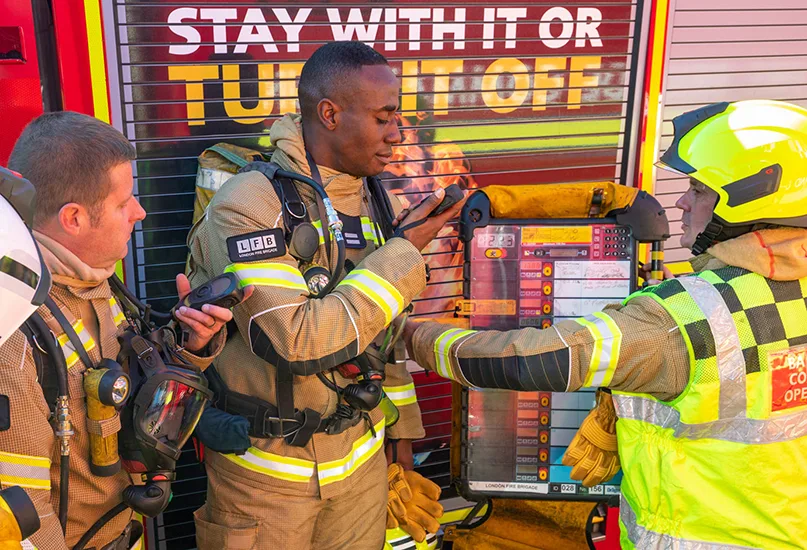
For instance, in March 2024, the organisation completed the last of the recommendations from Phase 1 of the Grenfell Tower Inquiry (GTI), which transformed how the fire service sector nationwide responds to incidents in high-rise buildings.
This included changes to firefighter training, improved processes for managing major incidents, and the introduction of innovative technology.
More broadly, LFB’s progress has also been recognised by His Majesty’s Inspectorate of Constabulary and Fire & Rescue Services (HMICFRS), which found the Brigade had improved in 10 out of 11 required areas in a report published in November 2024.
“As well as identifying that we are outstanding in how we respond to major incidents, HMICFRS also acknowledged improvements across areas like our operational response and how we understand risk, prevent fires, and make best use of our resources,” Smith says.
“We are committed to being a learning organisation and must maintain our focus on continuing to drive positive improvement.”
This will include completing recommendations directed towards LFB in Phase 2 of the GTI, which is expected to conclude later this year.
“I am pleased to say that public trust in LFB is in a good place. However, we cannot be complacent; we must continue to improve the way in which we engage and deliver our services”
Jonathan Smith, Commissioner, London Fire Brigade
TRUST AND TRANSPARENCY
Maintaining the trust of local communities across London is central to LFB’s ability to carry out its role in serving and protecting the public.
“A huge part of what we do is trying to prevent fires and other incidents from occurring in the first place,” says Smith.
“The only way to do this is by meeting our communities where they are, understanding their concerns, and providing them with the information they need to help keep themselves safe in an accessible way.”
In recent years, LFB has made real strides in the way it achieves this.
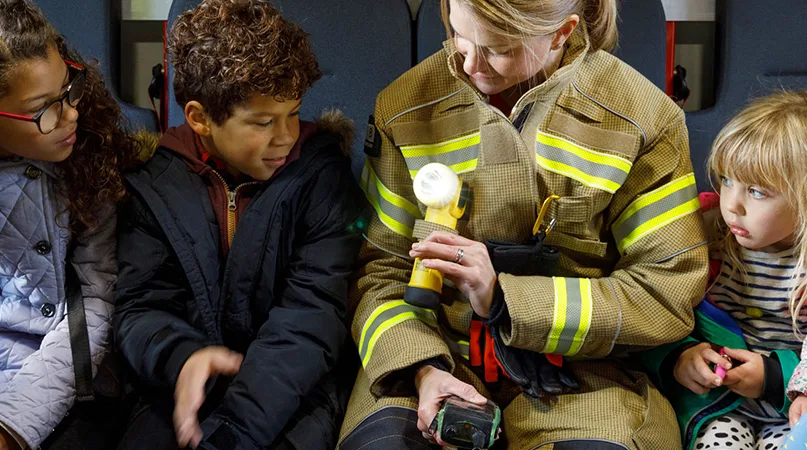
For example, it created a central team equipped with specialist community engagement experience that supports the delivery of outreach initiatives across boroughs.
LFB is likewise supported by its Community Forum, which comprises local volunteers with a diverse range of backgrounds, some of which have lived experience of fires.
“They provide us with critical scrutiny and support to improve the work we do,” Smith states.
The Brigade also measures its performance through trust gained from local communities, which it tracks using polling methods.
“I am pleased to say that public trust in LFB is in a good place. However, we cannot be complacent; we must continue to improve the way in which we engage and deliver our services,” Smith acknowledges.
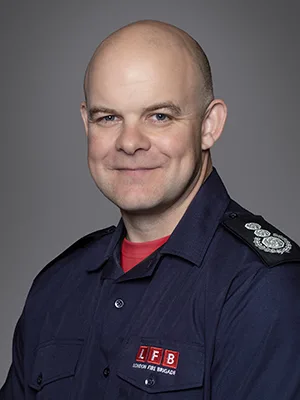
“There is still a huge amount of technological potential we are exploring, and we want to work collaboratively with colleagues across the public sector to understand how we can safety make use of AI to deliver the greatest outcomes”
Jonathan Smith, Commissioner, London Fire Brigade
SMARTER PUBLIC SERVICE
LFB stands at a pivotal moment as it considers how best to take advantage of technology to make its service more effective and efficient.
“Our use of artificial intelligence (AI) is part of this, and we have tracked productivity improvements in some areas where it is being used.
“There is still a huge amount of technological potential we are exploring, and we want to work collaboratively with colleagues across the public sector to understand how we can safely make use of AI to deliver the greatest outcomes,” Smith states.
However, improvements in technology go far beyond the realms of AI as LFB also considers what kind of kit and equipment it can introduce to best support its firefighters.
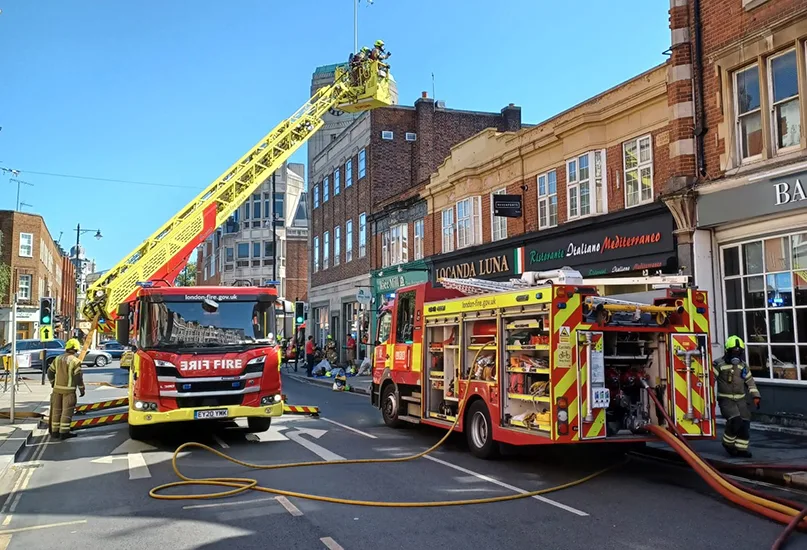
For instance, it recently rolled out a frontline drone capability which provides measurable benefits in situational awareness for incident commanders.
“That is just the start of what we might be able to use drones for in the future, and we’re continuing to explore what is currently in use by public services both in the UK and internationally.”
The Brigade is likewise reviewing the personal protective equipment (PPE) it provides to firefighters, as it strives to take advantage of the developments in protection from contaminants – a hazard which firefighters regularly face.
“The pace of technological change presents huge opportunities, and we must continuously assess what we can adopt to best equip our people to do their jobs, which will ultimately result in improved outcomes for the people of London,” Smith closes.