



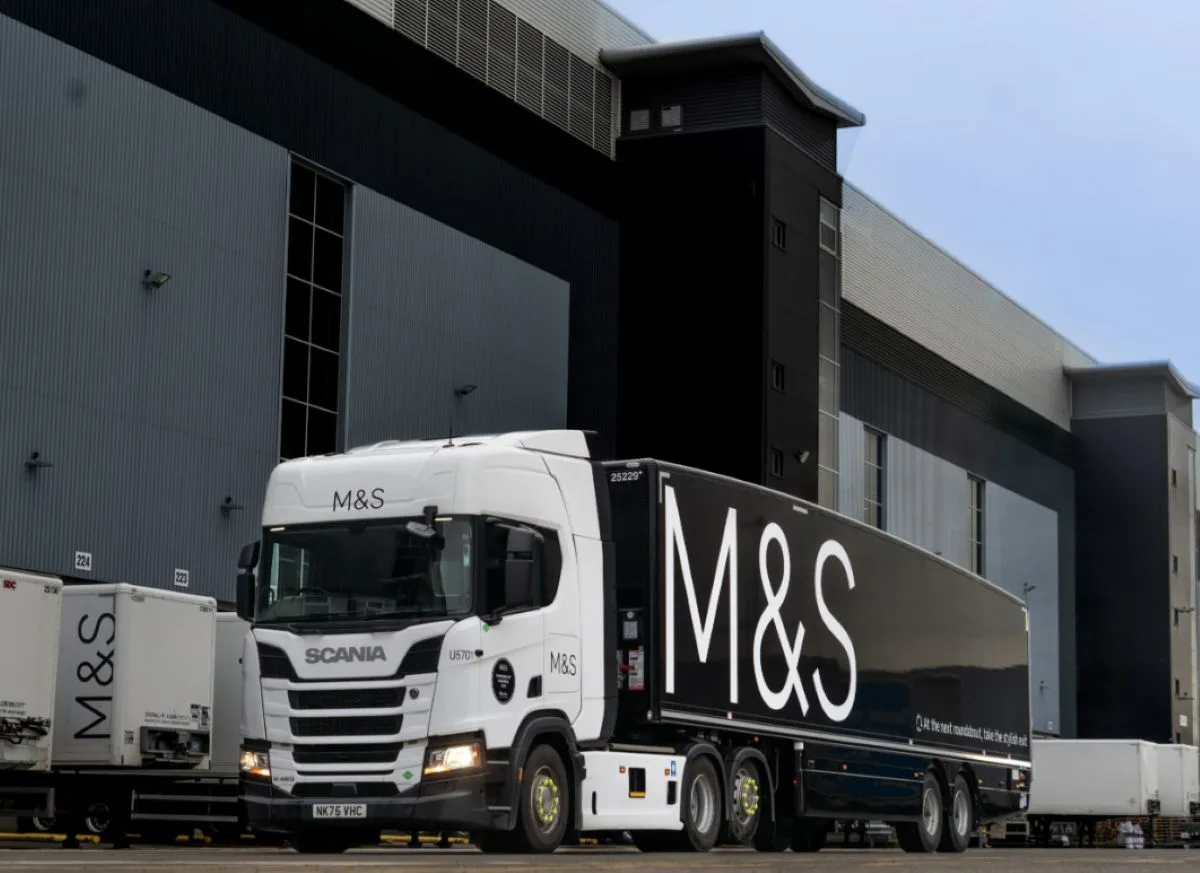
Marks & Spencer is scaling up its low-emission logistics fleet by adding biomethane-powered trucks with 85 percent lower carbon dioxide emissions, contributing to its long-term net zero ambitions.
SUSTAINABLY DRIVEN
Marks & Spencer (M&S) has announced plans to grow its fleet of lower-emission heavy goods vehicles (HGVs), with additional biomethane-powered trucks set to be introduced throughout 2026.
The move supports both its food, fashion, and home and beauty logistics operations, as the retailer continues efforts to reduce transport-related emissions.
M&S has said the new vehicles can deliver up to 85 percent lower carbon dioxide emissions compared to traditional diesel alternatives.
The store currently operates more than 210 bio-compressed natural gas (Bio-CNG) trucks, including approximately 150 Scania 4×2 and 26 Scania 6×2 vehicles. It plans to expand this number to more than 300 vehicles by the end of March 2027, further strengthening its lower-emission fleet.
BIO-CNG STRATEGY
The expansion forms part of M&S’ wider strategy to transition towards a lower-emission logistics network and achieve net zero across its value chain by 2040. Bio-CNG, produced from renewable waste sources such as food waste and agricultural by-products, has been identified as a key solution in this transition.
To support the rollout, M&S has entered into a long-term agreement with CNG Fuels to install mobile refuelling stations at its distribution centres. These facilities will provide sufficient daily capacity to refuel more than 300 trucks, complementing CNG Fuels’ existing UK-wide network of stations, which is set to expand significantly in the coming years.
“Moving to lower-carbon logistics with reduced dependency on diesel and the increased use of new technologies and lower carbon fuels is key to achieving our Plan A Net Zero ambitions,” comments Julian Bailey, Transport Director at M&S.
“We trialled a range of technologies and have chosen Bio-CNG as a key solution for decarbonising our logistics fleet as it is a proven, flexible, and cost-efficient fuel supported by mature infrastructure.”
INDUSTRY COLLABORATION
M&S’ initiative is additionally supported through its partnership with vehicle manufacturer Scania, contributing to the development of more sustainable transport solutions.
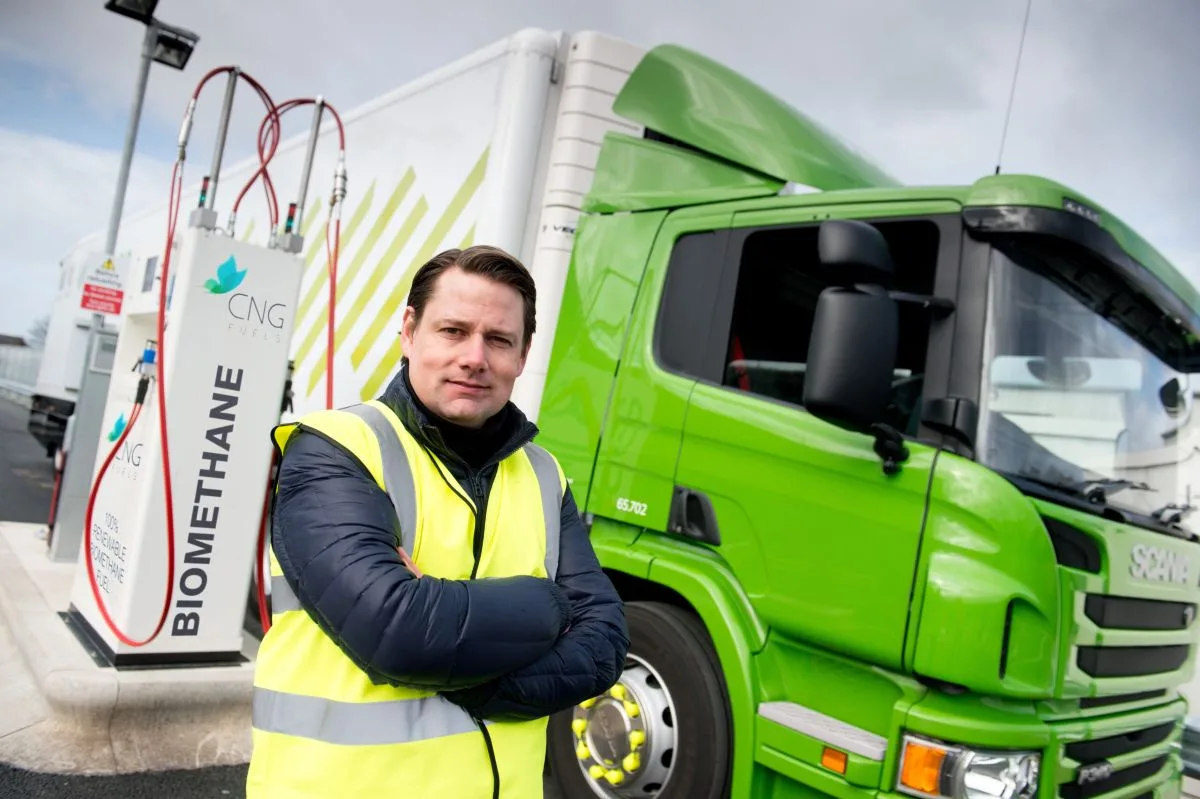
Philip Fjeld, CEO and Co-founder of ReFuels, comments: “We are proud to support M&S as they shift towards more sustainable logistics. Biomethane is a cost-efficient here-and-now solution to decarbonise road transport, and our Mobile Refuelling Stations help large fleets decarbonise quickly.
“This agreement underscores the rapid growth in demand from major UK retailers and distributors.”
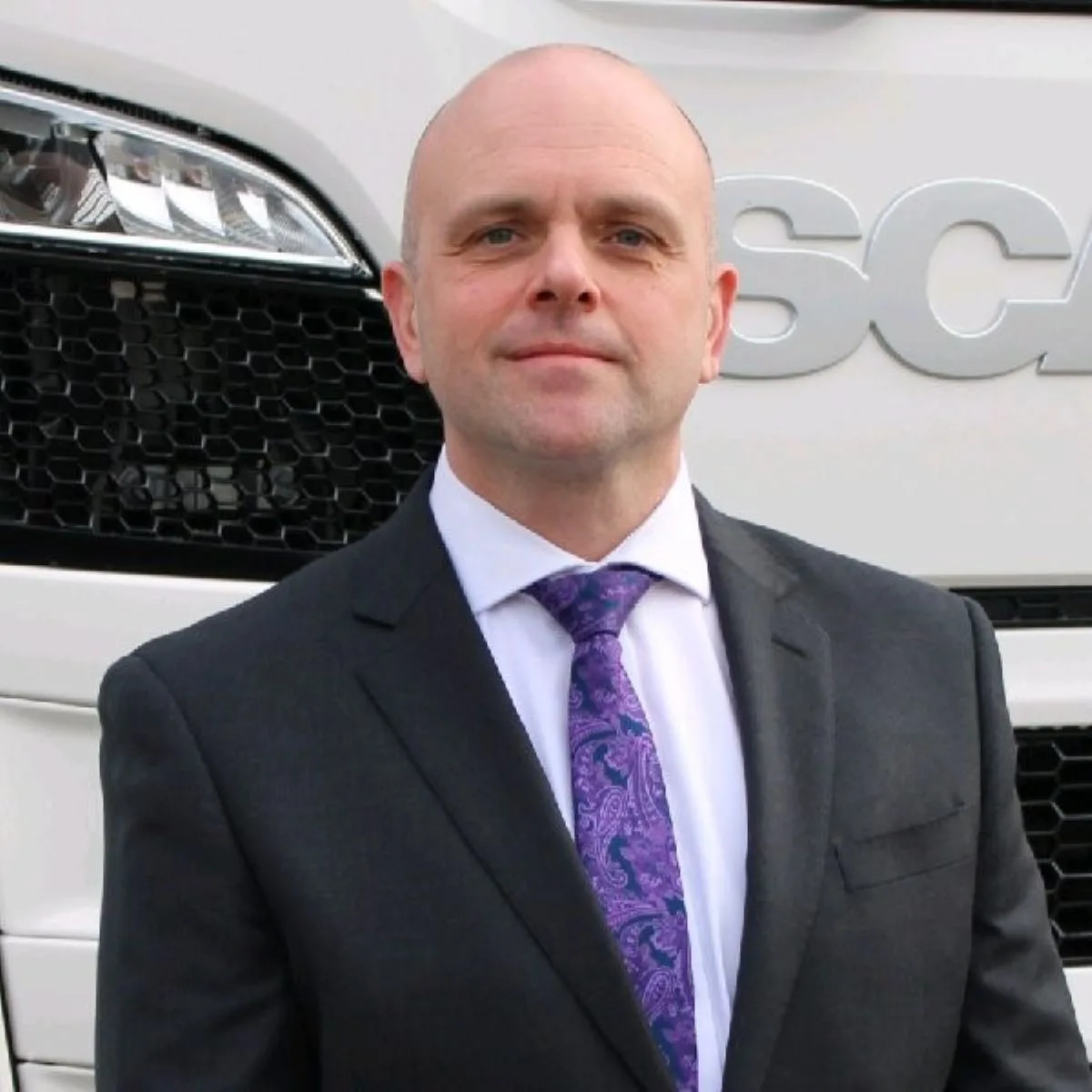
Simon Gray, Specialist Sales Manager at Scania UK, says: “We are pleased to be working in collaboration with M&S, and to be playing an active role in helping them reach their Plan A Net Zero ambitions.
“At Scania, we are driving the shift towards sustainable transport systems that are better for business, society, and the environment. By working together with our partners, we can develop transport solutions that reduce our carbon footprints, while making sure that we continue to meet the demands of a growing population – profitably and sustainably
“It is a testament to the vision and the shared values between the three companies that we can work side-by-side. And this is just the beginning. We are very excited to be in partnership with M&S and CNG Fuels, and we can’t wait to see how this partnership grows and evolves in the future.”
Alongside its biomethane fleet, M&S is also investing in electric vehicles, with 13 battery electric HGVs and five battery electric rigid trucks already operating across its distribution network.
This article was produced by the editorial team at EME Outlook and published as part of the Outlook Publishing global network of B2B industry magazines.
Outlook Publishing delivers industry insights, company stories, and sector coverage across manufacturing, mining, construction, healthcare, supply chains, food production, and sustainability.
EME Outlook provides ongoing coverage of organisations and developments shaping industries across Europe and the Middle East.