



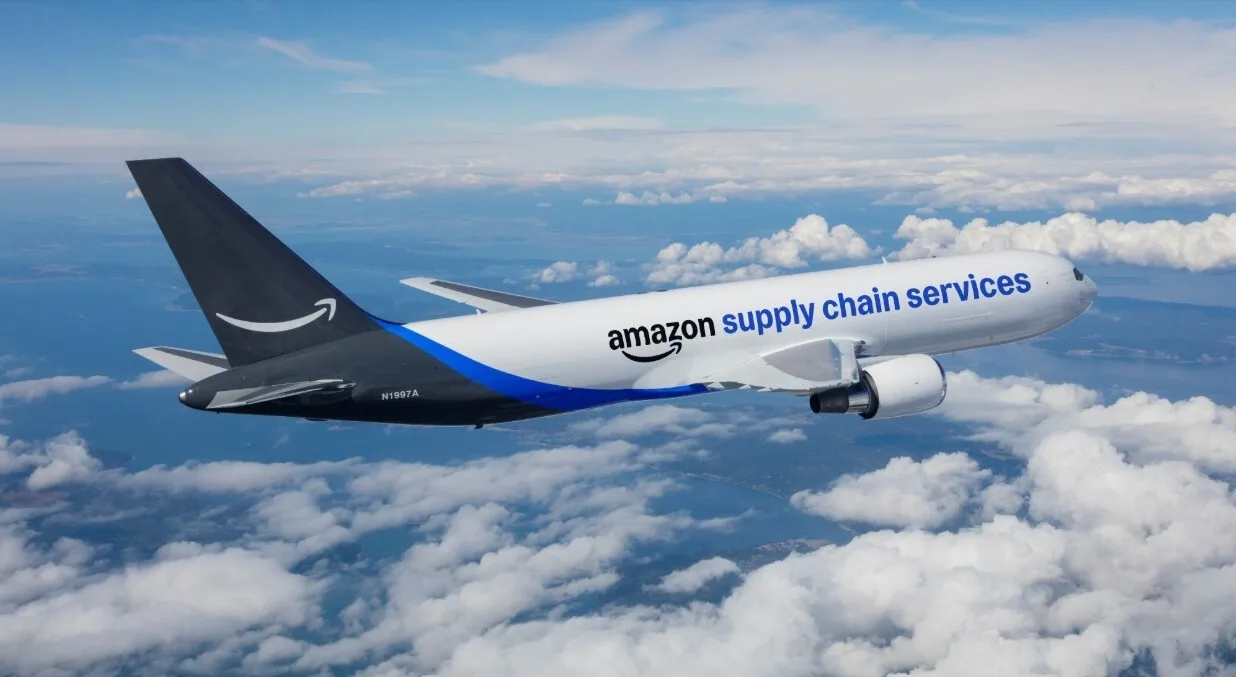
Amazon has launched Amazon Supply Chain Services (ASCS), extending its end-to-end logistics infrastructure to businesses beyond its marketplace, enabling companies to manage freight, inventory, and delivery through a single integrated network.
Key Developments
- Launch of Amazon Supply Chain Services (ASCS) for businesses of all sizes
- End-to-end capabilities spanning freight, warehousing, fulfilment, and parcel delivery
- Adoption by major enterprises including Procter & Gamble, 3M, Lands’ End, and American Eagle
- Built on infrastructure already moving billions of items annually
- Centralised platform enabling multi-channel inventory and distribution management
- Amazon Commercialises Its Internal Supply Chain Infrastructure
Expansion Beyond Amazon’s Own Retail Ecosystem
Amazon is expanding its logistics capabilities beyond its own retail ecosystem with the launch of Amazon Supply Chain Services (ASCS), effectively positioning its supply chain infrastructure as a third-party service for enterprise customers.
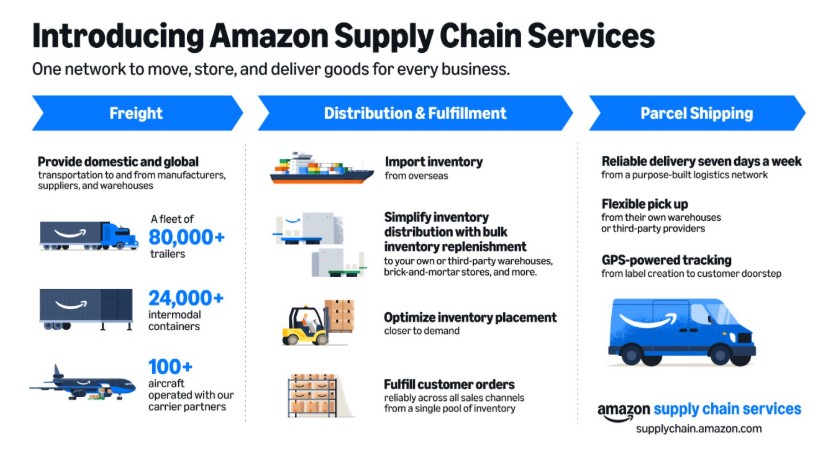
The offering opens access to Amazon’s integrated network spanning global freight, domestic distribution, fulfilment operations, and last-mile delivery. While these capabilities have long supported Amazon’s retail operations and third-party sellers, ASCS marks a shift toward offering the full stack as a unified service to businesses across sectors including manufacturing, healthcare, automotive, and retail.
“Amazon is bringing the infrastructure, intelligence, and scale of its supply chain services—proven over decades—to businesses everywhere, much like Amazon Web Services did for cloud computing,” said Peter Larsen, vice president of Amazon Supply Chain Services.
“Supply chain wasn’t just a function at Amazon—it was core to providing an exceptional shopping experience. Our differentiator. The reason we could offer fast, dependable delivery that nobody else could. And with the launch of ASCS, we’re confident we can give any other business access to the same cost efficiency, reliability, and speed that we’ve built for Amazon customers.”
From Fragmented Logistics to Integrated Flow
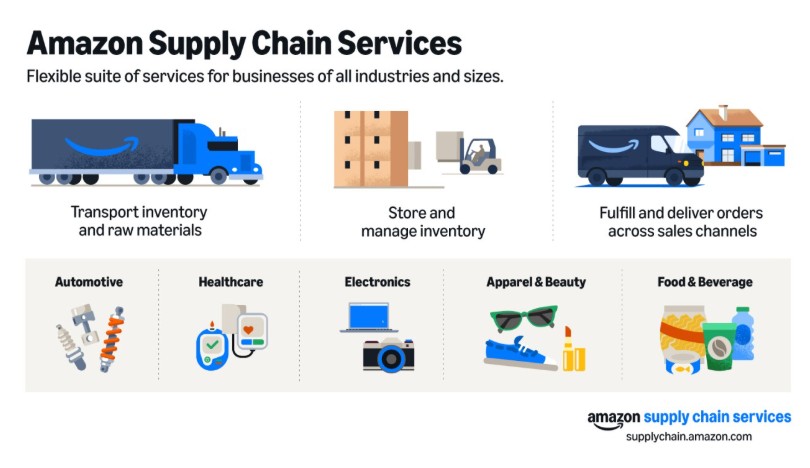
The ASCS model addresses a persistent challenge in supply chain management: fragmentation across multiple providers. Traditionally, businesses rely on separate partners for international freight, customs clearance, warehousing, and last-mile delivery, often resulting in limited visibility and operational inefficiencies.
Amazon’s approach consolidates these functions into a single network. Businesses can move goods from origin to end customer through one system, supported by unified inventory management and end-to-end tracking. This includes upstream activities such as transporting raw materials, as well as downstream distribution across multiple sales channels.
The model builds on Amazon’s experience supporting its seller ecosystem, where more than 80 billion units have been shipped through Fulfilment by Amazon (FBA) since 2006. Sellers using integrated logistics services have reported measurable commercial benefits, including increased sales performance and reduced operational complexity.
Enterprise Adoption Signals Broader Use Cases
Early adopters demonstrate how ASCS can be deployed across different supply chain scenarios.
Procter & Gamble is using Amazon’s freight services to transport raw materials and distribute finished goods across its network, while 3M is leveraging the platform to move products from manufacturing sites to global distribution centres. Lands’ End is using Amazon’s unified inventory model to support multi-channel fulfilment, and American Eagle Outfitters is deploying Amazon’s parcel network for direct-to-consumer delivery.
“Amazon is one of our key ecommerce partners, and we’re excited to leverage Amazon Supply Chain Services to position inventory closer to customers so we can reach them even faster,” said Andrew McLean, CEO of Lands’ End.
“This consistency is central to our solutions-based approach, enabling us to serve customers with confidence and agility, especially during peak seasons.”
Core Capabilities Across the Supply Chain Stack
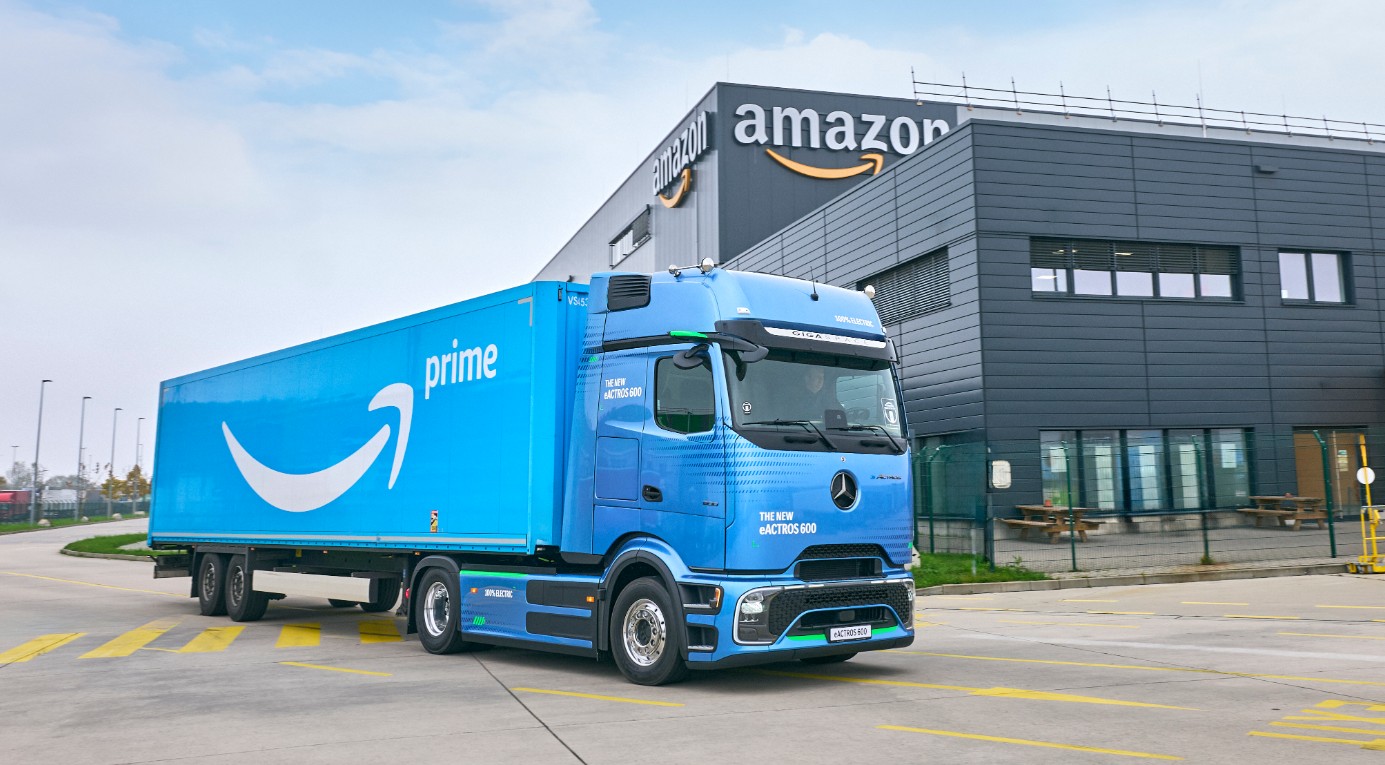
Amazon’s freight network spans ocean, air, ground, and rail, offering capacity options for both time-sensitive and standard shipments, alongside customs clearance and shipment visibility. Its distribution and fulfilment capabilities allow businesses to store inventory within Amazon’s network and dynamically position stock closer to demand, enabling faster and more accurate order fulfillment across digital and physical channels.
The parcel delivery layer supports shipments originating from both Amazon facilities and external warehouses, with delivery speeds typically ranging from two to five days and operations running seven days a week. All services are accessible through a centralised console, enabling businesses to manage logistics workflows from a single interface.
“Amazon has added value at every stage of our supply chain from cross-border logistics to warehouse storage and parcel shipping,” said Todd Bairstow, founder of Finer Form. “We’ve been able to save money, eliminate operational complexity, and it’s given us more time to focus on what matters: building our brand. Honestly, there wouldn’t be a Finer Form without Amazon.”