



Building on evidence that rainforests can be regenerated, IKEA has launched the Living Rainforest Restoration Lab to support global biodiversity conservation and climate change mitigation.
SUPPORTING GLOBAL BIODIVERSITY
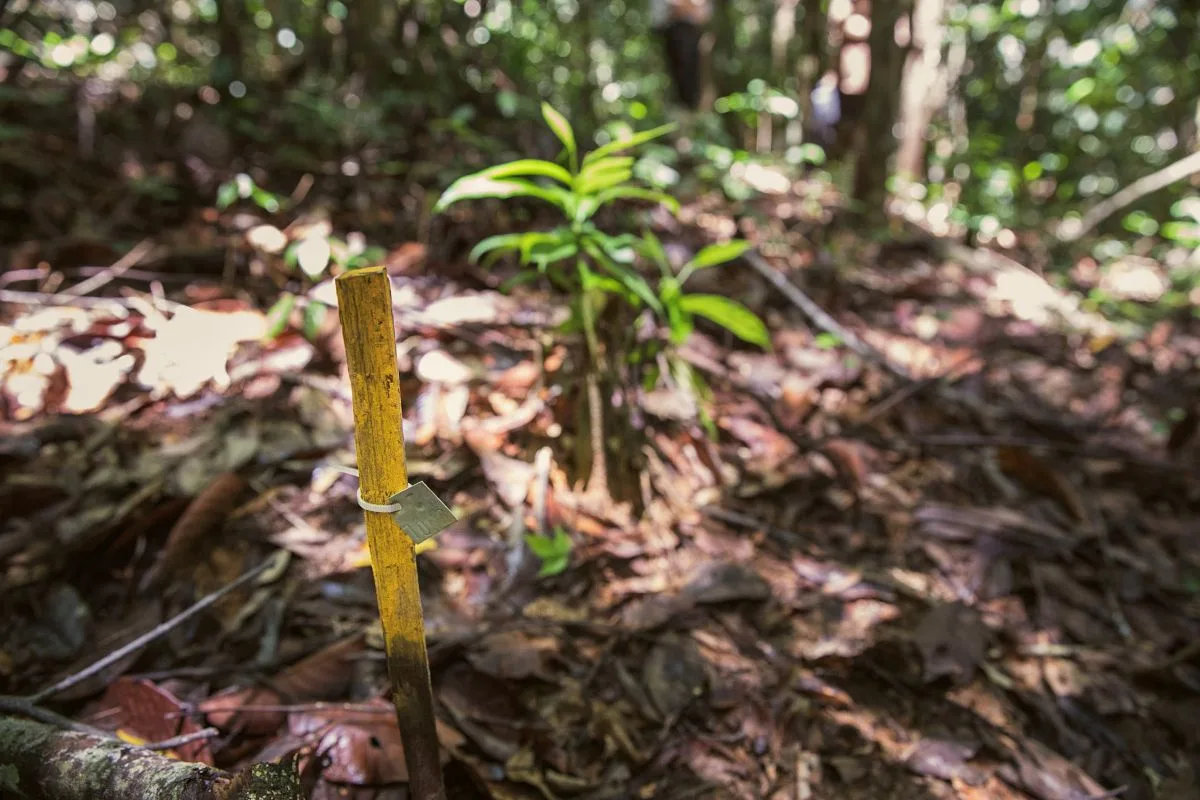
Approximately 25 years ago, IKEA, the Swedish University of Agricultural Sciences (SLU), and the Sabah Foundation began the restoration of a heavily degraded rainforest in Sabah, Borneo, Malaysia, calling it the Sow a Seed initiative.
In the quarter of a century since, 18,500 hectares of land have been restored and protected, making it one of the largest and longest-running tropical rainforest restoration projects in the world.
In the wake of these results, IKEA and its partners have announced the next phase of the initiative – the Living Rainforest Restoration Lab. This new initiative will highlight the shift from on-site restoration to research and knowledge sharing in order to support global biodiversity conservation and the mitigation of climate change.

“We are proud to carry forward our founder Ingvar Kamprad’s long-standing commitment to restoring and protecting forests. As the urgency to halt biodiversity loss grows, Sow a Seed shows what is possible: degraded rainforests can recover. Over nearly 30 years, the project has not only restored forests and biodiversity but also generated valuable knowledge. With the Living Rainforest Restoration Lab, we now want to share these insights more broadly, so they can help guide the restoration of other degraded rainforests around the world,” notes Lena Julle, Chief Sustainability Officer, Inter IKEA Group.
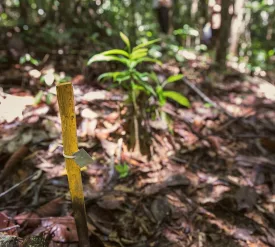
Specifically, the initiative assisted via natural forest regeneration, comprising the planting of five million seedlings from around 90 indigenous large tree species, and the nurturing of these trees to maturity. This has also encouraged endemic wildlife to return, such as pygmy elephants, orangutans, clouded leopards, and hornbills, amongst many others.
A REAL-WORLD RESEARCH PLATFORM
The official launch of the Living Rainforest Restoration Lab signifies a transition from hands-on restoration to a stronger focus on collaborative research, learning, and knowledge sharing. The initiative’s goal is to translate practical restoration insights into methods applicable across tropical forests globally.
IKEA has committed to funding the research programme for the next 10 years, with the lab supporting scientists and practitioners in developing and scaling effective restoration approaches through collaboration with academia.

“We aim to empower policymakers and the growing number of restoration practitioners with better knowledge, so that more rainforests can be restored more efficiently. A substantial part of the programme is dedicated to spreading the knowledge of best practices. The 24 research projects in this programme will therefore make a significant contribution to our global targets to conserve biodiversity and mitigate climate change on a substantially larger scale than the initial projects,” states Ulrik Ilstedt, Programme Leader at SLU.
Through the combination of long-term field data, restored landscapes, and scientific expertise, this real-world research platform provides valuable insight into topics such as biodiversity recovery, ecosystem functions, and climate benefits, including carbon storage, water regulation, and soil health.
The Living Rainforest Restoration Lab, launched by IKEA, SLU, and the Sabah Foundation, is a proud step forward for global biodiversity conservation and climate change action.
This article was produced by the editorial team at EME Outlook and published as part of the Outlook Publishing global network of B2B industry magazines.
Outlook Publishing delivers industry insights, company stories, and sector coverage across manufacturing, mining, construction, healthcare, supply chains, food production, and sustainability.
EME Outlook provides ongoing coverage of organisations and developments shaping industries across Europe and the Middle East.