Lily Sawyer is an in-house writer for EME Outlook Magazine, where she is responsible for interviewing corporate executives and crafting original features for the magazine, corporate...
- Senior Editor
Share
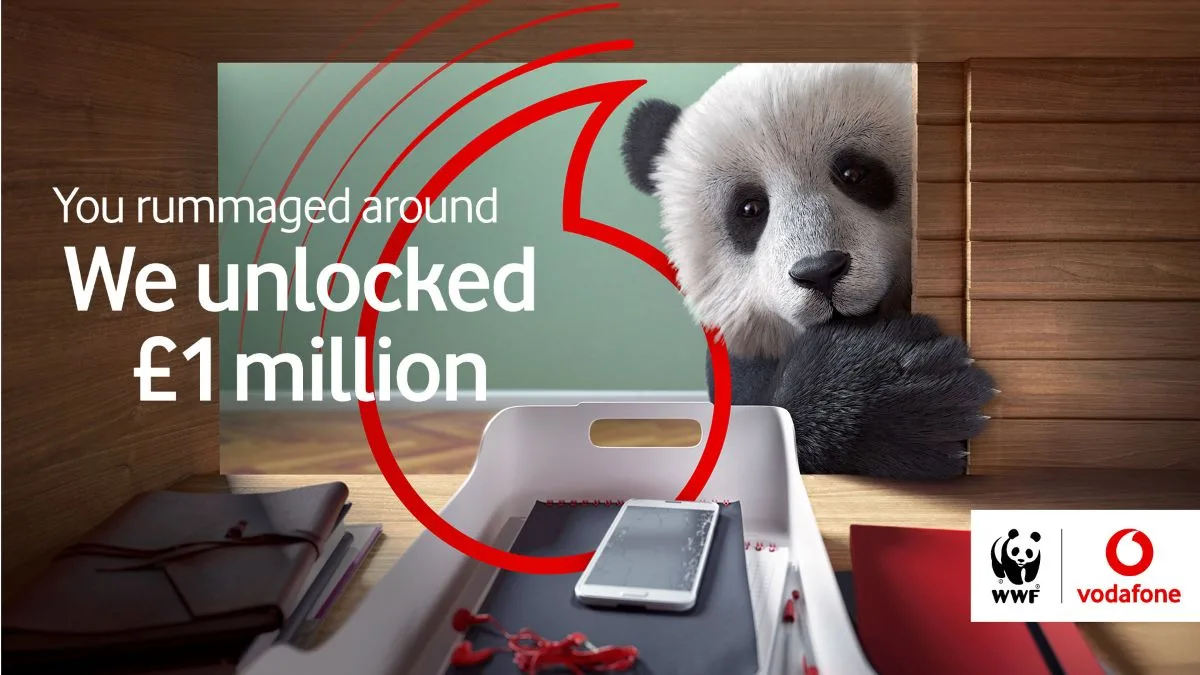
Vodafone and WWF celebrate the collection of one million unused phones, transforming everyday consumer action into £1 million for global conservation while accelerating the shift towards a circular, low-impact digital economy.
Vodafone and WWF have reached a significant sustainability milestone, collecting one million unused mobile phones and raising £1 million for conservation projects across Europe and Africa. The achievement underscores how incremental consumer behaviour – when scaled – can deliver tangible environmental outcomes.
Launched in November 2022, the One Million Phones for the Planet campaign encouraged customers and the wider public to trade in, donate, or recycle redundant devices. By pairing accessibility with purpose, the initiative simplified participation while highlighting the environmental value of extending device lifecycles.
Vodafone reinforced engagement in 2025 through its “We Need The Phones You Don’t” campaign, using animated storytelling to bring the issue of electronic waste into homes in a relatable, memorable way.
For Vodafone, the campaign represents more than a collection drive – it is a practical demonstration of circular economy principles in action.
Collecting one million phones for the planet shows just how powerful change is possible through small, everyday actions. Our partnership with WWF has turned unused phones into funding for conservation and is a practical example of the circular economy in action. We are incredibly grateful to our customers for backing our campaign with WWF and together showing how technology can help drive a more sustainable future for the planet
The partnership with WWF has translated consumer participation into measurable conservation outcomes. Funds raised are supporting biodiversity protection, habitat restoration, and community-led sustainability initiatives across multiple regions.
Projects supported include:
UK – The reintroduction of oysters and seagrass in the Firth of Forth for the first time in a century, improving water quality, reducing coastal erosion, and restoring marine ecosystems.
Kenya and Tanzania – Technology-driven monitoring systems are helping mitigate human-wildlife conflict, protecting both livelihoods and species such as lions and elephants.
Greece – Strengthened Marine Protected Areas have contributed to increased loggerhead turtle nesting, alongside expanded citizen science programs.
Germany and the Caucasus – Rewilding efforts, including the reintroduction of European bison after a century of extinction in the wild.
South Africa – Conservation initiatives combining AI-driven monitoring with community engagement, including black rhino relocation and sustainable fisheries support.
Beyond these regional efforts, funding has contributed to global initiatives such as the establishment of Colombia’s Serranía de Manacacías National Park, real-time environmental monitoring tools in Brazil, and continued progress in global tiger population recovery.
“Our partnership with Vodafone shows what we can achieve when technology and conservation come together. The One Million Phones for the Planet campaign has helped turn small individual actions into global impact, helping protect wildlife and support communities across Europe and Africa. We want to say a huge thank you to Vodafone customers for supporting this campaign and generating donations which protect wildlife such as tigers, black rhinos and loggerhead turtles and habitats around the world.”
At the core of the initiative is Vodafone’s broader ambition to embed circularity into its operations and customer ecosystem. By promoting repair, reuse, and recycling, the company is working to extend device lifecycles and reduce dependency on raw material extraction.
The environmental case is compelling. Choosing a refurbished smartphone over a new device can avoid approximately 50kg of CO2e emissions, while reducing lifecycle climate impact to around 20 percent or less of that associated with new manufacturing. It also eliminates the need to extract more than 70kg of raw materials.
Vodafone is scaling these benefits through partnerships with refurbishment specialists, enabling devices to be reconditioned and reintroduced into the market, rather than discarded.
CONNECTIVITY WITH PURPOSE
The campaign aligns with Vodafone’s wider sustainability strategy, which positions digital connectivity as a catalyst for environmental progress. Through its networks and technology platforms, the company is enabling solutions that improve energy efficiency, optimise resource use, and support circular business models.
This approach reflects a broader shift in how telecoms providers define value – not solely through connectivity, but through their capacity to address global challenges such as climate change and resource scarcity.
Vodafone has committed to achieving net zero carbon emissions across its full value chain by 2040, while continuing to reduce electronic waste and increase material recovery rates across its operations.
A MODEL FOR COLLABORATIVE IMPACT
The success of One Million Phones for the Planet demonstrates the power of cross-sector collaboration. By combining Vodafone’s scale and customer reach with WWF’s conservation expertise, the initiative has converted dormant consumer assets into meaningful environmental investment.
Crucially, it also highlights a replicable model – where businesses can align commercial ecosystems with sustainability goals, empowering customers to participate in solutions without friction.
As global pressure mounts to address both climate change and biodiversity loss, initiatives like this illustrate a clear path forward: practical, scalable, and rooted in collective action.
In turning forgotten devices into funding for nature, Vodafone and WWF have not only reached a milestone but set a benchmark for how technology, business, and environmental stewardship can work in tandem.
This article was produced by the editorial team at EME Outlook and published as part of the Outlook Publishing global network of B2B industry magazines.
Outlook Publishing delivers industry insights, company stories, and sector coverage across manufacturing, mining, construction, healthcare, supply chains, food production, and sustainability.
EME Outlook provides ongoing coverage of organisations and developments shaping industries across Europe and the Middle East.
Lily Sawyer is an in-house writer for EME Outlook Magazine, where she is responsible for interviewing corporate executives and crafting original features for the magazine, corporate brochures, and the digital platform.