


- The deposit return system
- Digital payments enable seamless deposit returns
- Tackling the scale of takeaway packaging waste
- Infrastructure designed for circularity at city scale
- Materials and design support lower carbon impact
- Circular systems supported by policy and partnerships
- Fintech’s growing role in circular economy systems
The deposit return system
Mastercard and New Loop have partnered to introduce a digital payment-enabled deposit return system (DRS) designed to accelerate the adoption of reusable takeaway packaging in urban environments.
Launched in collaboration with the Municipality of Copenhagen and Frederiksberg Municipality, the initiative combines physical return infrastructure with digital payments to make reuse systems more convenient, scalable and economically viable.
The system is one of the first joint deposit and return schemes for reusable takeaway packaging deployed across two capital municipalities.
Digital payments enable seamless deposit returns
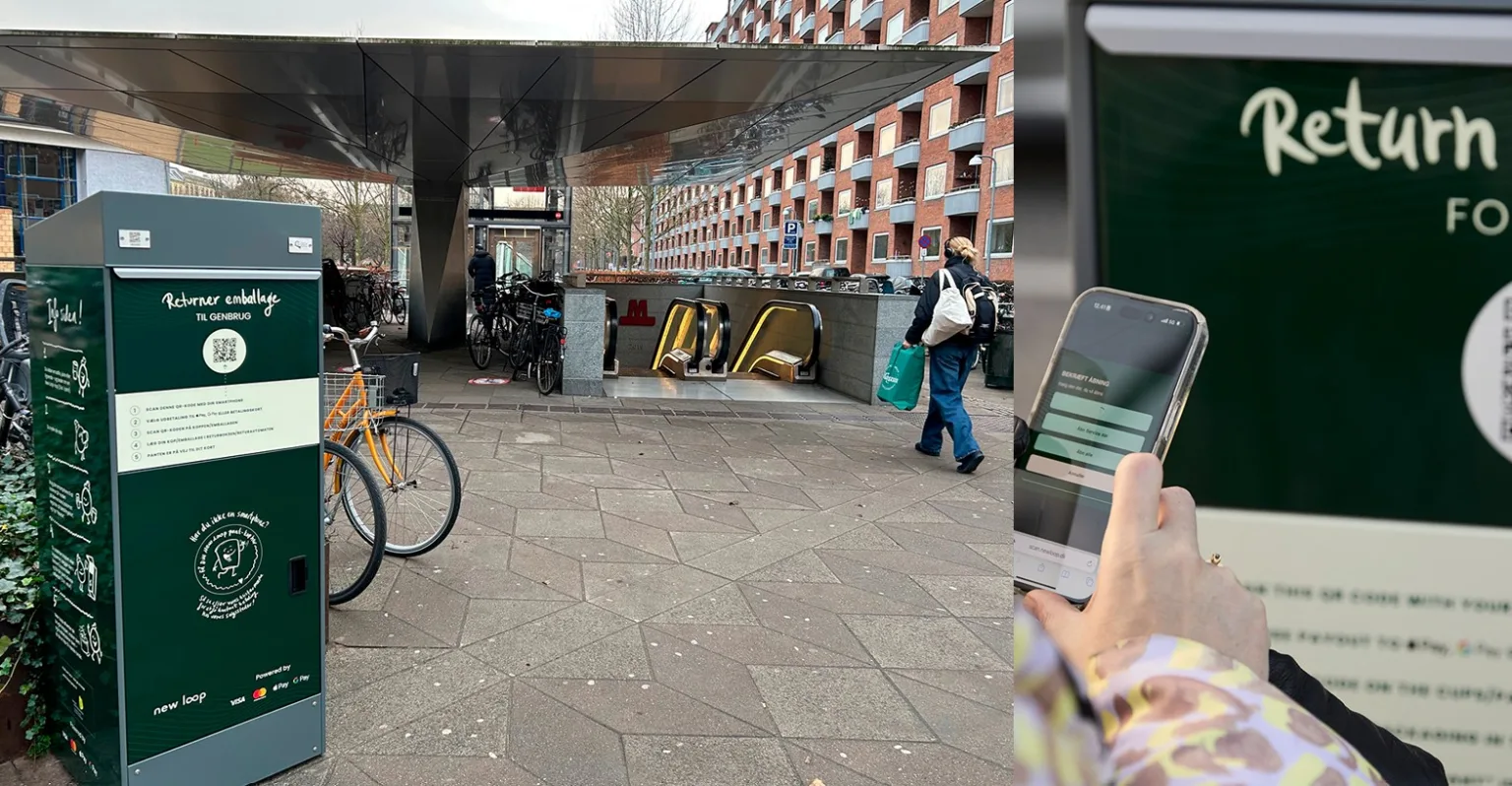
At the core of the initiative is Mastercard Move, a digital payment infrastructure that enables consumers to automatically receive deposit refunds when returning reusable packaging.
Customers purchasing takeaway food or drinks in reusable containers pay a deposit of DKK 5. When the packaging is returned to one of more than 54 return machines across Copenhagen and Frederiksberg, the deposit is refunded directly via payment card or mobile wallet.
This removes the need for cash handling and simplifies the user experience, helping to make reusable packaging as convenient as single-use alternatives.
“At Mastercard, we believe that technology can be a powerful driver for more environmentally conscious choices. By making it easy and fast for consumers to get their deposit back, we are removing barriers to recycling and helping Copenhagen and Frederiksberg take a big step towards a circular future. The initiative shows how fintech and digital payments can support cleaner and less waste-laden cities and empower consumers to make choices that benefit both themselves and the planet,” says Erik Gutwasser, Division President, Mastercard Northern Europe.
Tackling the scale of takeaway packaging waste
The initiative addresses a significant environmental challenge. Around 55 billion takeaway packaging items are used annually in Europe, highlighting the need for scalable reuse and recycling systems.
By combining infrastructure with financial incentives, the partnership aims to increase return rates and reduce reliance on single-use packaging.
The system also allows any individual to return abandoned packaging and claim the deposit, further encouraging collection and reuse.
Infrastructure designed for circularity at city scale
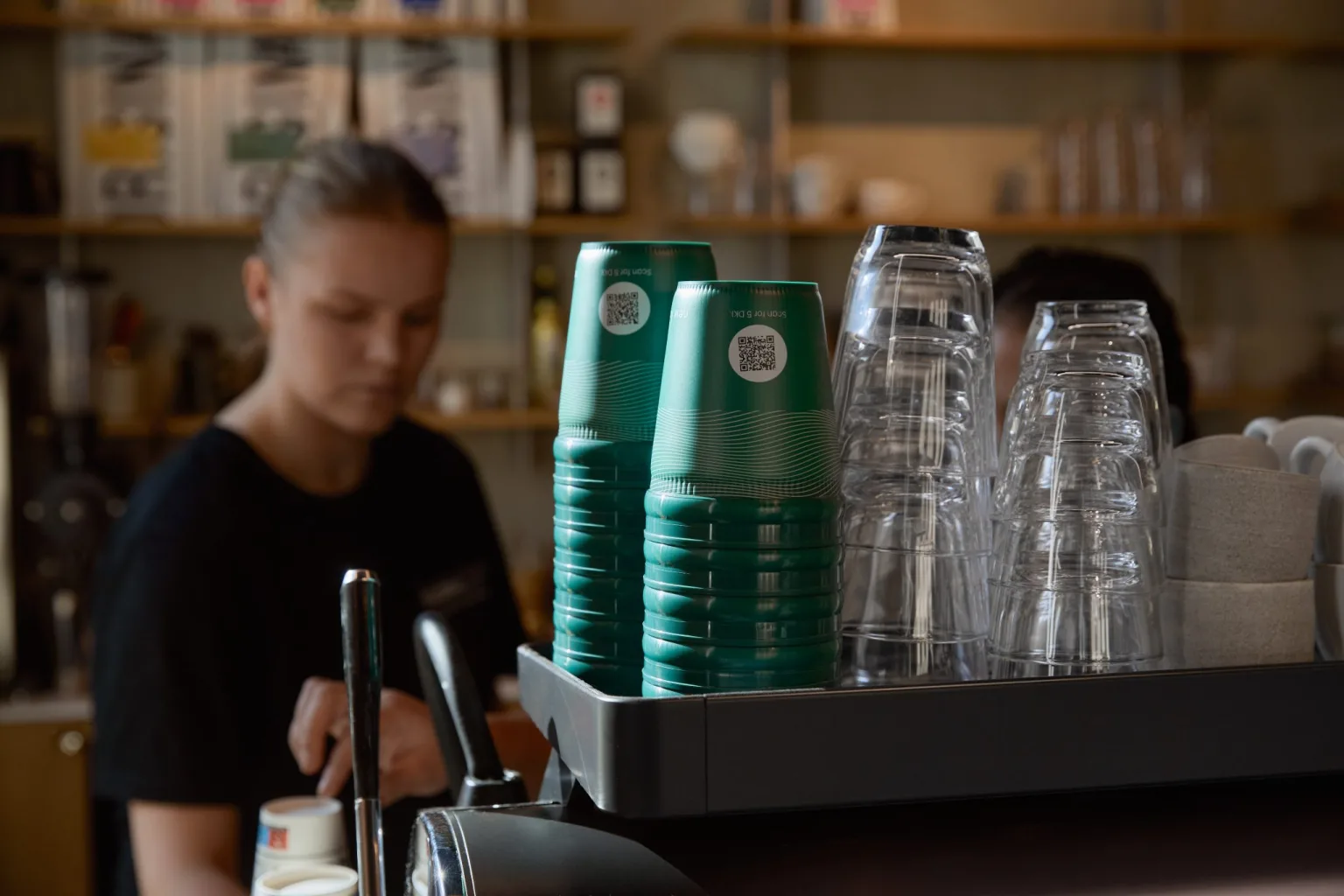
New Loop provides the underlying infrastructure for reusable takeaway packaging, supporting both businesses and consumers in transitioning away from single-use formats.
The system is already being adopted by participating businesses including TorvehallerneKBH, Kontra Coffee and Original Coffee, with additional companies expected to join.
Packaging includes cups and glasses for hot and cold drinks, with bowls and trays planned for future rollout. While the packaging features a shared visual identity, it can also be customised by participating brands.
Materials and design support lower carbon impact
New Loop’s packaging is manufactured using ISCC PLUS certified biocircular materials derived from mixed raw materials and residual streams from vegetable oil refining and processing.
According to the company, this approach reduces the extraction of fossil resources and contributes to a more resource- and CO₂-efficient recycling solution.
Circular systems supported by policy and partnerships
The initiative demonstrates how collaboration between private sector technology providers and municipalities can support circular economy models at scale.
“At New Loop, our mission is to make recycling the easy choice for everyone. By collaborating with Mastercard as well as Copenhagen and Frederiksberg, we are proving that circular systems can work at scale – not just for a single café, but across an entire metropolitan region. Together, we are showing how technology and simple everyday actions can significantly reduce waste from single-use packaging in streets, parks and nature, and help cities move towards a truly circular future,” says Anders Barsøe, CEO, New Loop.
The project has also been welcomed by environmental stakeholders.
“Plastic takeaway packaging is a big problem and accounts for around half of all waste found in the ocean. With political will, we can introduce return systems for many more types of packaging and create a more sustainable, circular system instead of the current throw-away culture. This pilot project is an important step in that direction,” says Mette Ranfelt, chief environmental policy consultant at the Danish Society for Nature Conservation.
Fintech’s growing role in circular economy systems
The partnership highlights the role digital payments infrastructure can play in enabling circular business models.
By removing friction from deposit return processes, solutions like Mastercard Move can help scale reuse systems, improve participation rates and make sustainable choices easier for consumers.
As cities and regulators increasingly focus on reducing waste and emissions, integrating financial systems with circular infrastructure could become a key enabler of sustainable urban ecosystems.