


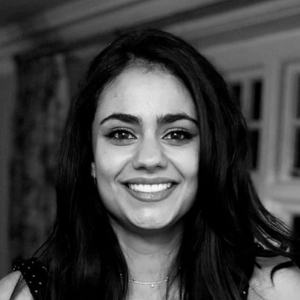
We speak with Rowan Bell, co-Founder and Creative Director of Hospitality at The Lost Estate, about blending historical gastronomy with immersive theatre, recreating the spirit of Belle Époque Paris, and using food and drink to transport audiences into the world of CHAT NOIR!.
IMMERSIVE THEATRE MEETS FINE DINING
As immersive experiences continue to reshape the hospitality and entertainment industries, food and beverage have become increasingly integral to storytelling.
Audiences now expect experiences that engage every sense, with carefully curated menus, drinks, aromas, and service working in harmony to create fully realised worlds that blur the boundaries between theatre and dining.
The Lost Estate has become known for producing large-scale immersive productions that combine live performance with meticulously researched hospitality concepts.
Its latest production, CHAT NOIR!, transports guests into the bohemian cabarets of 1890s Paris, drawing inspiration from the legendary Le Chat Noir – a legendary, bohemian 19th-century cabaret in the city’s Montmartre district, founded in 1881 by Rodolphe Salis –and the birth of modern gastronomy.
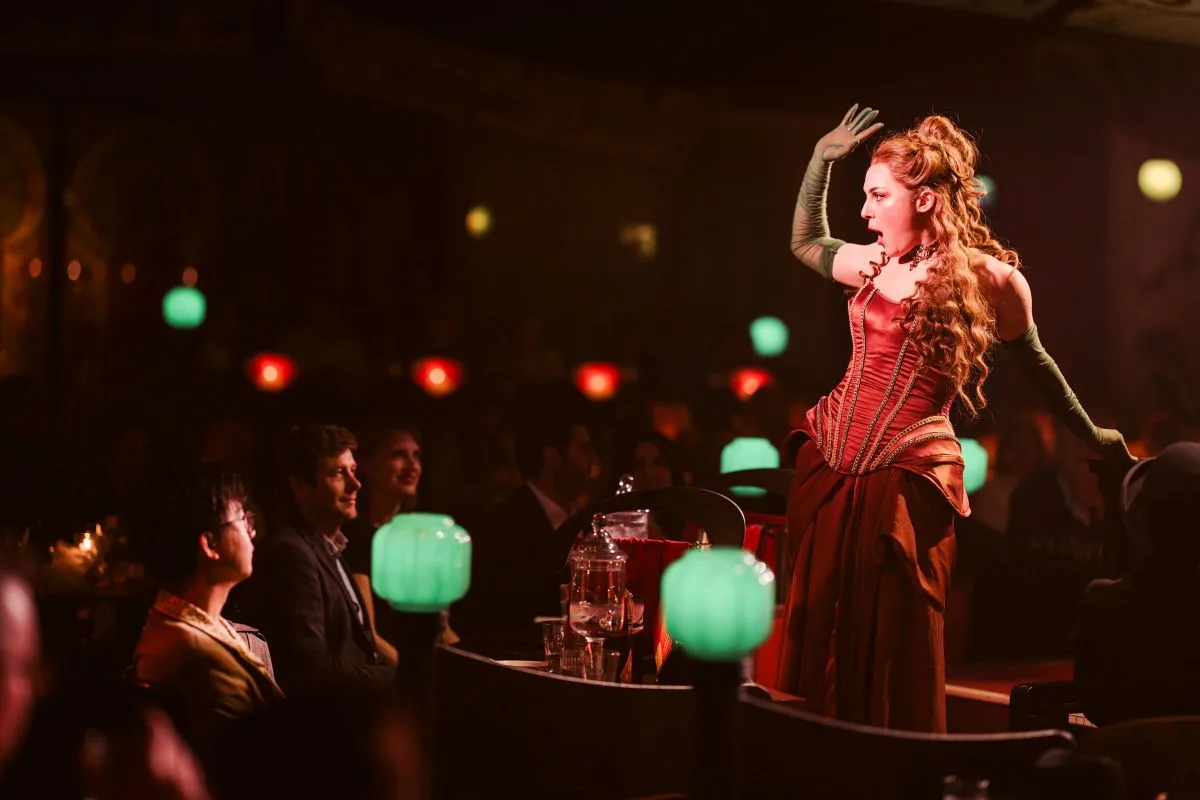
From absinthe fountains and Belle Époque cocktails to refined takes on classic French bistro dishes, every detail has been designed to evoke the atmosphere, flavours, and sensory excess of the era.
Rowan Bell, co-Founder and Creative Director of Hospitality, discusses the process of balancing historical authenticity with contemporary expectations, integrating food and drink into immersive storytelling, and overcoming the operational complexities of delivering theatrical dining experiences at scale.

EME Outlook (EO): CHAT NOIR! draws heavily on the culinary world of 1890s Montmartre. How did you approach balancing historical authenticity – dishes like Coq au Vin and absinthe culture – with the expectations and tastes of a contemporary London audience?
Rowan Bell, co-Founder and Creative Director of Hospitality (RB): We always start with a research phase where we’re looking at primary sources, period menus, and documented techniques from the time, but the execution is done with modern palates in mind. We want to retain enough of the original concepts that people feel they’ve been transported back in time, but not so much that they don’t like it!
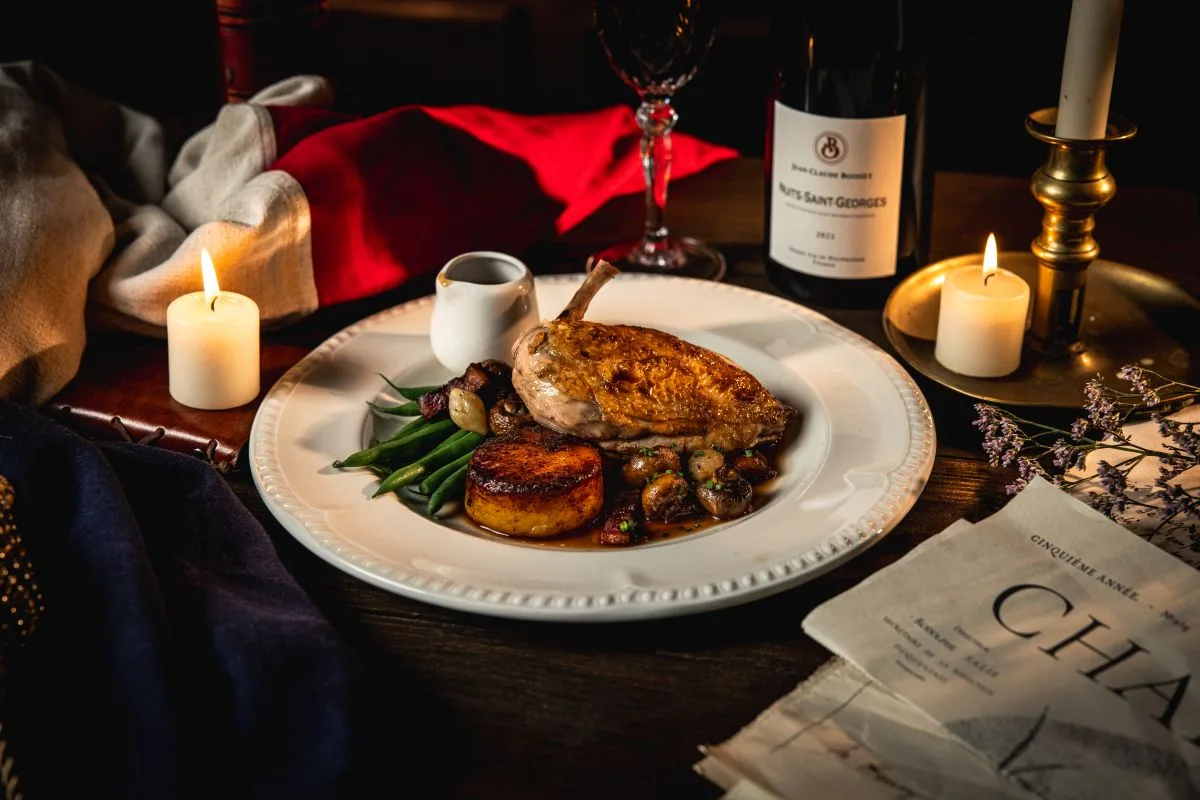
For example, Coq au Vin remains pretty faithful to the rustic style it would be served in at the time, but we refine variables that 1890s kitchens couldn’t have controlled as precisely, such as temperature, quality of produce, and consistency of other basic ingredients.
We also apply a fundamental principle to all food and drink design: everything we make has to have been possible at the time we are recreating in the experience.
So, we allow ourselves enough fantasy and artistic license that the food and beverage offerings fit within the heightened fantasy of the experience’s world, but we only use ingredients (and largely techniques) that existed at the time.
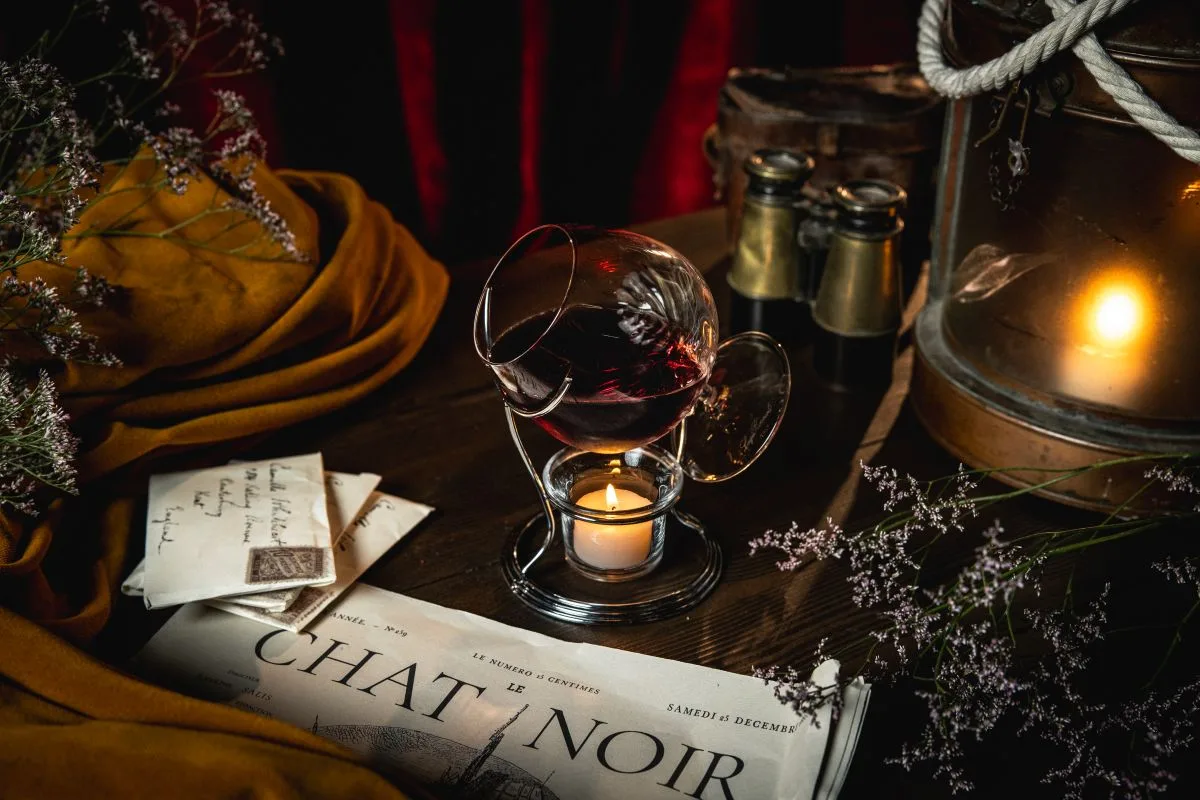
Everything on our cocktail menu, for example, could have been made by a bartender in the 1890s – even if many of them are much more creative than what you would have typically found in a dingy Parisian tavern!
This approach often means a huge amount of research that our guests will never see or be aware of, but which we believe both provides creative guardrails and a solid underlying logic to the menus, tying them together and making them feel ‘real’.
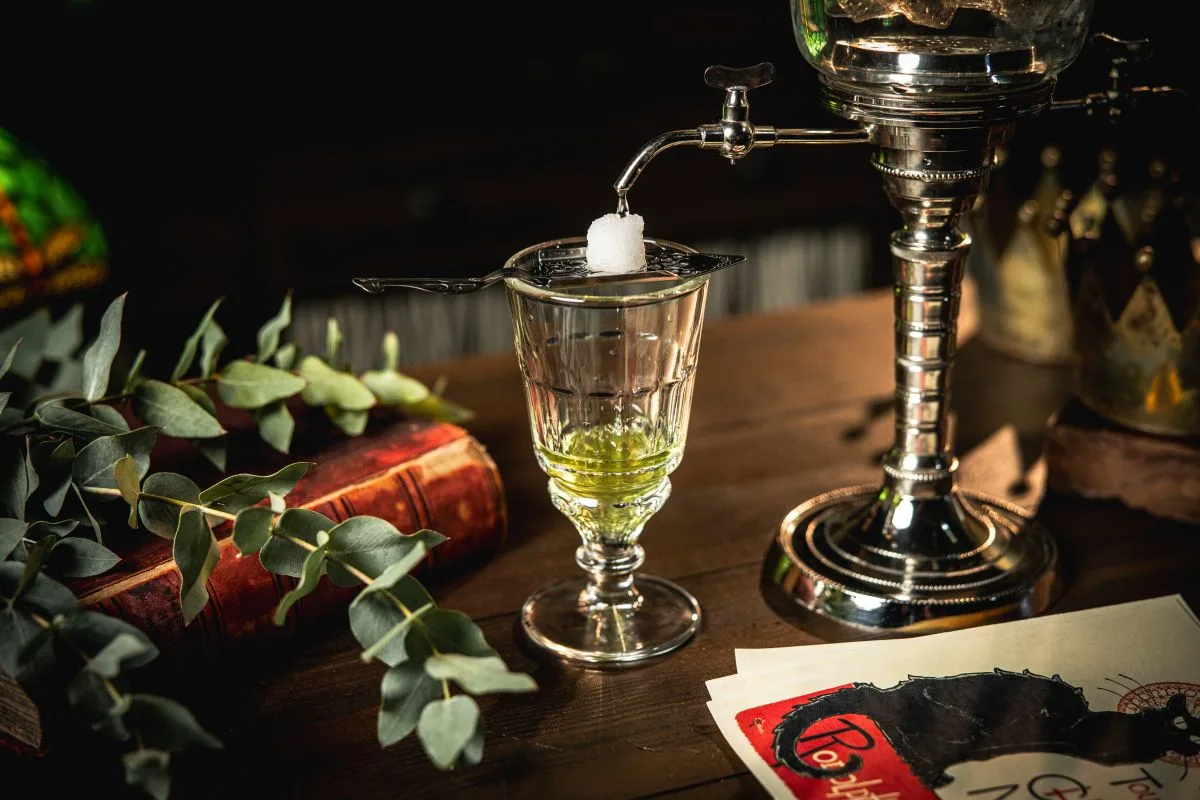
We designed the physical menu specifically to highlight absinthe culture (the “green hour”, absinthe spoons, fountains, etc.), but also tried to frame it in a way that provides an easier way in for modern audiences.
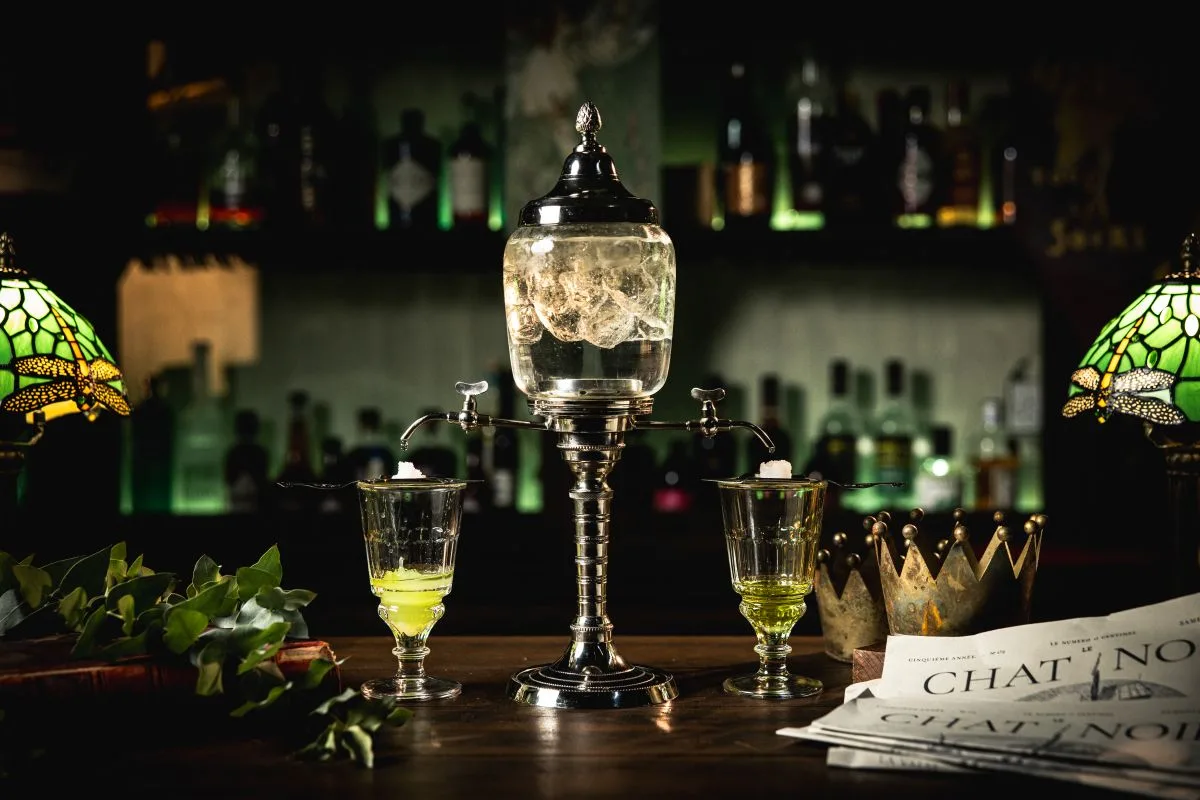
So, for example, instead of just having one house pour (as most establishments would have done at the time), we’ve built up both an array of different styles of absinthe to choose from, as well as three different serves (classic, frappe, fountain for two to share) – giving at least 24 possible combinations!
We hoped that being super inventive and in-world with how absinthe was presented in the menu, coupled with lots of choice and helpful tasting notes, we’d encourage people to really feel like they’d travelled back in time – and be brave enough to give it a go.
But, honestly, we had no idea before opening how it was actually going to land. No idea whether we’d sell 2 absinthe fountains per night or 50! Luckily, it’s been a total hit – it’s actually taken us by surprise how incredibly popular it’s been – it’s great to see people up for experimenting with something as potentially challenging as absinthe. We’ve now got what I imagine is one of the biggest stocks of absinthe fountains (for a bar) in the UK – perhaps even in the world!
EO: At The Lost Estate, food isn’t just service – it’s part of the narrative. When creating the menu for CHAT NOIR! how early does the culinary concept come into the creative process, and how closely is it integrated with character, music, and staging?
RB: We think about everything as one from the very beginning. The food, drinks, music, staging, lighting, costumes, text, and choreography are all conceived collaboratively and developed together, in the same way we ultimately want our guests to experience them.
Our creative process typically lasts nine to twelve months, and the hospitality offering for CHAT NOIR! has been evolving since the earliest stages of development. Very early on, we’re asking what the audience will taste, smell, drink, and physically handle throughout the evening.
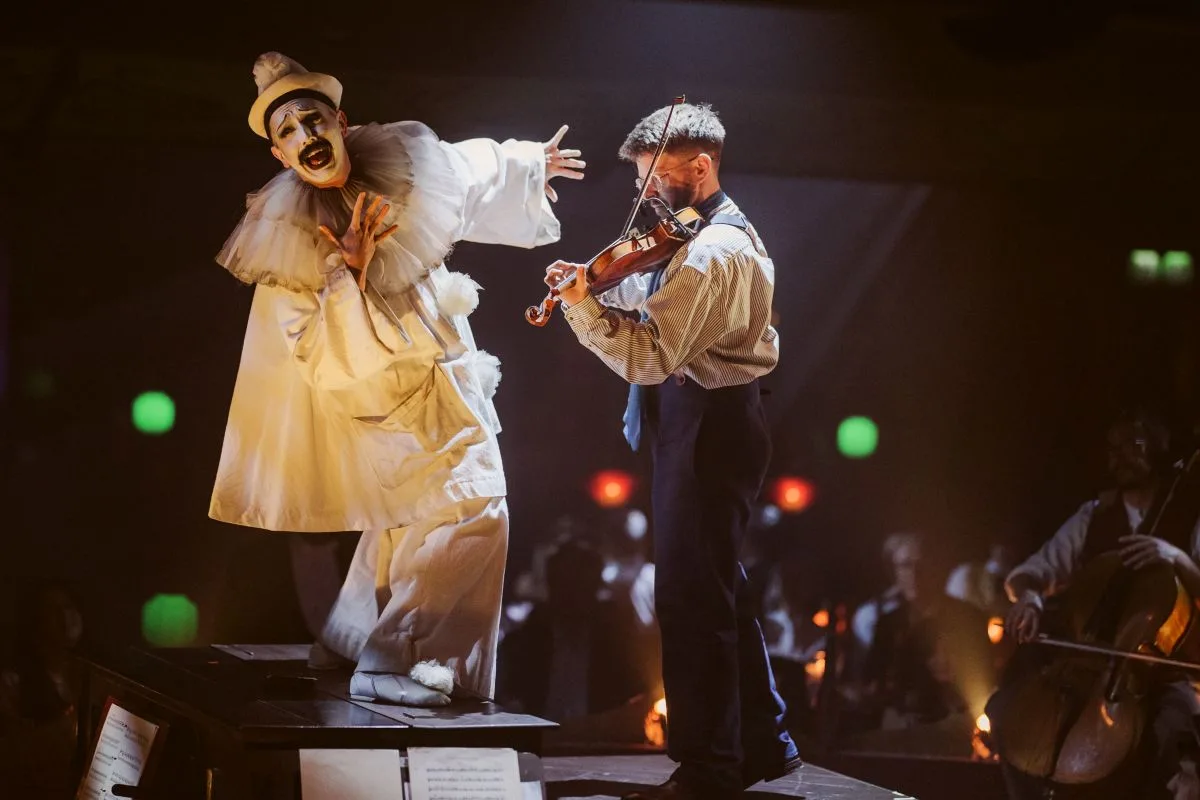
For us, the menu has to feel justified by the narrative and environment. The food exists because it genuinely belonged to that world, but also because it reflects Rodolphe Salis’s original vision of performance and hospitality fused into one experience.
One of the slowest and most labour-intensive parts of the process is often the physical menu design itself. We spend huge amounts of time studying historical sources, sometimes dozens of them, trying to capture all the tiny visual and linguistic details that make the world feel ‘real’.
EO: Immersive theatre presents unique operational challenges compared to traditional hospitality. What are the biggest creative hurdles in delivering a high-quality dining experience while also maintaining the illusion of being in 1890s Paris?
RB: Each experience has to run to very precise timings, and because there are often large parts of the experience when it wouldn’t be possible to serve food and drink due to the action on stage, we are left with small pockets of time when we have to suddenly serve over 200 guests.
This presents a huge operational challenge that has taken us years to get on top of and spans almost every area of the experience, from the design of the room and seating to the design of the menus. Food has to be plated at lightning speed on the pass, so it’s designed with a maximum number of moves in mind and a clean presentation that will survive a very bumpy, hurried journey from pass to plate!
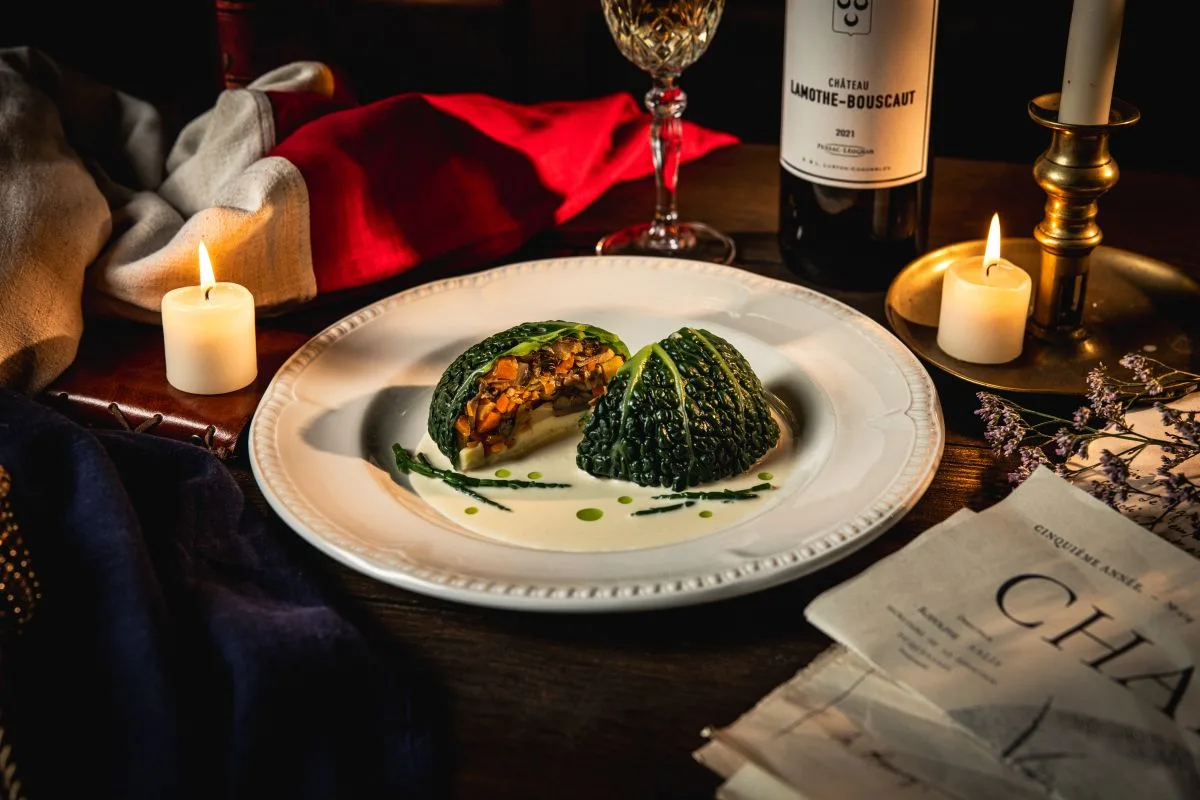
Getting this right involves careful consideration of which dishes to serve, as well as plates, food presentation and design of sides and sharing. All with the intention that these problems become invisible to the guest, and their world isn’t broken.
The cocktail operation is also something we’ve worked hard on over the years. It’s the same problem, fundamentally: as the experience moves between points when we can take orders and deliver drinks to periods of action, we’re often faced with the need to deliver hundreds of carefully crafted cocktails simultaneously. We’ve developed a batching system over the years, including our own recipes for shelf-stable citrus juices, which help make this possible.
We’ve also designed our non-public bar (where most of the drinks are made) to facilitate this delivery, with a setup more like a kitchen than a bar, with a pass area and different stations.
Again, with drinks, the design specifically limits the number of moves required on the pass to make the drink, ensuring speed and consistency.
EO: The experience celebrates the birth of modern gastronomy and haute cuisine. From your perspective, what defines that era’s influence on today’s dining culture – and how have you translated those principles into a menu that still feels relevant and exciting in 2026?
RB: What’s incredible about this period of food history (the rise of haute cuisine) is that it’s really the moment when dining becomes an art in the modern sense. A kind of process, beauty, balance for their own sake.
This is when things like curated menus started coming in, when service standards became super important. This is where things like tasting menus, refined sauces, celebrity chefs, food as theatre, wine pairings, and all sorts of other things began.
I feel this era is what now defines basically all fine dining the world over – it’s got to be the single biggest influence on the culinary world ever, by far. Every time a chef takes a piece of traditional cuisine, takes it apart, and turns it into beautifully cooked protein, a refined sauce, and garnishes, that’s French 19th-century influence, right there (or, probably more specifically, Escoffier’s influence).
With CHAT NOIR! , although we took inspiration from haute cuisine, we are not trying to tell that particular story. We’re interested in imagining how the chef of a club like the original Le Chat Noir would have been inspired by the culinary movement around them.
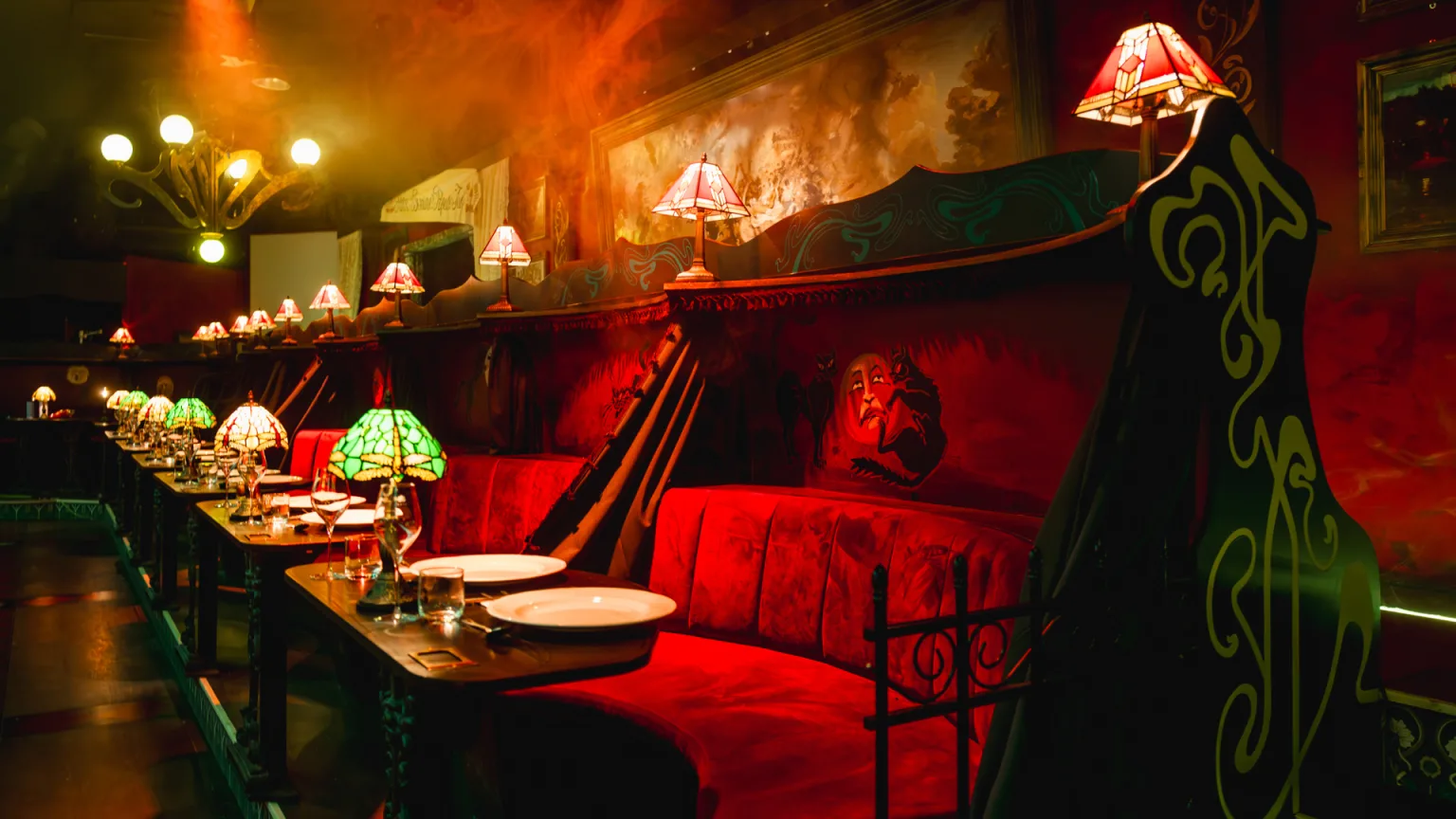
The food in such establishments would likely have been pretty basic – bistro style, often primarily cold cuts that would keep well for hours into the evening. So we’ve taken that as our inspiration – providing a cold spread to start that is already laid out as guests arrive.
Then, taking two classic French bistro dishes – coq au vin and tarte citron, and imagining how they would have been presented by a club chef who had been inspired by Escoffier and the haute cuisine style.
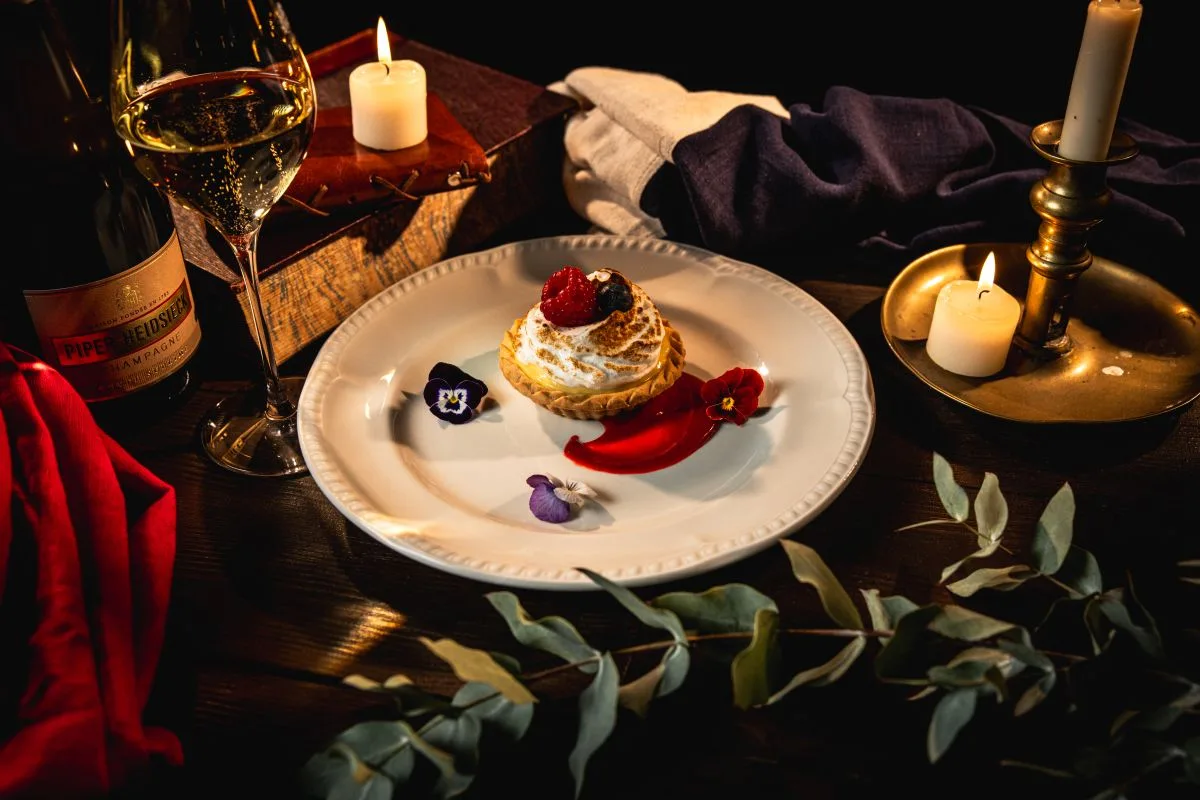
So the dishes become cleaner, more process-driven, with a little flair and decoration. The sauce, for example, becomes more refined and richer with reduced stock, rather than the flour-thickened braising liquid typical of the time.
EO: Beyond the dishes themselves, how do elements like aroma, texture and drink pairing help transport guests fully into the world of 1890s Montmartre?
RB: We see the entire food and drink offering – not just the dishes themselves, but everything surrounding them – as being just as important to creating a world and transporting guests to a time and place as the show itself.
Our aim is to create one whole, rather than a series of distinct parts. In the minds of guests, the food and drink become part of the world, part of the story, rather than something experienced separately from the theatre.
In a real Parisian cabaret of the 1890s, the experience would never have been divided neatly into categories of “show”, “food”, and “drink”. It was all part of one sensory world. In fact, the whole point of cabaret as an art form is that it combines variety entertainment and hospitality into one experience, and this was the great innovation of Rodolphe Salis, Founder of the original Le Chat Noir.
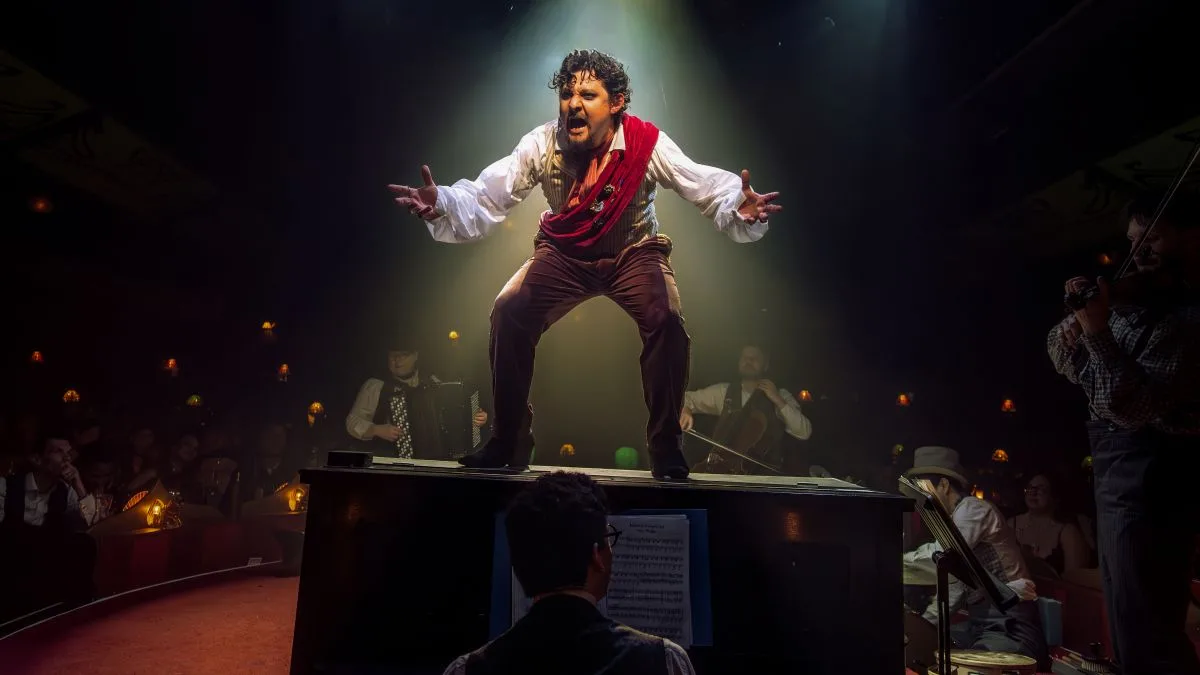
In terms of aroma and taste specifically, the experience is designed around a ‘Green Hour’ that begins just before the second part of the action. This is when we bring out all the absinthe orders, with dozens of absinthe fountains suddenly flooding the room.
Then, as the aroma of the louching absinthe drifts across the tables and reaches guests’ noses, we begin an absinthe dream that spreads across the entire space. The lights dim to a faint green, an absinthe drip appears centre stage, and the sound of chilled water falling into the emerald spirit is amplified throughout the room.
Salis then begins a kind of ASMR poem to absinthe, describing its aromas, flavours and ingredients, while the house band plays strange, haunting music. Things become stranger and more sensual, the audience losing themselves deeper and deeper in the dream, absinthe mixing with music, words, dance, and poetry.
This is all to say: we take the idea of integrating hospitality and theatre pretty seriously!
The Lost Estate’s CHAT NOIR! runs at 9 Beaumont Avenue, near West Kensington station, booking until September. For more information and to book, visit www.chatnoirlondon.com
This executive interview was produced by the editorial team at EME Outlook, a publication within the Outlook Publishing global network of B2B industry magazines.
Outlook Publishing features leadership insights and company stories from organisations shaping sectors including manufacturing, mining, construction, healthcare, supply chains, food production, and sustainability.
EME Outlook explores the organisations, leadership teams, and industries shaping business and innovation across Europe and the Middle East.