



Ericsson and Net Feasa are partnering to bring carrier-grade 4G and 5G connectivity together with agentic artificial intelligence capabilities to improve cargo visibility and operational efficiency across the maritime industry.
MARITIME CONNECTIVITY AT SEA
A new partnership between Ericsson and Net Feasa aims to transform maritime operations through secure 4G and 5G connectivity combined with agentic artificial intelligence (AI)-ready data capabilities.
The collaboration will provide container vessels with carrier-grade connectivity designed to improve cargo visibility, operational efficiency, and safety across global shipping networks. According to the companies, the solution has been developed to support operations regardless of where vessels are located on the world’s oceans.
The partnership combines Ericsson’s telecommunications infrastructure with Net Feasa’s smart container and logistics technology platform. The offering includes Ericsson Radio System products and Ericsson On-Demand 5G Core delivered as-a-service, alongside Net Feasa’s Agentic Control Tower platform.
The companies state that the solution will enable thousands of connected assets onboard vessels to communicate in real time through low-Earth orbit satellite connectivity. This allows operators to gain continuous oversight of containers and cargo conditions while at sea.
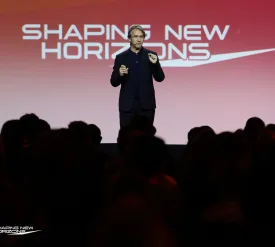
“Maritime operators need secure, reliable connectivity that follows the vessel, wherever it sails,” highlights Andres Vicente, Head of Southeast Asia, Oceania, and India for Ericsson.
“Alongside Net Feasa, we are bringing on board 4G and 5G cellular networks to the world’s container fleets, establishing the foundation for data-driven operations and AI-enabled services from ship to shore.

“With container vessels as our starting point, the scope of what we can achieve across the entire global shipping industry is immense. Together, we are shaping the future of connected, intelligent shipping.”
Andres Vicente, Head of Southeast Asia, Oceania, and India for Ericsson
SMARTER SHIPPING OPERATIONS
Several live maritime use cases are already being deployed through the partnership, including reefer monitoring, dangerous goods handling, and early heat detection onboard container vessels. These applications are intended to help operators proactively manage cargo risks and improve supply chain resilience.
The companies say the system creates AI-ready data streams that support more intelligent operational decision-making across the maritime industry. By combining connectivity with agentic AI capabilities, vessels and connected assets can autonomously communicate changes in status and generate alerts when issues arise.
Ericsson noted that the partnership supports the growing demand for reliable connectivity across ports, shipping fleets, and wider logistics operations as the maritime industry continues its digital transformation journey.
In the original announcement, the companies highlighted the operational advantages of combining telecommunications infrastructure with intelligent cargo monitoring systems.
For instance, secure, carrier-grade 4G/5G connectivity on board container vessels, delivering agentic AI-ready data, will improve cargo visibility and increase operational efficiency across the maritime industry, regardless of location on the world’s oceans.

Net Feasa’s Agentic Control Tower platform is designed to provide visibility of smart-enabled containers while supporting SIM-managed end-to-end connectivity for shipping companies and port operators.
“Digitalisation of the intermodal supply chain is at a tipping point. With the advent of agentic AI, we are gathering data from everything that moves, analysing and securing this data, and empowering carriers to act on this data across their operations,” explains Mike Fitzgerald, Chairman and Founder of Net Feasa.
“This landmark partnership has the potential to transform the global maritime industry not just from an operational efficiency perspective but across employee safety, cargo risk reduction and compliance.”
DIGITAL TRANSFORMATION AT SEA
The maritime sector is increasingly adopting connected technologies to improve visibility, automate processes, and reduce operational disruption across supply chains. Ericsson has previously highlighted the role of cellular connectivity in enabling smarter ports and more efficient transport hubs capable of securely tracking millions of shipments.
The latest partnership reflects growing industry interest in combining 5G infrastructure with AI-driven operational systems to support more autonomous and data-led logistics environments. Ericsson has also continued to expand its focus on agentic AI technologies across enterprise networking and telecommunications applications.
This article was produced by the editorial team at EME Outlook and published as part of the Outlook Publishing global network of B2B industry magazines.
Outlook Publishing delivers industry insights, company stories, and sector coverage across manufacturing, mining, construction, healthcare, supply chains, food production, and sustainability.
EME Outlook provides ongoing coverage of organisations and developments shaping industries across Europe and the Middle East.