



Google and Energy Dome have signed their first bilateral commercial agreement for a 23 MW/200 MWh CO2 Battery project in County Offaly, Ireland, marking the next stage of a long-term partnership to deploy long-duration energy storage technology across multiple regions.
Long-term partnership advances energy storage deployment
The project follows the companies’ announcement last year to work together on scaling Energy Dome’s CO2 Battery technology and supporting Google’s ambition to expand access to affordable, secure and 24/7 clean energy for electricity grids globally. It also follows the announcement earlier this month of a 19 MW/200 MWh project in Arizona involving Energy Dome, Google and local utility SRP.
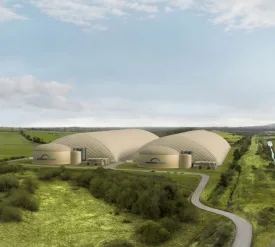
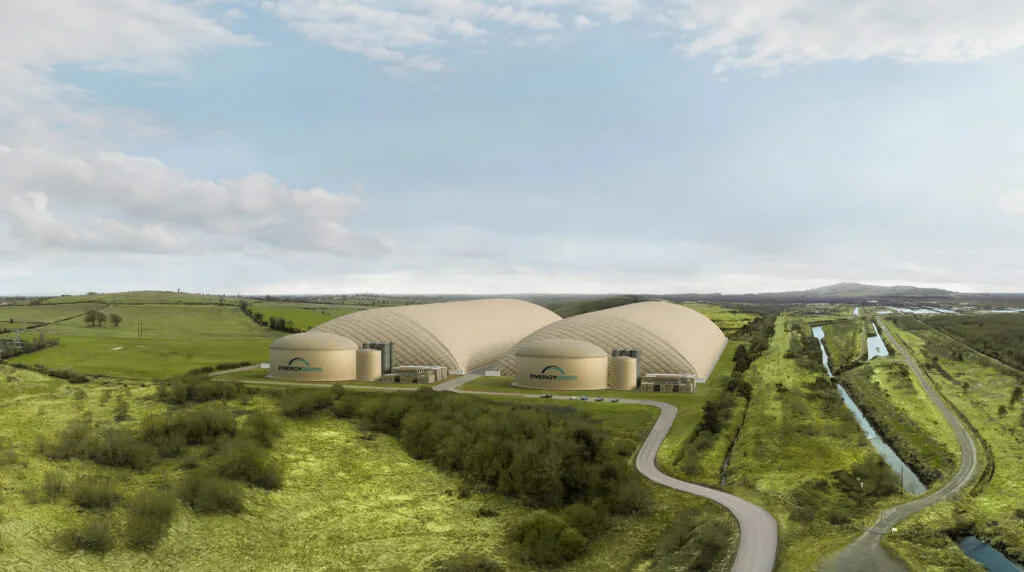
Energy Dome will develop, own and operate the County Offaly facility using its proprietary CO2 Battery technology.
The system stores energy by using electricity from the grid to compress and store CO2 before expanding it through a turbine to generate electricity when required.
Supporting Ireland’s electricity system
The Irish Government has identified long-duration energy storage as an important technology for improving security of electricity supply, reducing system costs and supporting its target of reaching 80 per cent renewable electricity by 2030.
Google and Energy Dome said the project is intended to demonstrate how long-duration energy storage can contribute to an affordable, secure and clean electricity system. The CO2 Battery is designed to absorb surplus electricity during periods of oversupply and dispatch stored energy during periods of high demand, helping to balance the grid while easing local congestion.
Strategic location in County Offaly
The project will be located near Rhode in County Offaly, close to a key node on the Irish electricity grid where high-voltage transmission lines serve the Greater Dublin metropolitan area.
According to the companies, expanding energy infrastructure in this part of Ireland is important for supporting economic growth in areas of increasing electricity demand.
The project is being developed in partnership with Lumcloon Energy, a Midlands-based developer. It will be built on the site of a former peat-fired thermal power plant, repurposing brownfield industrial land for clean energy infrastructure.
The location is also close to the Rhode Green Energy Park, where renewable energy resources, including solar and wind, experience curtailment because of grid congestion. By storing excess electricity for later use, the project aims to reduce congestion and avoid the need for additional transmission infrastructure.
Partnership supports international deployment
Claudio Spadacini, Founder and CEO of Energy Dome, said: “We are proud to work with Google on a project that strengthens grid resilience and unlocks the path to 24/7 carbon-free energy in Ireland. This project is the first commercial bilateral deployment under the strategic partnership between our companies, which aims to develop CO2 Battery projects across Europe, North America and Asia-Pacific”.
Energy Dome said its CO2 Battery technology uses readily available, off-the-shelf components rather than relying on lithium-ion batteries or other critical minerals. The company said the technology is intended to provide dispatchable, long-duration energy storage while supporting energy security, resilience and reliability as electricity demand increases.
Project expected online in 2028
Vanessa Hartley, Head of Google Ireland, said: “At Google, we are committed to catalysing next-generation energy technologies to bolster grid resilience and introduce critical storage capacity to the system. This milestone is a next step in our long-term partnership with Energy Dome, and will help scale their promising long-duration energy storage technology, charging ahead to an affordable, secure and clean energy future.”
The project has secured land, planning consent and a grid connection. It has also been awarded a 10-year capacity contract by EirGrid, the State-owned transmission system operator, and is expected to begin operations in 2028.
This article was produced by the editorial team at EME Outlook and published as part of the Outlook Publishing global network of B2B industry magazines.
Outlook Publishing delivers industry insights, company stories, and sector coverage across manufacturing, mining, construction, healthcare, supply chains, food production, and sustainability.
EME Outlook provides ongoing coverage of organisations and developments shaping industries across Europe and the Middle East.