



Ilija Ugrinic, Senior Vice President of Strategy and Marketing at Proactis, explains why organisations need to have a more proactive than preventative approach to supplier issues and how greater visibility across the procurement lifecycle helps procurement teams become more strategic.
Organisations across multiple sectors spend far too much time firefighting supplier issues, chasing missing documents, and scrambling to keep up with renewals. And there’s a very good reason why this is the case – their processes are designed to be reactive, not proactive.
Having seen this pattern across multiple organisations over the last 20 years, I can only describe this as latent pain. Think of a dodgy door lock – you learn to live with it; it’s annoying, but it never quite makes it to the top of the list to fix. Then one day it breaks completely, and suddenly it becomes the priority. Process gaps in procurement work the same way: the pain is real but easy to defer – until it isn’t. Fixing the process isn’t as hard as most organisations expect, but it is always better to act before the lock breaks.
Outdated processes are the main culprit when it comes to a reactive posture. Contracts are negotiated and then left to sit in shared drives where they become nothing more than static records. And it’s that stasis which prevents organisations from effectively tracking performance thanks to an inability to gain insight from information contained in spreadsheets and other documents.
This lack of insight makes it particularly difficult to identify risk signals and any other indicators of supplier underperformance. It also means that negotiated savings achieved at contract award are rarely fully realised as the agreement runs its course.
WHY A SOURCING-ONLY MINDSET LEAVES VALUE UNPROTECTED
Organisations have embraced digital sourcing. It’s a great start, but it only touches the edges of the procurement lifecycle. While eSourcing delivers value at the award stage, many organisations automatically default to manual processes once sourcing ends.

It creates a situation where organisations focus 80 percent of their energy on sourcing itself, and only 20 percent of their time managing the whole procurement lifecycle. This hampers supplier performance visibility, leading to inconsistent risk awareness and reduced long-term value creation.
EVOLUTION OF SUPPLIERS INTO PROACTIVE PARTNERS
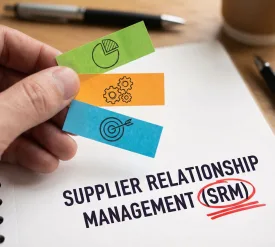
The key to achieving long-term value lies in effective supplier relationship management (SRM). Effective SRM should be viewed as the ‘engine of prevention’ as it helps to shift procurement from a reactive process to one characterised by continuous management of performance, risk, and value. SRM helps prevent service level drift and scope creep by enabling highly visible performance monitoring and encouraging efficient supplier communications.
It also enables supplier self-service to help reduce in-house admin, improve accuracy, and deliver cleaner supply data. And it’s important to remember that supplier self-service is about much more than policing suppliers – it’s about empowering them to become active participants in good governance and adding value to the process.

CONTRACT MANAGEMENT AS A POWERFUL PREVENTION TOOL
In relation to ongoing contract management (CM), contracts must be viewed as active control mechanisms, not historical, passive PDFs stored deep within an organisation’s IT systems.
Static documents provide little visibility around renewal dates and make it extremely difficult to link actual supplier performance to the contractual obligations agreed during sourcing. Once CM is introduced, the increased visibility makes it significantly easier to keep track of automatic renewal and milestone alerts and align expenditure with agreed contract parameters. Without an effective CM strategy, organisations can find it difficult to see the wood from the trees.
A UNIFIED PLATFORM AS A SINGLE SOURCE OF TRUTH
Unifying within a single, dedicated platform provides an opportunity to access a single source of truth. Disconnected systems create duplicated records – a collection of fragmented documentation that’s difficult to control and monitor and frustrates users. With a unified suite, procurement professionals gain the peace of mind that comes with full lifecycle visibility of what is happening within the function.

A unified platform provides integrated analytics capable of delivering the insight required to minimise risk, keep pace with the contract renewal schedule, and track ongoing expenditure. And that visibility is critical. After all, it’s impossible to optimise the whole lifecycle when the critical information required to do so is hidden from view.
EVENT-CENTRIC TO CONTINUOUS VALUE MANAGEMENT
While technology is important, rationalising and improving the procurement lifecycle requires a cultural shift across an organisation. Procurement professionals need to evolve their activities from ‘did we achieve savings at award?’ to ‘are we sustaining, protecting, and adding value to the process?’
A truly unified, automated procurement function frees users from chasing documents and firefighting emerging issues. It helps to lift procurement from a purely transactional activity to an ongoing optimisation process capable of adding strategic value.

IMPLEMENT A PREVENTIVE SYSTEM
Organisations that embrace the idea of procurement as a continuous lifecycle, rather than a series of one-off events, will gain a strategic advantage. It’s about much more than preventing problems – it’s about establishing the foundation for value-added, strategic procurement maturity. A unified procurement platform, encompassing eSourcing, SRM, and CM, provides the tools organisations need to deliver the required value for procurement functions.
This article was produced by the editorial team at EME Outlook and published as part of the Outlook Publishing global network of B2B industry magazines.
Outlook Publishing delivers industry insights, company stories, and sector coverage across manufacturing, mining, construction, healthcare, supply chains, food production, and sustainability.
EME Outlook provides ongoing coverage of organisations and developments shaping industries across Europe and the Middle East.