Neil Perry is Content Director for Outlook Publishing.
- Content Director
Share
Unilever’s investment in digital supply chain technology is helping the company improve operational performance while reducing environmental impact, with those efforts now earning further recognition from the World Economic Forum (WEF).
Digital transformation supports efficiency and sustainability goals
The company has received three additional WEF Global Lighthouse Network designations, bringing its total to 11 across ten sites — the most held by any FMCG business. According to Unilever, the recognition reflects how advanced technology is strengthening supply chain resilience, productivity and sustainability across its operations.
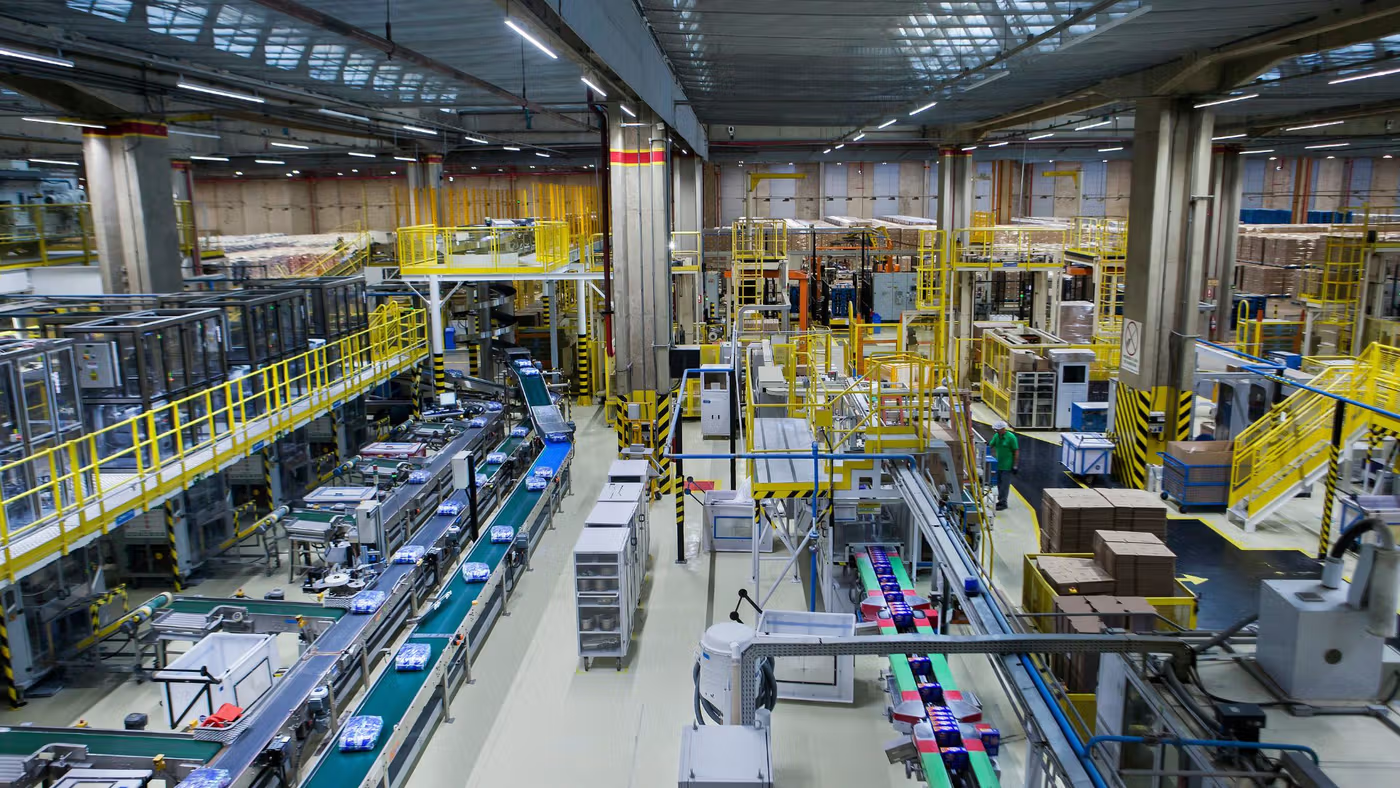
Unilever says its ongoing digital supply chain transformation is helping deliver “operational excellence” across its manufacturing and distribution footprint.
“Our WEF Lighthouse sites reflect how our world-class operations are combining digital innovation with the passion and expertise of our people, enabling us to respond faster to demand, operate more efficiently and continuously raise performance across our global network,” said Willem Uijen, Chief Supply Chain and Operations Officer.
Willem Uijen, Chief Supply Chain and Operations Officer.
Water and emissions reductions at India manufacturing site
One of the newly recognised sites is Unilever’s Gandhidham Personal Care factory in India, which received WEF Global Lighthouse distinction in sustainability.
Located in the water-scarce Kutch region, the site has deployed AI, digital twins and smart technology to improve resource efficiency across operations.
These investments have delivered:
17% less water used on-site
More than 6 billion litres of water saved in the local community
48% less material waste
90% reduction of Scope 1 and 2 emissions
AI and digital twins are being used to reduce water consumption, optimise energy use, and support the transition to renewable fuels and low-emission refrigerants.
Technology improving supply chain resilience and fulfilment
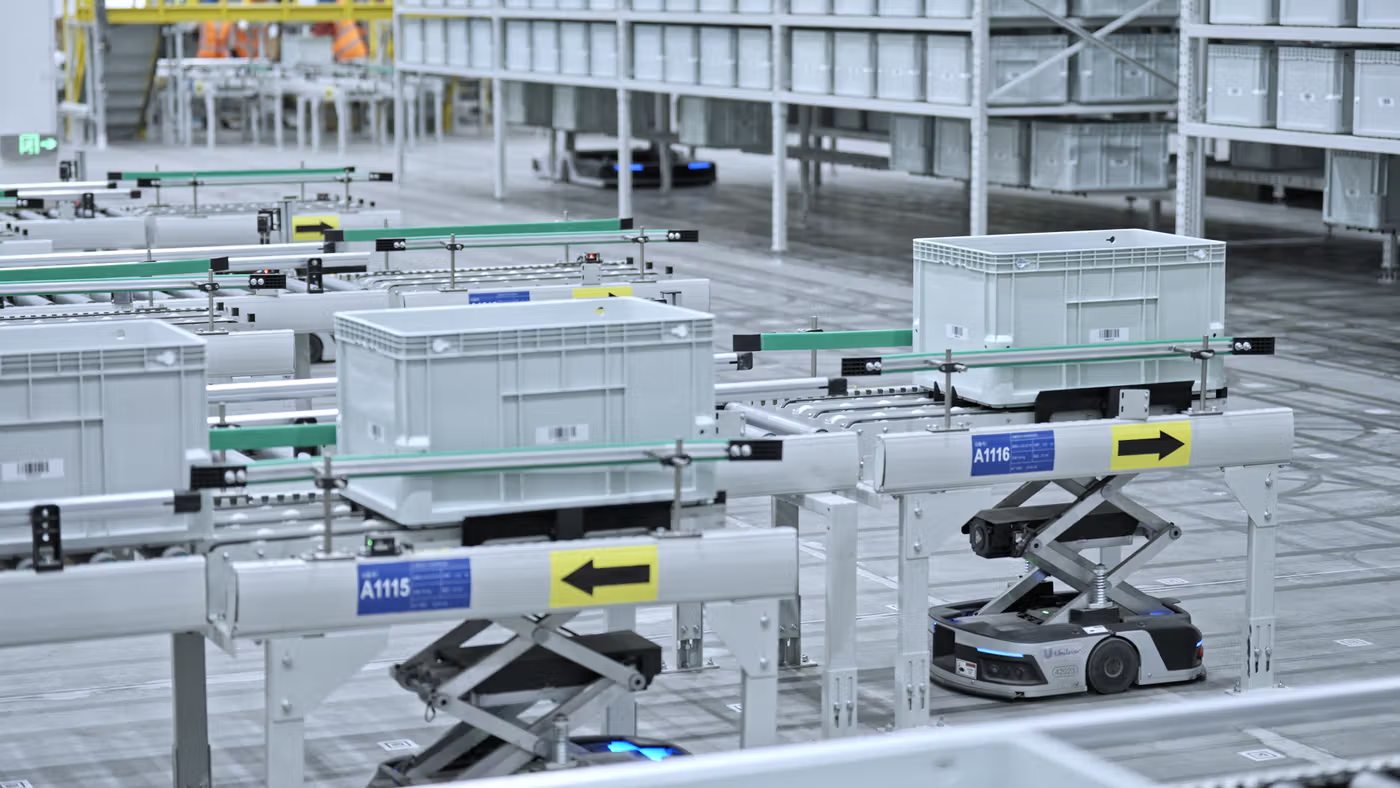
WEF also recognised Unilever’s Hefei factory-to-consumer site in China for supply chain resilience, where GenAI and automation are supporting direct-to-consumer fulfilment.
The company says the site has reduced delivery times by 75%, lowered logistics costs by 24% and expanded inventory capacity by 50% without increasing physical footprint.
Productivity gains through AI-driven manufacturing
Meanwhile, Unilever’s Pondicherry Home Care site in India was recognised for productivity after deploying machine learning and AI tools to improve production flexibility and product quality.
The site has doubled production speed, increased output by 25%, and tripled product variants without requiring additional space.
Scaling digital innovation across the network
Unilever says several of the technologies developed at these sites are now being rolled out more broadly, with factory-to-consumer supply chain models already adopted across all Unilever sites in China and being used as a global benchmark.
“These initiatives strengthen our competitive edge and create long-term value for our stakeholders, while contributing to a more sustainable future,” said Priya Nair, CEO and MD, Hindustan Unilever Limited.
As consumer goods manufacturers face increasing pressure to improve resilience, efficiency and sustainability simultaneously, Unilever’s WEF recognition highlights how digital supply chain investment is becoming a core lever for achieving all three.
Priya Nair, CEO and MD, Hindustan Unilever Limited.
This article was produced by the editorial team at EME Outlook and published as part of the Outlook Publishing global network of B2B industry magazines.
Outlook Publishing delivers industry insights, company stories, and sector coverage across manufacturing, mining, construction, healthcare, supply chains, food production, and sustainability.
EME Outlook provides ongoing coverage of organisations and developments shaping industries across Europe and the Middle East.