



This year’s Money20/20 celebrated a decade of being the world’s leading FinTech show, showcasing how AI, digital assets, and financial sovereignty continue to take centre stage.
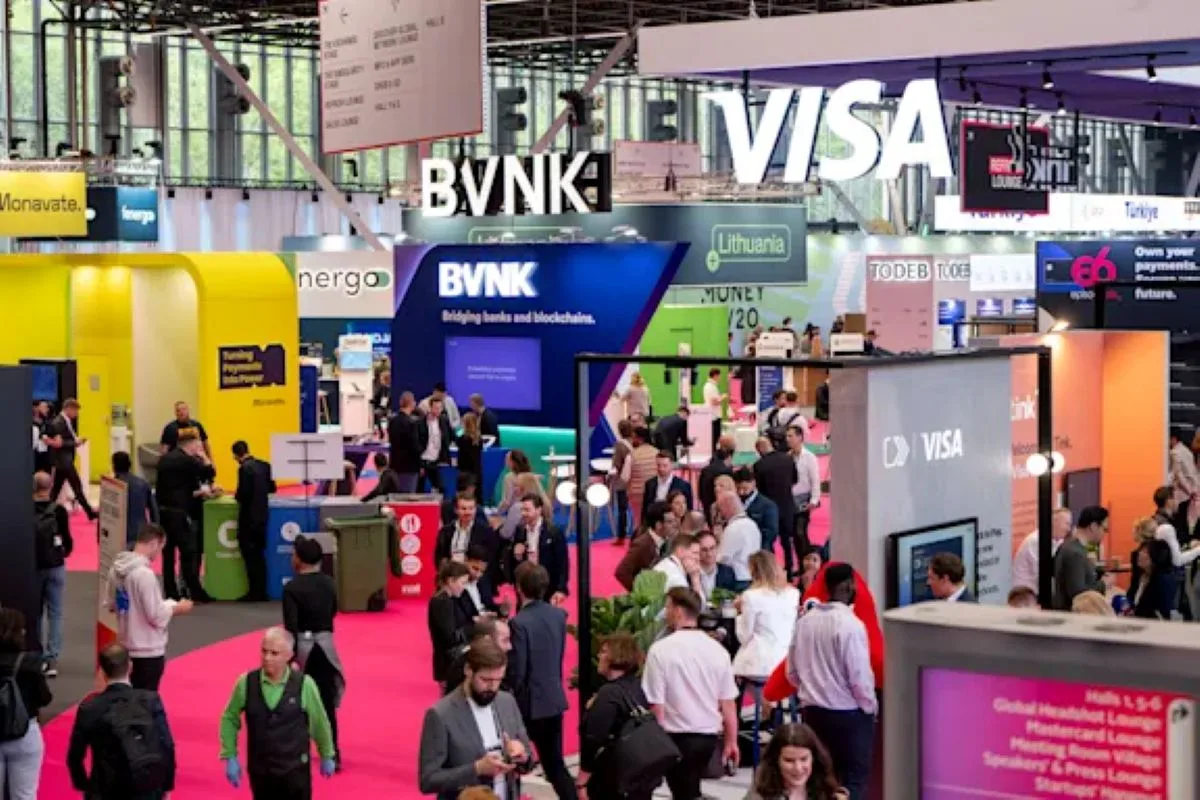
Money20/20, the world’s leading FinTech show, celebrates a major milestone with its 10th Europe edition, convening more than 7,500 attendees, one in three at C-suite level, and over 2,300 companies from over 105 countries.
Taking place in Amsterdam, the event witnessed significant industry announcements, strategic partnerships, and networking that will impact the future of financial services.
Featuring more than 450 speakers across six stages, Money20/20 Europe welcomed leaders from banking, FinTech, payments, policy, technology, and digital assets to explore the forces reshaping the future of money.
“This year’s show demonstrated that financial services has entered a new phase of transformation,” said Bryony Naylor, Vice President of Money20/20 Europe.

“Across the show floor and on stage, we saw leaders move beyond discussing what’s next to actively building it. From AI and digital identity to financial sovereignty and digital assets, the conversations and partnerships formed in Amsterdam will influence the direction of the industry.”
SHOWCASING INFLUENTIAL VOICES
Throughout the show, some of the most influential voices in global finance, technology, and policy took to the stage, including Sebastian Siemiatkowski, CEO and Co-Founder of Klarna; Onur Genç, CEO of BBVA; Marguerite Bérard, CEO of ABN AMRO; Kelly Devine, President, Europe at Mastercard; Yoni Assia, CEO and Co-Founder of eToro; Francesca Carlesi, CEO of Revolut UK; Arjun Sethi, Co-CEO of Kraken; Simonas Krėpšta, Board Member of the Anti-Money Laundering Authority (AMLA); Sarah Wynn-Williams, technology policy expert and bestselling author and many others.
Policy20, the invitation-only round table sessions, convened more than 40 senior policymakers, regulators, central banks, and industry leaders for a high-level forum examining how regulatory coordination, interoperability, and trust can support innovation across an increasingly interconnected global financial ecosystem.
FACILITATING THE FUTURE OF FINTECH
Money20/20 Europe also showcased six start-ups defining the future of FinTech through its Startup Media Session and Startup Hub, the premier platform for early and growth-stage fintechs to gain visibility, forge critical connections, and accelerate their path to scale.
Aviel Intelligence, a UK-based anti-scam intelligence company that identifies and engages with active scammers at scale using AI-powered synthetic personas to extract live mule accounts in real-time, won the industry-leading Start-Up Pitch Competition, earning recognition on one of FinTech’s most influential stages.
The other selected companies, Fraudio, Vouchsafe, Softbees, SAPI, and Serene presented breakthrough innovation across AI-native finance, fraud prevention, digital assets, trust infrastructure, and modular banking technology.
Across more than 100 hours of content, speakers explored the rise of AI and the Agentic Age, the future of European competitiveness, cross-border payments, digital identity, cybersecurity, embedded finance, and the evolution of financial infrastructure. Discussions around financial sovereignty, digital assets, and the future role of stablecoins emerged as some of the defining themes of the week.
STRENGTHENING EUROPEAN FINANCE
European financial sovereignty was discussed throughout the show, with leaders from banking, payments, technology, and policy examining how Europe can strengthen its financial infrastructure, accelerate innovation, and maintain strategic autonomy in an increasingly competitive global environment.
Conversations highlighted the importance of resilient payment systems, digital identity frameworks, and homegrown innovation in shaping Europe’s financial future.
Digital assets also moved firmly into mainstream conversation. Industry leaders explored the growing role of stablecoins, tokenised assets, and blockchain-based financial infrastructure, alongside the increasing convergence of traditional finance and decentralised finance.
Reflecting this shift, Money20/20 launched The New Intersection of Money: Where TradFi and DeFi Converge, addressing how established financial institutions and decentralised financial networks are coming together to reshape payments, liquidity, asset ownership, and the broader financial ecosystem.
The publication brings together insights from leaders across banking, FinTech, digital assets and policy, and examines the opportunities and challenges emerging at the intersection of traditional and decentralised finance.
AI also remained a dominant topic throughout the show, with speakers focusing on the transition from experimentation to deployment and the impact AI is already having across customer experience, fraud prevention, compliance, risk management, and operational efficiency.
Conversations increasingly centred on how AI is transforming financial services from a productivity tool into a core business capability.
ABOUT MONEY20/20
Launched by industry insiders in 2012, Money20/20 has rapidly become the heartbeat of the global fintech ecosystem. Over the last decade, the most innovative, fast-moving ideas and companies have driven their growth at the event, which takes place across Las Vegas, Amsterdam, Riyadh, and Bangkok.
This article was produced by the editorial team at EME Outlook and published as part of the Outlook Publishing global network of B2B industry magazines.
Outlook Publishing delivers industry insights, company stories, and sector coverage across manufacturing, mining, construction, healthcare, supply chains, food production, and sustainability.
EME Outlook provides ongoing coverage of organisations and developments shaping industries across Europe and the Middle East.