Lily Sawyer is an in-house writer for EME Outlook Magazine, where she is responsible for interviewing corporate executives and crafting original features for the magazine, corporate...
- Senior Editor
Share
Bosch, Toyota Motor Europe, the BMW Group, and Repsol have launched a six-month Spanish pilot to demonstrate that 100 percent renewable gasoline can power today’s vehicles using existing infrastructure.
Bosch, Toyota Motor Europe, the BMW Group, and Repsol have launched a six-month pilot project in Spain to test the real-world viability of vehicles powered exclusively by 100 percent renewable gasoline.
Beginning in July 2026, around 20 Toyota and BMW vehicles will operate in everyday traffic using Repsol’s Nexa 95 renewable gasoline. Throughout the trial, Bosch’s Digital Fuel Twin will digitally monitor and validate fuel usage, generating practical data on how renewable fuels perform under normal driving conditions.
Rather than relying on laboratory testing, the initiative is designed to demonstrate that renewable fuels can already be deployed at scale using today’s passenger vehicles, existing refuelling infrastructure, and digital certification technologies.
The partners believe this could provide a complementary pathway to reducing emissions across Europe’s transport sector whilst supporting a technology-neutral approach to decarbonisation.
DIGITAL TRANSPARENCY ACROSS THE VALUE CHAIN
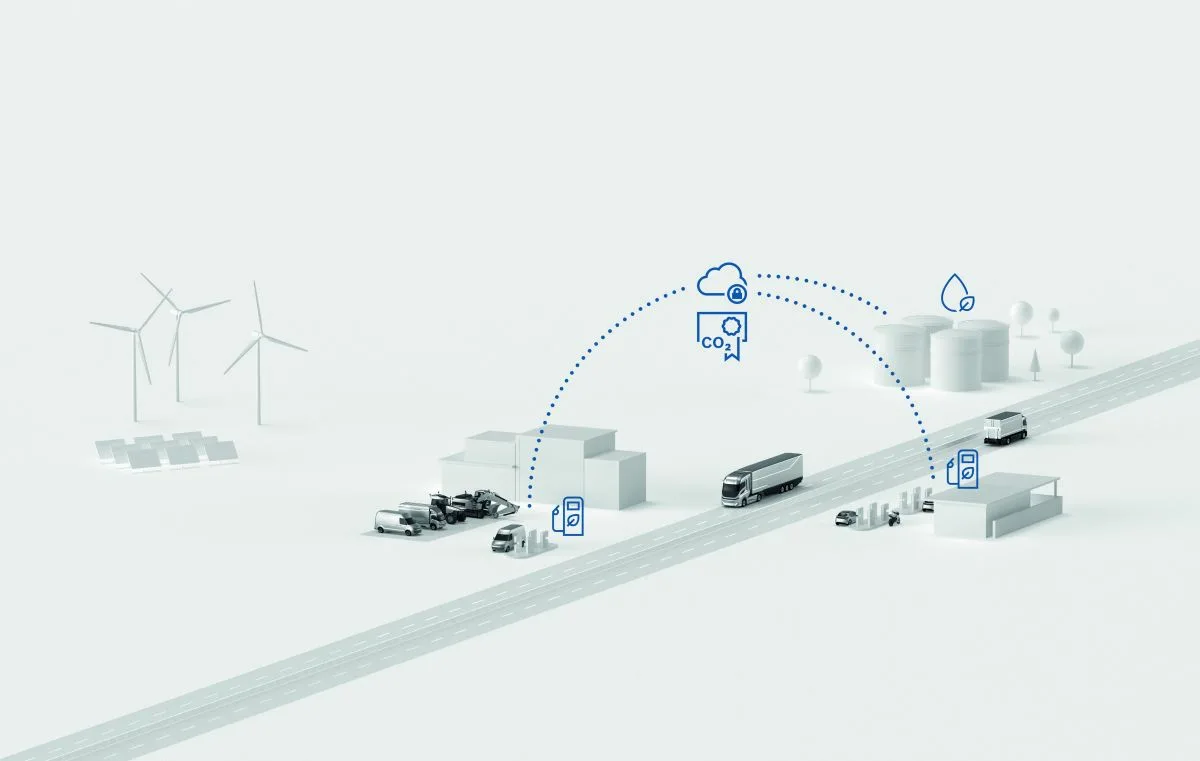
A central element of the pilot is Bosch’s Digital Fuel Twin, which captures and validates fuel data from multiple sources, including vehicle information, filling stations, and fuel card transactions.
The platform provides end-to-end digital traceability, enabling renewable fuel consumption to be tracked and verified from production through to the end user. By monitoring individual vehicle fuel consumption in real time, Bosch aims to improve transparency, support regulatory compliance, and strengthen confidence in renewable fuels.
The project also seeks to demonstrate the availability of digital tracking technologies capable of certifying renewable fuels throughout their lifecycle, alongside proving that existing vehicle fleets can successfully operate on fully renewable gasoline without requiring new infrastructure.
LEVERAGING TODAY’S INFRASTRUCTURE
Unlike decarbonisation strategies that depend on entirely new vehicle technologies or significant infrastructure investment, the Spanish pilot focuses on the immediate compatibility of renewable fuels with existing assets.
Bosch’s Digital Fuel Twin ensures complete digital transparency along the entire value chain, enabling the reliable tracking and verification of renewable fuels from market entry to the end consumer. By precisely monitoring the fuel consumption of individual vehicles in real time, we create the foundation for trust and compliance with legal regulations. This, in turn, promotes the acceptance of renewable fuels in the transport sector
Toyota España is supplying passenger cars from its current Toyota and Lexus fleet, whilst the BMW Group is contributing vehicles from its own fleet. These will be fuelled exclusively with Repsol’s Nexa 95 renewable gasoline, which is produced from RED-compliant raw materials and is fully compatible with current gasoline engines.
Spain was selected as the location for the pilot thanks to the availability of renewable gasoline at public filling stations, Repsol’s existing infrastructure, and the close collaboration between all participating organisations.
The partners hope the project will demonstrate that renewable fuels offer a practical route to reducing greenhouse gas emissions without requiring consumers to replace their existing vehicles.
INFORMING EUROPE’S MOBILITY TRANSITION
Beyond the operational trial, the initiative is intended to contribute to wider discussions surrounding Europe’s automotive decarbonisation strategy.
Data and interim findings gathered throughout the six-month programme will be shared with policymakers, industry stakeholders, and the media to help inform future legislative discussions around technological neutrality and the role renewable fuels could play alongside vehicle electrification.
Alongside validating fuel performance, the project will also assess how scalable current monitoring systems are, how effectively refuelling processes can be tracked, and whether fuel consumption can be reliably linked to individual vehicles.
Ultimately, Bosch, Toyota Motor Europe, the BMW Group, and Repsol hope the pilot will demonstrate that renewable fuels can already deliver measurable emissions reductions using existing vehicles and infrastructure, whilst providing valuable evidence to support a broader, technology-neutral approach to Europe’s journey towards lower-carbon mobility.
This article was produced by the editorial team at EME Outlook and published as part of the Outlook Publishing global network of B2B industry magazines.
Outlook Publishing delivers industry insights, company stories, and sector coverage across manufacturing, mining, construction, healthcare, supply chains, food production, and sustainability.
EME Outlook provides ongoing coverage of organisations and developments shaping industries across Europe and the Middle East.
Lily Sawyer is an in-house writer for EME Outlook Magazine, where she is responsible for interviewing corporate executives and crafting original features for the magazine, corporate brochures, and the digital platform.