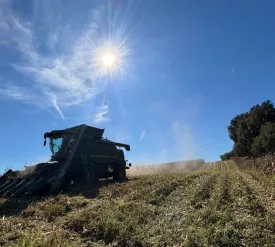




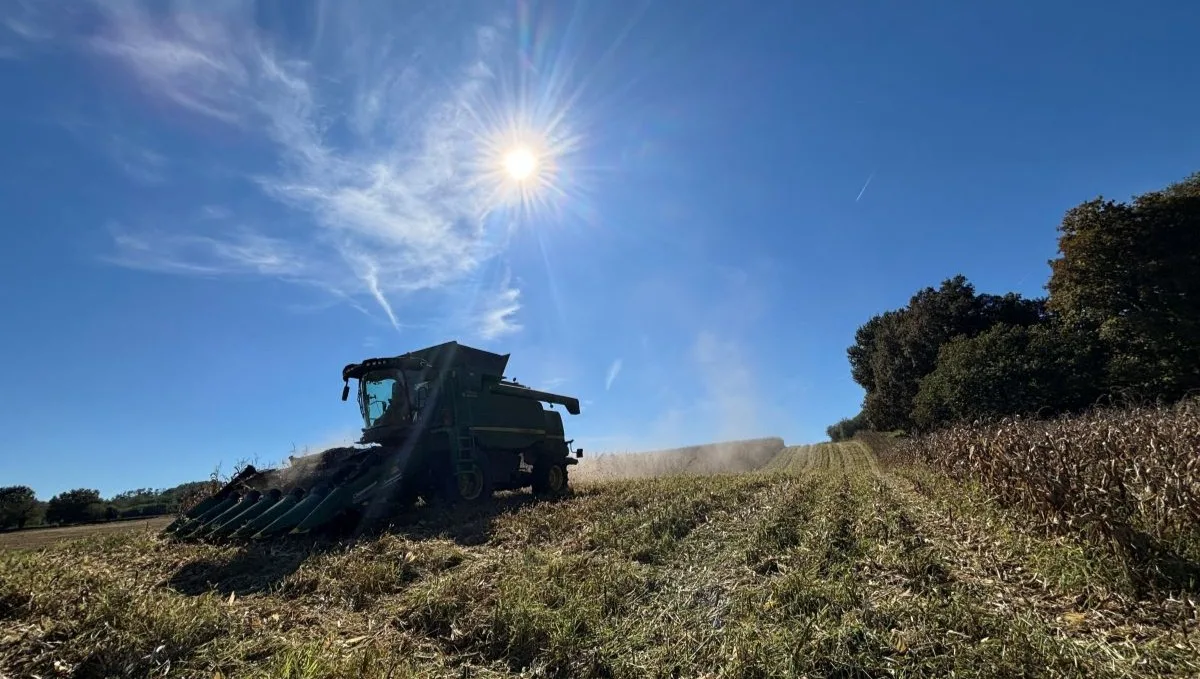
Tate & Lyle’s regenerative corn programme is being extended for another year following impressive environmental results that outperformed both annual and multi-year regional benchmarks.
BUILDING RESILIENCE IN A KEY SOURCING MARKET
Tate & Lyle is broadening its regenerative agriculture programme for corn in Europe after early outcomes from its 2025 initiative in France outperformed both annual and multi-year regional emissions benchmarks.
Developed alongside Regrow Ag (Regrow), an agriculture resilience platform, and French farming partners Armbruster Grandes Cultures, Euralis Groupe Coopératif, and Maïsadour, the programme operates across key corn sourcing areas in the northeast and southwest of France. The expansion in 2026 reflects the company’s continued focus on supporting farm resilience, improving soil health, and reducing greenhouse gas (GHG) emissions.
France was selected as a priority market due to its importance to Tate & Lyle’s corn supply chain and the impact of recent drought conditions across the region. The initiative was designed to help strengthen resilience to climate change whilst supporting more sustainable agricultural practices.
In 2025, Tate & Lyle enrolled 1,800 hectares into the programme through its partnership with Regrow. According to the company, emissions from the participating land were 19 percent lower than the regional average for the year.
“When we founded this programme with Regrow, our goal was to create a practical way to support farmers, build resilience, and reduce emissions,” explains Anna Pierce, Director of Sustainability, Tate & Lyle.

“The results from France show that the approach is working and has the potential to scale.”
Anna Pierce, Director of Sustainability, Tate & Lyle
SUPPORTING FARMERS AND STRENGTHENING SUPPLY CHAINS
The programme centres on conservation tillage, cover cropping, and improved nitrogen management. Participating farmers receive agronomic support from Regrow, the cooperatives, and representative groups, enabling them to adopt practices suited to their individual land conditions.
Progress has already been recorded in the uptake of regenerative practices. Conservation tillage reached 82 percent in 2025, while cover crop adoption nearly doubled to 32 percent compared to the 2019 baseline. Farmers also track implementation and outcomes through Regrow’s platform.
Tate & Lyle views regenerative agriculture as an important component of building a more resilient and lower-carbon supply chain while continuing to support farming communities.
“This programme is helping us build a stronger, more resilient supply chain for Tate & Lyle and our customers,” explains Jérôme Béra, Tate & Lyle’s President Europe, Middle East and Africa.

“By scaling regenerative agriculture, we can provide lower-carbon ingredients to our customers while strengthening long-term supply security.”
Jérôme Béra, President Europe, Middle East and Africa, Tate & Lyle
The company’s decision to expand the programme in 2026 is intended to further support these objectives as it continues to scale regenerative agriculture across its operations.
DELIVERING VALUE FOR CUSTOMERS
Tate & Lyle says the programme is designed to support both supply chain resilience and decarbonisation efforts for its customers.
Clients purchasing the company’s corn-based ingredients already benefit from Tate & Lyle maintaining acres in regenerative agriculture programmes across France and the US, equivalent to the volume of corn it buys each year. The company also provides Scope 3 carbon emissions data through product carbon footprints for purchased corn-based ingredients, helping customers with environmental reporting.
In addition, customers sourcing corn-based ingredients from the company’s French suppliers that are initially processed at Tate & Lyle’s Netherlands facility can participate directly in the regenerative agriculture programme in France. This enables them to report the impact of accelerated decarbonisation in their own Scope 3 emissions reporting and support progress towards emissions reduction targets.
This article was produced by the editorial team at EME Outlook and published as part of the Outlook Publishing global network of B2B industry magazines.
Outlook Publishing delivers industry insights, company stories, and sector coverage across manufacturing, mining, construction, healthcare, supply chains, food production, and sustainability.
EME Outlook provides ongoing coverage of organisations and developments shaping industries across Europe and the Middle East.