



Growing Climate Pressures on Global Rice Farmers
Generational Concerns Among Rice Farmers
New research carried out by 60 Decibels for Mars Food & Nutrition, surveying rice farmers in India, Pakistan and Thailand, highlights growing concern about the future of the sector.
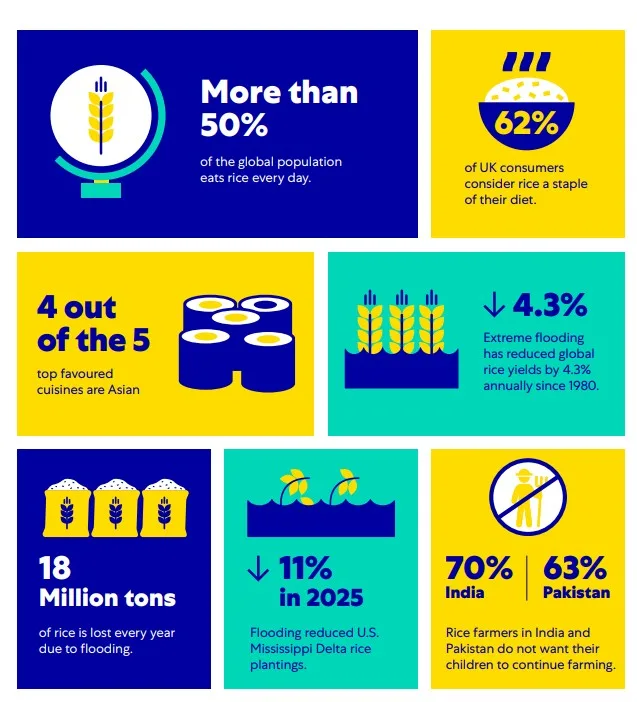
According to the findings, 70% of rice farmers in India and 63% of rice farmers in Pakistan say they do not want their children to follow them into rice farming, suggesting that current conditions are discouraging the next generation from continuing in the industry.
The findings indicate a generational shift that could affect the long-term resilience of rice farming if underlying challenges are not addressed.
Consumer Awareness Gap Around Climate Risks
While rice remains a staple food for many consumers, awareness of climate risks affecting its production remains limited.
In the U.K., 62% of consumers describe rice as a staple in their diet, yet 38% do not believe climate change could affect rice production. In addition, 36% say they are unaware which crops have the highest environmental impact.
The findings highlight what the research describes as a gap between the importance of rice in everyday diets and understanding of the climate risks affecting its production.
At the same time, 46% of consumers believe governments and policymakers have the greatest responsibility for making rice farming more sustainable.
Investment in Climate-Smart Agriculture
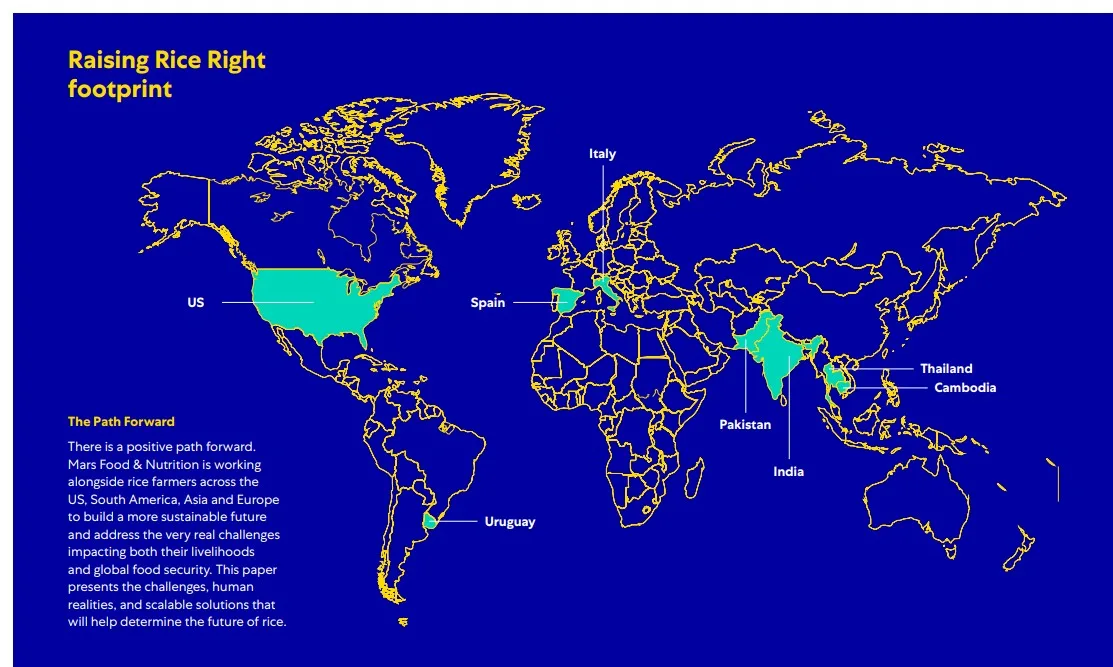
Mars is investing $20 million through its Raising Rice Right platform between 2020 and 2030 to support farmers in adopting climate-smart agriculture practices across key sourcing regions including the U.S., Europe and Asia.
Through partnerships with farmers and organizations in these regions, the company says it has demonstrated that practices such as alternate wetting and drying can reduce water usage and greenhouse gas emissions while maintaining or improving crop yields.
Chris Sackree, Global VP Supply, Mars Food & Nutrition said:
“The challenge is no longer to prove that climate-smart agriculture works. We already have solid evidence and practical solutions that can be adapted to very different rice-growing regions. The real opportunity now lies in creating the economic incentives and market conditions that make farmers want to adopt these practices at scale – that is when transformation will truly accelerate.”
Collaboration Across the Rice Value Chain
Mars says that moving fully toward climate-smart rice farming will require collaboration across the entire value chain, including farmers, companies, retailers and governments.
The company states that incentivizing water-saving and low-emission farming practices through subsidies, grants and extension services could help support adoption. It also highlights the need for investment in training, equipment and infrastructure, alongside collaboration with NGOs and governments to expand regional programs.
According to the company, coordinated action across the industry could help promote both livelihoods and climate resilience for rice farmers around the world.