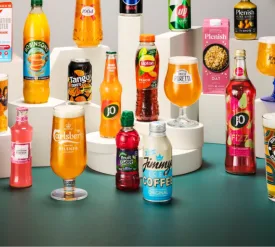




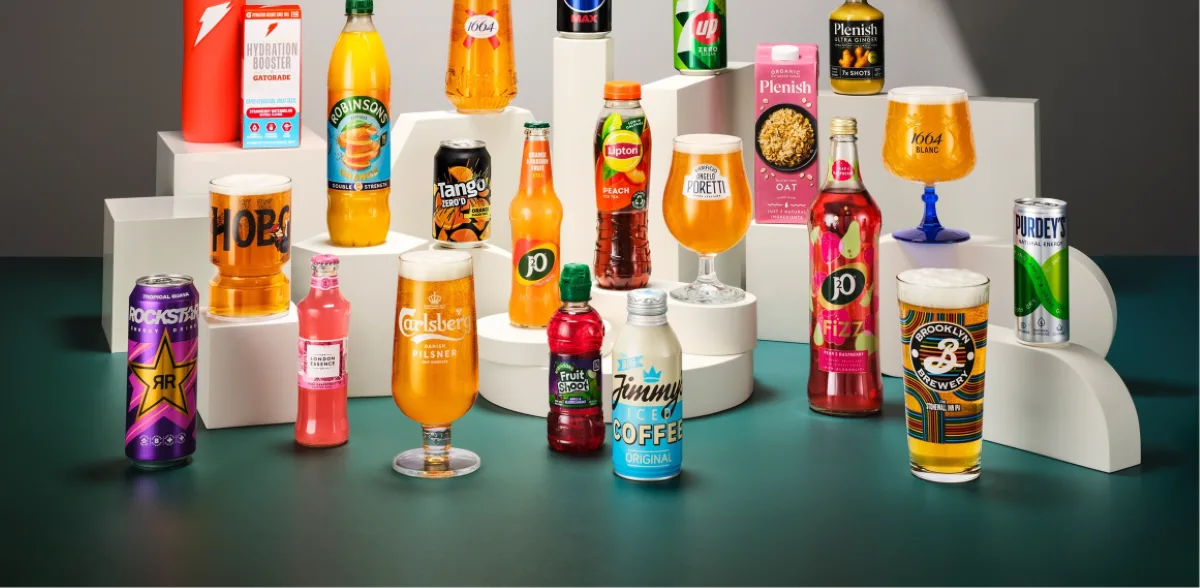
For UK manufacturers – and particularly the food and beverage sector – grid flexibility programmes offer a new revenue stream and help avoid production losses through power failures. We explore the opportunity and discuss what participation means for one major producer – Carlsberg Britvic.
A MULTI-PARTY MODEL
The energy network has evolved, moving away from a top-down distribution model to become a system in which multiple parties participate.
On this new energy network, an interdependence between consumer, generator, infrastructure, and regulator has developed, which is key to overcoming some of the biggest energy challenges of our time – power doesn’t just come from power stations anymore: it comes from businesses and communities working together to use energy in a smarter way.
In the UK there are now multiple, highly complex energy markets which all ultimately serve a common goal. They ensure the nation’s supply of electricity matches demand, now and into the future, and that electricity is clean, stable, and affordable.
The Capacity Market is arguably the simplest of these. It’s a mechanism that plans ahead to ensure that future energy supply, from multiple sources, is sufficient to match the forecast for demand. UK businesses are key contributors to the Capacity Market’s energy inventory, playing an important role in maintaining the balance of supply and demand on the grid.
On 1st October 2025, Enel X helped Carlsberg Britvic enrol in the UK’s new Capacity Market season, pledging to make electricity available to the grid in the event of a power grid emergency. In doing so, it joined future-focused commercial and industrial energy users in their support of a more secure energy supply, the stability of the electricity grid, and a greener future fuelled by renewable energy.
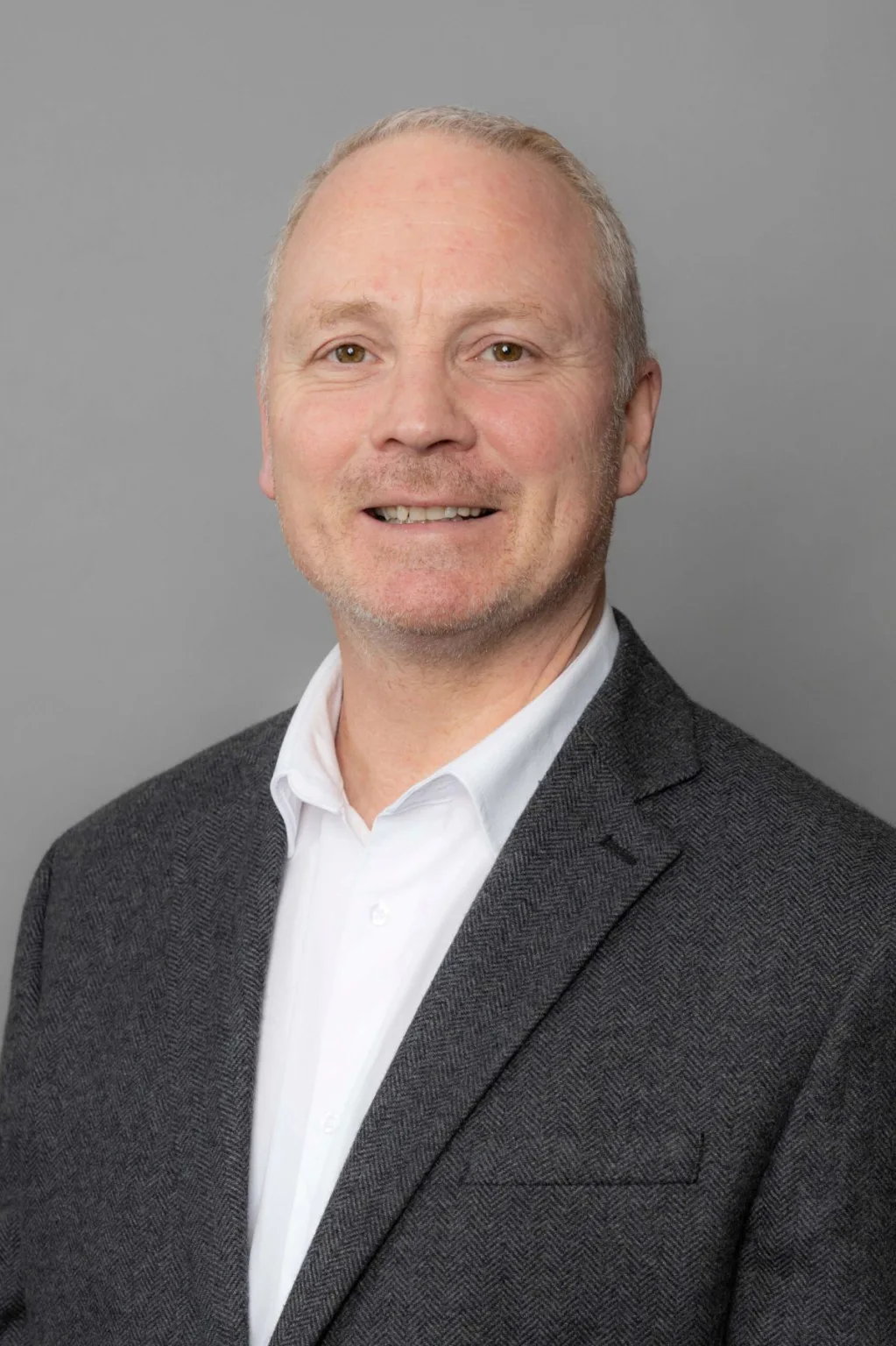
Nigel Paine, Vice President of Production at Carlsberg Britvic, explains what participation means to the company.
“When Enel X first introduced us to the Capacity Market, the motivation for businesses like ours to be ‘good grid citizens’ was clear. Our commitment to give back energy to the grid, should the need arise, is a small sacrifice to make if it means we all benefit from a more stable supply of electricity.
“As an organisation with significant energy needs, we view the electricity grid as business-critical infrastructure that needs to be protected. Working in partnership with the grid is a mutually beneficial arrangement that just makes good business sense.”
Nigel Paine, Vice President of Production, Carlsberg Britvic
THE POWER TO FLEX
Most organisations have flexible electricity capacity that they are simply unaware of. Everyday equipment such as heating, ventilation, and air conditioning (HVAC) systems and compressors, pumps, or processes that involve refrigeration or extreme heat can be curtailed with minimum disruption to the business.
On-site energy generation and storage assets such as combined heat and power (CHP) or battery energy storage systems (BESS) can also provide backup to the national grid through the Capacity Market and other flexibility schemes.
This is a more circular approach to the management of the country’s energy supply, as it effectively uses resources that exist locally to keep pace with the growing demand for electricity. That’s a far more efficient – and less environmentally damaging – alternative to turning “traditional” centralised power stations up and ultimately having to build new ones.
More importantly, the greenhouse gas (GHG) emissions that these power stations would have produced over their lifetime are also avoided, making a positive contribution to our journey to net zero.
The UK government’s Clean Power 2030 Action Plan includes a call for significantly more flexibility across the electricity system. The National Energy System Operator (NESO) has projected that by 2030 the UK will need 25-45 gigawatt (GW) of within-day flexibility – roughly double current levels.
The government’s Clean Flexibility Roadmap goes further still, setting out a total flexibility capacity target of 51-66 GW by 2030, a two to three-fold increase on the approximately 24 GW installed today.
THE OPPORTUNITY
What does this mean for the UK’s businesses, and specifically for food and beverage operators with major manufacturing, bottling, and packaging operations?
Flexibility schemes typically pay organisations for their participation, whether or not their flexible energy resources are called on to help balance the grid. This opens up additional revenue, helping offset production costs or provide capital that can be reinvested in the business.
The financial rewards can be significant, but there are other compelling reasons for participation. By helping support the grid’s stability, major producers can help improve its reliability to avoid outages and maximise their own uptime, as well as that of supply partners who also depend on it.
Demand flexibility is especially important in the context of renewable energy, the output from which is far more variable than gas, coal, or nuclear plants. By contributing flexible resources, organisations are supporting the grid’s ability to adapt to less predictable inputs, in turn accelerating the connection of clean power projects and a reduction in the carbon footprint of power.
WHAT FLEXIBILITY LOOKS LIKE
Enel X works with organisations to help identify untapped flexibility resources so that they can be put to work as part of its virtual power plant (VPP), which examines what participation looks like in practice.
Nigel explains: “We deal with high-quality, perishable goods, so sudden or unplanned interruptions to production could carry a high cost. In extreme cases, it may even impact our ability to fulfil customer orders, which, for us, is non-negotiable. Any steps we can take to mitigate this risk must be taken.
“By accessing the Capacity Market with Enel X, we have joined a community of like-minded organisations coming together in a virtual power plant. Working as a group, small adjustments to our collective energy consumption can make a big difference to electricity grid stability. By temporarily switching off machinery or rescheduling a production process, Carlsberg Britvic can help to relieve pressure on the electricity system, which reduces the risk of an interruption to our own power supply.
“As a Capacity Market contributor, we also benefit from receiving an invaluable four-hour advance warning should grid stability be at risk. This enables us to act before it’s too late.
“We are also paid based on the level of commitment we make to the Capacity Market. Most food and drink manufacturers work with the tightest of margins, so this income makes the Capacity Market a very compelling proposition for the sector.”
As Carlsberg Britvic’s experience shows, the transition towards a decentralised, digitised and decarbonised power system presents opportunities for industry and consumers that are prepared to adopt a more flexible approach to energy consumption. For food and beverage manufacturers operating on tight margins and with little tolerance for downtime, the case for participation is particularly strong. Their participation not only supports the roadmap to net zero and boosts the competitiveness of British industry, but it also helps underscore industrial reliability too.
Commercial and industrial energy users such as Carlsberg Britvic have a crucial role to play in Britain’s energy future. Flexibility is one of the UK’s largely untapped strengths. The nation already has the businesses, scale, assets, and processes in place to deliver meaningful system services today. Unlocking further participation at scale and at pace will be essential if the UK is to hit its sustainability targets for 2030 – and beyond.
“Ultimately, we see our support of the grid as an investment in our future. As we grow, we require certainty around grid connections and access to clean energy to power new facilities, and new jobs, around the country. A strong grid is a cornerstone of a strong economy – we’re proud to play our part in defending the UK’s energy security.”
Nigel Paine, Vice President of Production at Carlsberg Britvic
What does participation in demand flexibility look like for your business? How could benefits unlocked through the Enel X VPP provide revenue or offset capital expenditure? Contact the company today to discover more.
ABOUT ENEL X
Enel X is a multinational power company and a leading integrated player in the global power and renewables markets, present in 27 countries worldwide.
At global level, it is the largest renewable player, the foremost electricity distribution network player by number of grid customers served and the biggest retail operator by customer base.
Enel X generates electricity with approximately 92 GW of total capacity. Enel Green Power, the Group’s renewables arm, has a total capacity of approximately 67 GW and a generation mix that includes wind, solar, geothermal, and hydroelectric power, as well as energy storage facilities, installed in Europe, the Americas, Africa, Asia, and Oceania.
Enel Grids, the Group’s global business line dedicated to the management of the electricity distribution service worldwide, delivers electricity through a network of 1.9 million kilometres with more than 69 million end users connected to its distribution grids.
Enel Commercial is the Group’s arm dedicated to customers around the world with the aim of effectively providing products and services based on their energy needs and encouraging them towards a more conscious and sustainable use of energy.
It provides electricity, gas and integrated services to more than 29 million customers globally, including households, enterprises, industries and public administrations. In addition, it offers flexibility services aggregating 10.4 GW and has approximately 33,800 owned public charging points for electric mobility.
Enel’s leadership in the different categories is defined by comparison with FY2025 data and results of relevant comparable listed companies, excluding those with predominant state control.
This article was produced by the editorial team at EME Outlook and published as part of the Outlook Publishing global network of B2B industry magazines.
Outlook Publishing delivers industry insights, company stories, and sector coverage across manufacturing, mining, construction, healthcare, supply chains, food production, and sustainability.
EME Outlook provides ongoing coverage of organisations and developments shaping industries across Europe and the Middle East.