Lily Sawyer is an in-house writer for EME Outlook Magazine, where she is responsible for interviewing corporate executives and crafting original features for the magazine, corporate...
- Senior Editor
Share
Airbus and Virgin Atlantic are pioneering AI-driven inflight catering, using real-time data insights to reduce waste, improve efficiency, and enhance passenger experience without compromising onboard service quality.
The global airline industry is facing a mounting sustainability issue. Cabin and catering operations generate an estimated 3.6 million tonnes of waste annually – a figure projected to reach four million tonnes by the end of 2025.
Without intervention, this could double by 2040 as passenger numbers continue to rise.
A notable share of this waste – between 18 and 20 percent – consists of untouched food and beverages. Due to strict international regulations, much of it is either incinerated or sent to landfill, posing both environmental and operational challenges.
Recognizing the urgency, Airbus has identified in-flight food waste as a key area for improvement, aligning its efforts with the UN 2030 Agenda for Sustainable Development.
FROM CONCEPT TO CABIN
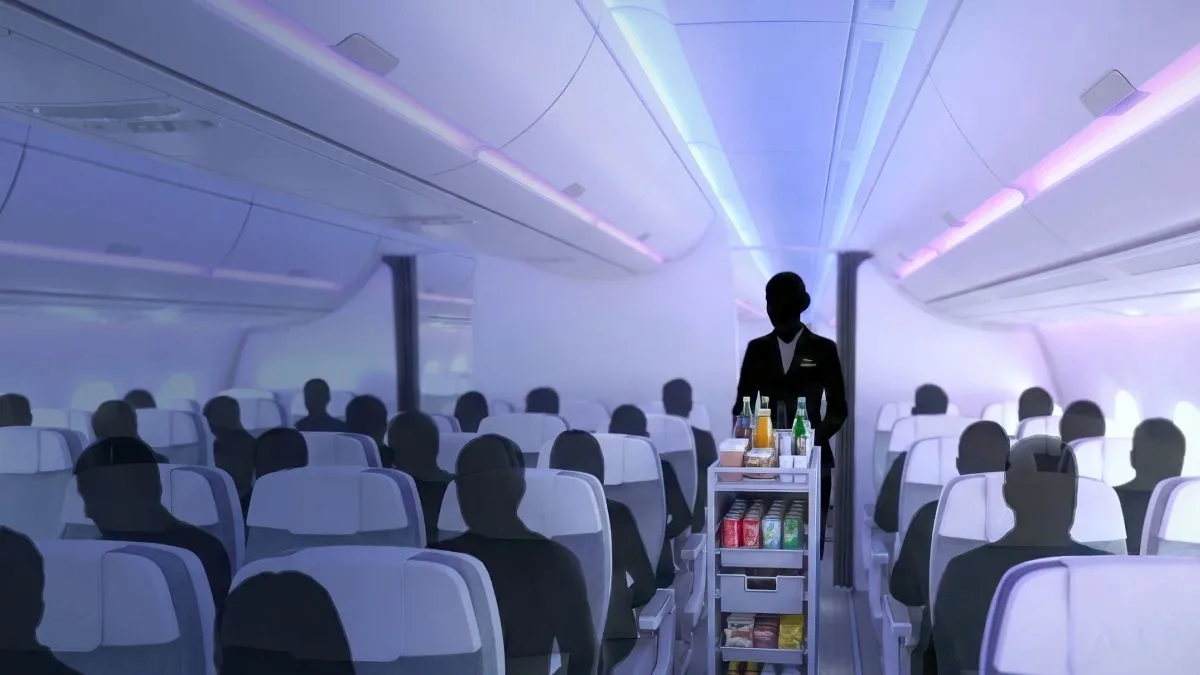
In 2025, Airbus brought its “Smart Catering” concept into real-world testing through a collaboration with Virgin Atlantic. The AI-driven solution was designed to provide a clearer understanding of onboard consumption by automatically capturing data on passenger meal choices and tracking unused items.
Initial trials took place at a ground-based cabin mock-up facility in the UK, where the system demonstrated its ability to operate seamlessly without adding to crew workload.
Following this success, the technology was deployed on live flights, including routes from London to New York on an A330 and London to Orlando on an A350.
These trials validated the system’s capability to deliver accurate, actionable insights under real operating conditions.
At Virgin Atlantic, we’re always looking for innovative ways to elevate our premium onboard experience while reducing our environmental impact. Collaborating with Airbus on the Smart Catering trials has given us valuable insight into how data and AI can help us better match customer preferences, minimise waste, and operate more efficiently. This is an exciting step forward in our commitment to sustainability, without compromising the high-quality service our customers know and love
Beyond waste reduction, Smart Catering introduces tangible improvements to onboard service. Designed for the connected aircraft environment, the solution equips cabin crew with digital tools that streamline operations and elevate passenger engagement.
Features such as interactive galley search, live inventory tracking, and intuitive dietary information eliminate the need for manual reporting.
Crew members can instantly locate food and beverages, identify stock levels, and access nutritional or allergy details, all in real time.
By reducing administrative tasks, the system enables the crew to focus more on delivering a premium passenger experience.
HOW AI POWERS SMART CATERING
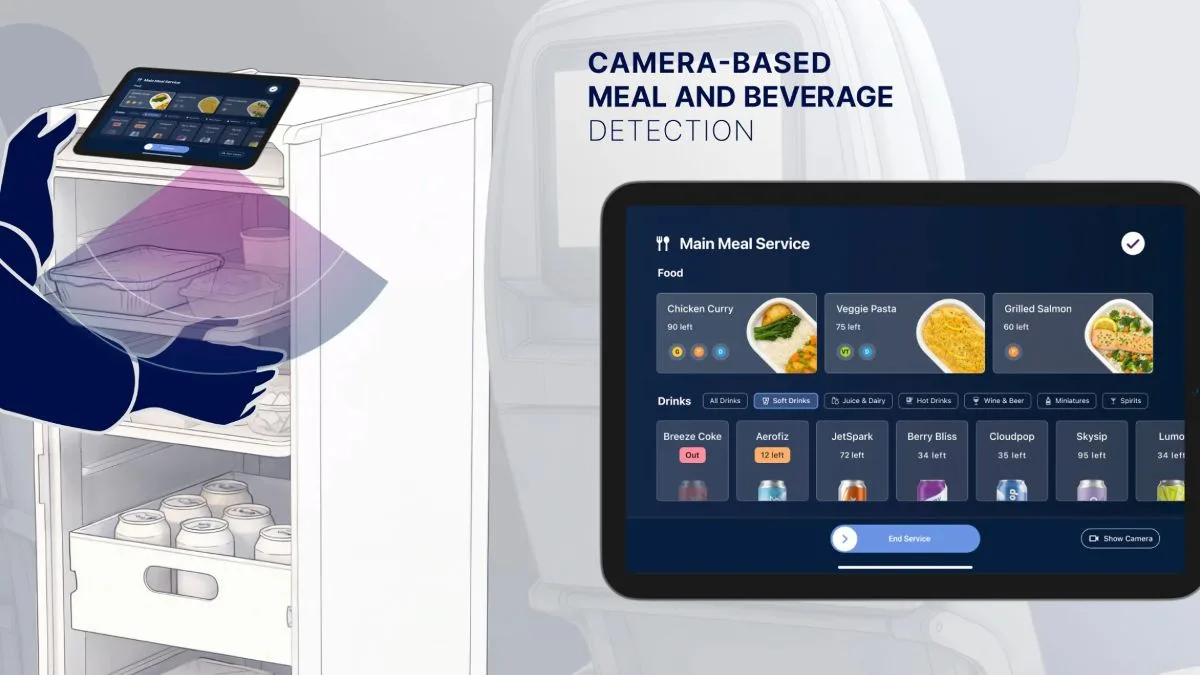
At the core of the solution is a camera-based AI recognition system integrated into existing crew devices, such as tablets or smartphones.
As crew members remove meal trays or beverages from trolleys, the device camera captures the action, automatically updating onboard inventory. This process occurs seamlessly within normal service routines, requiring no additional steps.
The system also functions as an intelligent assistant, providing real-time insights into stock availability, item location, and passenger dietary needs.
Crucially, all collected data feeds into a central ‘ground cloud’, enabling fleet-wide analysis. Airlines can then leverage route-specific insights to better match catering supply with actual passenger demand.
During the flight tests, the tool provided features like interactive galley search, live inventory, and intuitive dietary information free crew from manual forms and reporting, allowing them to focus on the passenger. The system provided real-time availability and location status of all food and beverage, and could indicate in which trolley and galley they can be found during the flight.
The implications of Smart Catering extend beyond operational efficiency. By aligning catering loads more closely with real consumption patterns, airlines can significantly reduce unnecessary uplift.
This data-driven approach has the potential to deliver double-digit reductions in preventable waste, particularly in relation to excess food and beverage provisioning.
For airlines, this represents a dual benefit – lowering environmental impact while optimizing costs and logistics.
LOOKING AHEAD
With successful trials completed, Airbus is now showcasing Smart Catering to the wider industry.
A working prototype will be available for demonstration at the Aircraft Interiors Expo (AIX) in Hamburg from April 14–16, offering airlines the opportunity to experience the solution firsthand.
As sustainability and efficiency become increasingly central to aviation, innovations such as Smart Catering highlight how AI and digital tools can transform even the most routine aspects of airline operations into smarter, more responsible systems.
This article was produced by the editorial team at EME Outlook and published as part of the Outlook Publishing global network of B2B industry magazines.
Outlook Publishing delivers industry insights, company stories, and sector coverage across manufacturing, mining, construction, healthcare, supply chains, food production, and sustainability.
EME Outlook provides ongoing coverage of organisations and developments shaping industries across Europe and the Middle East.
Lily Sawyer is an in-house writer for EME Outlook Magazine, where she is responsible for interviewing corporate executives and crafting original features for the magazine, corporate brochures, and the digital platform.